Change isn’t inherently destructive.
It’s how we change that determines whether we create more life… or less.
That’s the heart of regenerative work... whether it’s regenerative living, regenerative agriculture, or conservation.
We’ve got an incredible amount of power as humans, and with that comes responsibility. Every day, we’re choosing (whether we realise it or not) between actions that facilitate the conditions for life or actions that extract and erode.
Regenerative approaches are also deeply practical, even self-interested.
Because win-win scenarios exist. We can meet human needs while improving the systems we depend on. In that sense, ecologists and regenerative practitioners might be the most self-interested people on earth: they’re simply playing the long game on soil, water, biodiversity, resilience, and real economics.
Here’s the frame that matters:
Sphere of influence vs. sphere of concern
If enough people put their energy into what they can actually influence, the “sphere of concern” starts to shrink. Not because problems magically disappear, but because collective daily decisions are what create the aggregate outcomes we’re all worried about.
Helping one farm. One watershed. One processing facility. One supply chain. One community.
It can feel like a drop in the bucket.
But that’s not the end state.
That “one” becomes proof. Proof becomes momentum. Momentum becomes a shift, and shifts can happen fast once there’s gravity.
And that’s why we don’t need one hero solution.
We need many. An open movement of people and companies building systems that are so useful, so fair, so measurable, that others naturally move towards them.
The technical path isn’t the hardest part
A lot of the regenerative “how” is actually pretty straightforward. The hardest part isn’t the practices.
It’s the climate between our ears.
The paradigm shift. The invisible social structures. The default assumptions that keep old incentives glued in place.
But we also know something else:
when a small percentage of people truly adopt a new vision, the world can tip.
I think about it like steering a canoe downriver (because I spend time on rivers and lakes).
Yes, you watch the rocks.
But if you stare at the hazards, you drift into them.
You have to focus more on the pathway.
That’s what we’re doing with Grow: building rails that make regenerative outcomes measurable, bankable, and scalable, across living, agriculture, and conservation, so people don’t just care about better systems… they can participate in them, benefit from them, and help pull the whole boat in a better direction.
Because once momentum shows up, the shift can happen very quickly.
What’s one thing in your sphere of influence this week that could facilitate the conditions for more life?
1
1 comment
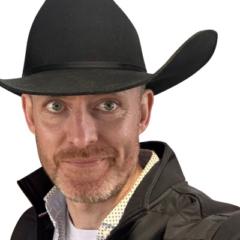
Change isn’t inherently destructive.
skool.com/thegrowskool
Welcome to the Grow Skool, where learning becomes cultivation. The soil is ready.
Let’s learn like life depends on it, because it does.
Leaderboard (30-day)
1
+51
2
+18
3
+16
4
+7
5
🔥
+6
Powered by