

7d •
Cover Art Design
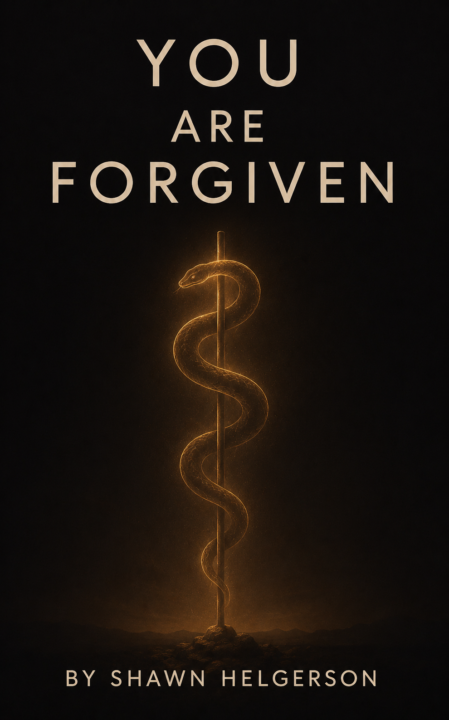
I think I found the design for the cover art for You Are Forgiven. The book deals with how we need to face out shadow and realize that much of what we see in the world is a projection of what we've not healed in ourselves. Similarly, in my book Silicon and Soul, I make the case that AI becomes a mirror of humanity's consciousness - shadow and all - and we need to be mindful of how we train it. So, I wanted the two covers to be similar, and I think I found a winner.
28d •
Claude Writing Prompt
When I work with Claude to help me write, I've developed a voice instruction so there's less line editing to do later: "Master Sergreant Reverend E.B. White with a slightly dark sense of humor, writing a paper for my high school English teacher, Mrs. Cox who is strict about punctuation and founding member of PETOP (People for the Ethical Treatment Of Participles) and she is HIGHLY allergic to "AI-isms" and doesn't carry and epi-pen." It took a lot of practice to find this as a description of my natural writing voice. What might yours be?
14d •
Parakaya Pravesha Writing
Every writing teacher will tell you: show, don't tell. Almost none of them tell you why it's so hard to do. Here's why: you can't show what you haven't inhabited. If you're standing outside the scene — watching it happen, reporting on it — the only tool you have is telling. These tell me what's happening: - "She was sad." - "The room was tense." - "He felt afraid." These show me what's happening: - "Her shoulders sagged, and she sighed heavily." - "Mr. Baker clenched his jaw and fists when Mrs. Fletcher walked in." - "His body froze when he saw the figure emerge through the closed door." Do you feel the difference? In Sanskrit, there's a concept called parakaya pravesha — entering another's body. It describes a yogi who leaves their own form and inhabits another, not to control, but to understand from the inside. To know what can only be known by being there. That's what writing a scene actually requires. The philosopher Adi Shankaracharya — a celibate monk who had never known love or marriage — entered the body of a dead king so he could learn what he could not learn as a renunciate. He lived inside another life in order to know it truly. When he came back, he could speak of things he had never experienced. Not because he imagined them. Because he had been there. That's the job. Before you write the scene, enter it. Feel the floor under your feet. Smell what's in the air. Know what your character wants so badly they can taste it. Then write. You won't have to think about showing versus telling. You'll have no choice but to render what you lived. The report comes from outside. The scene comes from inside. Where in your current project have you been standing outside a scene you should have inhabited?

Jan '25 •
WELCOME! START HERE! 👋
Hey everyone! 😁 THIS IS THE BEST PLACE TO START! Now it's time to introduce yourselves! Let your personality shine and start to meet the members of this community! Let's support one another and be that helpful push that's sometimes needed when it comes to writing a book! Write a post with the category as Introductions! 🤪 THANKS FOR JOINING! I'm looking forward to learning about your book or your writing journey! 🤩

May 29 •
A little snippet
This is the prologue for my current WIP, From Your Dad. Enjoy or give feedback, whichever you're called to do 😁😁😁 Follow Aira's journey of healing.
1-30 of 287

skool.com/the-storytellers-path
Turn your story into a finished book in 6 months.
For dedicated writers creating transformational or fiction books.
Paid Tiers: Has Professional team
Leaderboard (30-day)
1
+94
2

+67
3

+51
4
+38
5

+24
Powered by