
Write something
Pinned

21h •
Ready isn't a feeling. It's a decision.
Over the years, I’ve noticed a pattern. Most people don’t get stuck because they don’t know what to do. A lot of times, they’re stuck because they do know what to do, they’re just waiting to feel ready before they move. They’re waiting for more confidence, or more energy, or more clarity, or for someone to tell them they’re on the right track. And honestly, that makes sense. It feels responsible. It feels smart. But what I’ve seen over and over is that action is what creates those things. Confidence doesn’t show up first. Clarity doesn’t magically appear. You move… and then those things start to follow. Fear doesn’t disappear. Doubt doesn’t go away. You’re still tired. You still wonder if it’s going to work. That part is normal. It doesn’t mean you’re doing it wrong. It usually means you’re right on the edge of something bigger. The people who end up creating extraordinary lives aren’t immune to that feeling. They don’t have some secret advantage. They just don’t let that discomfort be the thing that decides for them. They do it anyway. So if you’re feeling a little stuck right now, maybe the question isn’t “How do I feel more ready?” Maybe it’s “What’s one small step I could take today… even if I don’t feel ready yet?” And if you are feeling brave, drop it below so this community can hold you accountable.
Pinned

1d •
🧠 Reality Fatigue Is Real: The Human Cost of Synthetic Media
We used to worry about whether a piece of content was true. Now we also worry about whether it is even real. The hardest part is not the deception itself, it is the slow erosion of trust that makes us tired, suspicious, and less willing to engage. ------------- Context: The New Burden We Did Not Ask For ------------- Synthetic media has moved from novelty to background noise. We see altered images, cloned voices, manufactured screenshots, and convincing video clips circulating with speed and confidence. The content arrives pre-loaded with emotional triggers, urgency, outrage, fear, admiration, and it demands a reaction before it deserves belief. Most conversations focus on the extreme cases, political manipulation, major fraud, public scandals. Those are real concerns, but they obscure the more common impact: everyday cognitive strain. People begin to second-guess what they are seeing. They hesitate before sharing. They start looking for hidden motives. Over time, that vigilance becomes exhausting. This is what we mean by reality fatigue. It is the emotional and mental wear of living in an environment where verification becomes a constant requirement. It is not paranoia, it is adaptation. The problem is that adaptation comes at a cost, and most teams are not naming that cost yet. In organizations, the effects show up quietly. Decision-making slows because people do not trust inputs. Relationships fray because people suspect manipulation. Communication becomes more guarded because nobody wants to be fooled. Even when a piece of content is legitimate, the atmosphere of doubt lingers. If we want responsible AI adoption, we have to treat reality fatigue as a wellbeing issue, not just a technical threat. ------------- Insight 1: The Threat Is Not Only Deception, It Is Doubt at Scale ------------- Deception harms in a direct way, but doubt harms in a systemic way. When people cannot reliably tell what is authentic, they stop relying on signals that used to guide them. Tone, facial expressions, screenshots, even recorded audio lose their meaning. The world becomes more ambiguous.

Pinned
3d •
Testing Claude Opus 4.6 & More AI News You Can Use
This week, I break down the Claude Opus 4.6 release from Anthropic and shows off some early test results, explains why so many are freaking out about Google's Project Genie, discusses OpenAI's latest Codex app release, and more. Enjoy!
3d •
Most people won’t make money with AI.
Not because AI doesn’t work.But because they stay vague.Busy. But not profitable. Here’s what usually gets in the way: 1) Treating AI like the product:Tools don’t make money.Outcomes do.ChatGPT. Claude. Perplexity. They’re leverage.Not offers.If you can’t explain who it helps and what problem it removes, you don’t have a business yet. Action: Pick one tool you already use. Write down one task it replaces or speeds up. That’s your starting point.

33m •
A small workflow change that saved my meetings
I wanted to share a workflow experiment that’s actually working really well for me. I’ve been using Phantom to handle call recordings and generate summaries, which means I’ve stopped taking manual notes entirely. To make it seamless, I hooked it up to n8n so the summaries are automatically routed to the right people in my company. It keeps everyone aligned without me having to remember to send follow-ups. It’s been a small change with a surprisingly big impact on my focus. I built the automation in n8n myself—if anyone is curious about the setup or wants to see the template, I’m happy to share how I did it.
0
0
1-30 of 11,350
skool.com/the-ai-advantage
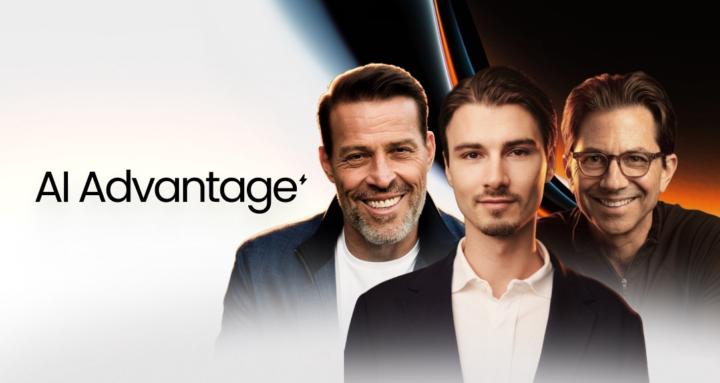
Founded by Tony Robbins, Dean Graziosi & Igor Pogany - AI Advantage is your go-to hub to simplify AI and confidently unlock real & repeatable results
Leaderboard (30-day)
1

+237
2

+160
3

+142
4

+135
5

🔥
+116
Powered by