
Write something
Pinned

56m •
🔄 From One-Off Prompts to Habitual AI Use
Many people believe they are using AI because they have tried it. A prompt here, a draft there, an occasional experiment when time allows. But trying AI is not the same as integrating it. Real value does not come from one-off interactions. It comes from habits. AI delivers its greatest impact not when it is impressive, but when it is ordinary. When it becomes part of how we think, plan, and decide, rather than something we remember to use only when things get difficult. ------------- Context: Why AI Often Stays Occasional ------------- Most AI use begins with curiosity. We explore a tool, test a few prompts, and are often impressed by the results. But after that initial phase, usage becomes irregular. Days or weeks pass without opening the tool again. Each return feels like starting from scratch. This pattern is understandable. Without clear integration into existing routines, AI remains optional. It competes with habits that are already established and comfortable. When time is tight, optional tools are the first to be skipped. Organizations unintentionally reinforce this pattern by framing AI as an add-on. Something extra to try, rather than something embedded into how work already happens. As a result, AI remains novel, but not essential. The gap between potential and impact often lives right here. Not in what AI can do, but in how consistently we invite it into our workflows. ------------- Insight 1: One-Off Use Creates Familiarity Without Fluency ------------- Trying AI occasionally builds awareness, but it does not build intuition. Each interaction feels new. We forget what worked last time. We rephrase similar prompts repeatedly. Learning resets instead of compounding. Fluency requires repetition. The same way we become comfortable with any tool, language, or process, through use in similar contexts over time. Without that repetition, AI remains impressive but unreliable. This is why many people describe AI as inconsistent. In reality, their usage is inconsistent. Without patterns, there is no baseline to learn from.

Pinned

21h •
3 things I do every weekend to set up my week
I’ve learned this the hard way. If you wait until Monday to get focused, you’re already behind. Here’s how I set up my week before it starts: 1. I choose ONE win that mattersNot a to-do list. Not busy work. One outcome that actually moves my life or business forward. That goes on the calendar first. 2. I remove friction ahead of time I look at my week and ask,“What’s going to trip me up?” Too many meetings, distractions, low-energy days. I fix it now so I’m not relying on willpower later. 3. I reset my environment Desk clear. Calendar clean. Priorities visible. When Monday hits, I don’t want to think... I want to execute. This isn’t about discipline. It’s about design. Winning weeks are built before they begin. What about you? What’s the ONE thing you do to set yourself up to win the week ahead? Drop it below 👇

1h •
🤖 Which One Is AI? (Hard Mode)
Two images One is real One is an AI influencer with 121K+ followers Comment 1 or 2 below 👇 I’ll reveal the answer later this evening and break down what gives it away This is how realistic AI visuals have become

3d •
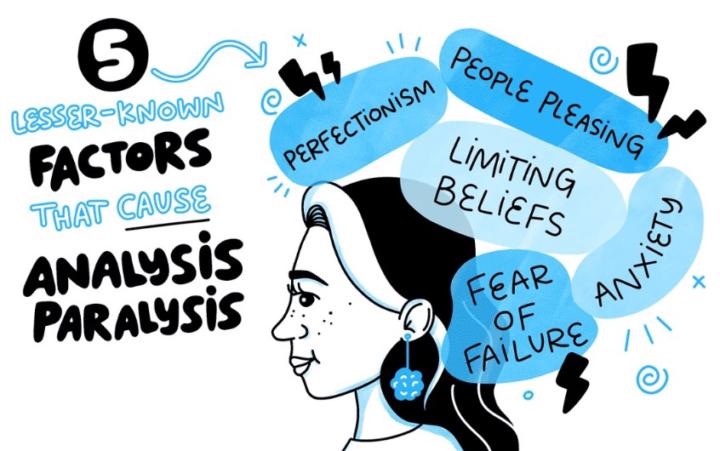
🧠 The Hidden Cost of Overthinking AI Instead of Using It
One of the most overlooked barriers to AI adoption is not fear, skepticism, or lack of access. It is overthinking. The habit of analyzing, preparing, and evaluating AI endlessly, while rarely engaging with it in practice. It feels responsible, even intelligent, but over time it quietly stalls learning and erodes confidence. ------------- Context: When Preparation Replaces Progress ------------- In many teams and organizations, AI is talked about constantly. Articles are shared, tools are compared, use cases are debated, and risks are examined from every angle. On the surface, this looks like thoughtful adoption. Underneath, it often masks a deeper hesitation to begin. Overthinking AI is socially acceptable. It sounds prudent to say we are still researching, still learning, still waiting for clarity. There is safety in staying theoretical. As long as AI remains an idea rather than a practice, we are not exposed to mistakes, limitations, or uncertainty. At an individual level, this shows up as consuming content without experimentation. Watching demos instead of trying workflows. Refining prompts in our heads instead of testing them in context. We convince ourselves we are getting ready, when in reality we are standing still. The cost of this pattern is subtle. Nothing breaks. No failure occurs. But learning never fully starts. And without practice, confidence has nowhere to grow. ------------- Insight 1: Thinking Feels Safer Than Acting ------------- Thinking gives us the illusion of control. When we analyze AI from a distance, we remain in familiar territory. We can evaluate risks, compare options, and imagine outcomes without putting ourselves on the line. Using AI, by contrast, introduces exposure. The output might be wrong. The interaction might feel awkward. We might not know how to respond. These moments challenge our sense of competence, especially in environments where expertise is valued. Overthinking becomes a way to protect identity. As long as we are still “learning about AI,” we cannot be judged on how well we use it. The problem is that this protection comes at a price. We trade short-term comfort for long-term capability.
22h •
🔁 How Micro-Adaptations Build Long-Term AI Fluency
One of the most persistent myths about AI fluency is that it requires big changes. New systems, redesigned workflows, or dramatic shifts in how we work. This belief quietly stalls progress because it makes adoption feel heavier than it needs to be. In reality, long-term fluency with AI is almost always built through small, consistent adjustments rather than sweeping transformations. ------------- Context: Why We Overestimate the Size of Change ------------- When people think about becoming “good” with AI, they often imagine a future version of themselves who works completely differently. Their days look restructured. Their tools look unfamiliar. Their thinking feels more advanced. That imagined gap can feel intimidating enough to delay action altogether. In organizations, this shows up as waiting for perfect systems. Teams postpone experimentation until tools are approved, policies are finalized, or training programs are complete. While these steps matter, they often create the impression that meaningful progress only happens after a major rollout. At an individual level, the same pattern appears. We wait for uninterrupted time, for clarity, for confidence. We assume that if we cannot change everything, it is not worth changing anything. As a result, adoption stalls before it begins. Micro-adaptations challenge this assumption. They suggest that fluency does not come from overhaul. It comes from accumulation. ------------- Insight 1: Fluency Is Built Through Repetition, Not Intensity ------------- Fluency with AI looks impressive from the outside, but its foundations are remarkably ordinary. It is built through repeated exposure to similar tasks, similar decisions, and similar patterns of interaction. Small, repeated uses allow us to notice how AI responds to our inputs over time. We begin to see what stays consistent and what varies. This pattern recognition is what turns novelty into intuition. Intense bursts of experimentation can feel productive, but they often fade quickly. Without repetition, learning remains shallow. Micro-adaptations, by contrast, embed learning into everyday work where it has a chance to stick.
1-30 of 10,873

skool.com/the-ai-advantage
Founded by Tony Robbins, Dean Graziosi & Igor Pogany - AI Advantage is your go-to hub to simplify AI and confidently unlock real & repeatable results
Leaderboard (30-day)
1

+373
2

+358
3

+329
4

+206
5

+189
Powered by