
Write something
Pinned

39m •
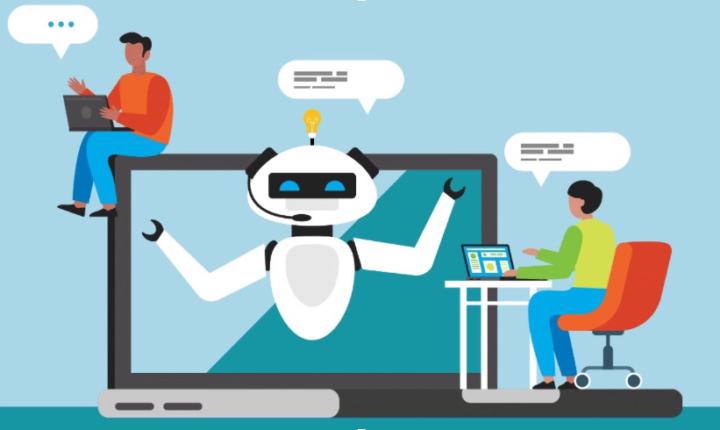
🔁 How Micro-Adaptations Build Long-Term AI Fluency
One of the most persistent myths about AI fluency is that it requires big changes. New systems, redesigned workflows, or dramatic shifts in how we work. This belief quietly stalls progress because it makes adoption feel heavier than it needs to be. In reality, long-term fluency with AI is almost always built through small, consistent adjustments rather than sweeping transformations. ------------- Context: Why We Overestimate the Size of Change ------------- When people think about becoming “good” with AI, they often imagine a future version of themselves who works completely differently. Their days look restructured. Their tools look unfamiliar. Their thinking feels more advanced. That imagined gap can feel intimidating enough to delay action altogether. In organizations, this shows up as waiting for perfect systems. Teams postpone experimentation until tools are approved, policies are finalized, or training programs are complete. While these steps matter, they often create the impression that meaningful progress only happens after a major rollout. At an individual level, the same pattern appears. We wait for uninterrupted time, for clarity, for confidence. We assume that if we cannot change everything, it is not worth changing anything. As a result, adoption stalls before it begins. Micro-adaptations challenge this assumption. They suggest that fluency does not come from overhaul. It comes from accumulation. ------------- Insight 1: Fluency Is Built Through Repetition, Not Intensity ------------- Fluency with AI looks impressive from the outside, but its foundations are remarkably ordinary. It is built through repeated exposure to similar tasks, similar decisions, and similar patterns of interaction. Small, repeated uses allow us to notice how AI responds to our inputs over time. We begin to see what stays consistent and what varies. This pattern recognition is what turns novelty into intuition. Intense bursts of experimentation can feel productive, but they often fade quickly. Without repetition, learning remains shallow. Micro-adaptations, by contrast, embed learning into everyday work where it has a chance to stick.
2
0
Pinned

3d •
Why So Many People Feel Stuck Right Now (And How to Fix It)
Why so many people feel stuck right now isn’t because they’re lazy, weak, or broken. It’s because they’ve lost a compelling future. When you take away someone’s belief that tomorrow can be better, that their effort leads somewhere meaningful, you don’t just kill motivation. You kill hope. Napoleon Hill called this drifting. Living without a quest. No clear direction. No emotional pull. No reason to endure the hard days. Humans are wired to move toward something. A future worth sacrificing for. A vision that pulls you forward when life gets heavy. Without that, everything feels harder than it needs to be. Work feels pointless. Discomfort feels unbearable. Life starts to feel like something you’re just trying to survive. So here’s how you create a compelling future in a real, practical way. First, stop being vague. “More money” or “less stress” won’t pull you forward. Get specific. How do you wake up when life is working? Who are you with? What problems are gone? If you can’t feel it, it won’t move you. Second, decide who you need to become to live that future. More disciplined. More decisive. More honest. Less available to distractions. A compelling future isn’t just a destination. It’s an identity you’re growing into. Third, give yourself a 90-day quest. Drifting happens when time feels endless. Momentum shows up when time feels intentional. One focus. One target. One thing that proves you’re moving again. And finally, protect your optimism. This matters more than people think. If you live in cynicism, doom, and constant negativity, your future shrinks. Optimism isn’t naive. It’s a strategy. A compelling future doesn’t magically appear. You choose it. You design it. And you defend it. Question for you: what’s one thing about your future you’re choosing to be optimistic about again?

1m •
So excited
Hi everyone 🤍 I’m super excited to share that I am walking my soul path as a Light Language Activator and Spiritual Business Mentor. I support women in remembering who they truly are, activating their innate gifts, and creating businesses and lives that are deeply aligned, expansive, and true. I’ve recently opened a Light Language channel and am feeling deeply guided to share these transmissions and connect with those who feel called. If this resonates with you, I would love your support in growing my channel and expanding this work into the world ✨ If you feel a pull, you’re so welcome to connect, follow, share, or simply reach out. https://www.instagram.com/maria.lightcodes?igsh=MWJjOWUxejZ0MG91Zg== Thank you for being here and for honoring the journey 🤍
0
0

1h •
The Skills to Learn in 2026
Here’s the full list and how community, connection & serving others does every single one!! ☑ AI and big data You don’t just hear about AI. You use it. While most professionals are still “planning to learn ChatGPT,” you’re on your 500th conversation. Daily reps with tools others are still exploring. That gap compounds fast. ☑ Analytical thinking What worked? What didn’t? Why? When you build in public, you get immediate feedback loops. You stop guessing and start measuring. Over time, you develop an instinct for what resonates - backed by data, not hope. ☑ Leadership and social influence You don’t wait for a title to lead. You earn trust by sharing what you know, helping others solve problems, and showing up consistently. Influence isn’t given. It’s built - one post, one insight, one conversation at a time.

🔥
33m •
📰 AI News: OpenAI Backs Merge Labs To Bring Brain And AI Closer Together
📝 TL;DR OpenAI has led a roughly quarter billion dollar seed round into Merge Labs, a brain computer interface startup co founded by Sam Altman in a personal capacity. The long term vision is wild, safe high bandwidth links between your brain and AI that could eventually feel more like thinking than typing. 🧠 Overview Merge Labs is a new research lab focused on bridging biological and artificial intelligence to maximize human ability, agency, and experience. Instead of surgical implants, it is exploring non invasive or minimally invasive ways to read and influence brain activity using advanced devices, biology, and AI. OpenAI is not just wiring money, it plans to collaborate on scientific foundation models that can interpret noisy neural signals and turn them into intent that AI agents can understand. 📜 The Announcement In mid January, OpenAI announced that it is participating in Merge Labs’ large seed round, reported at around 250 million dollars and one of the biggest early stage financings in neurotech to date. Merge Labs emerged from a nonprofit research effort and is positioning itself as a long term research lab that will take decades, not product quarters, to fully play out. The founding team blends leading BCI researchers with entrepreneurs including Sam Altman in a personal role. OpenAI says its interest is simple, progress in interfaces has always unlocked new leaps in computing, from command lines to touch screens, and brain computer interfaces could be the next major step. ⚙️ How It Works • Research lab, not a quick app - Merge Labs describes itself as a long horizon research lab that will explore new ways to connect brains and computers, rather than rushing a gadget to market next year. • Non invasive, high bandwidth focus - Instead of drilling electrodes into the brain, the team is working on approaches like focused ultrasound and molecular tools that can reach deep brain structures without open surgery, while still moving a lot of information.
1
0
1-30 of 10,860

skool.com/the-ai-advantage
Founded by Tony Robbins, Dean Graziosi & Igor Pogany - AI Advantage is your go-to hub to simplify AI and confidently unlock real & repeatable results
Leaderboard (30-day)
1

+389
2

+370
3

+333
4

+212
5

+191
Powered by