
Write something
Pinned

3d •
This Is What Commitment Actually Looks Like
I just want to take a moment to say this... I’m genuinely proud of you. Not because this is easy. Not because you have it all figured out. But because you’re leaning into the work anyway. Adapting is uncomfortable. Learning new tools stretches you. Changing how you think, move, and operate takes effort. And most people avoid that. Most people wait until it feels simple. Until it feels familiar. Until someone else proves it first. You didn’t. You are committed to the tools. You are staying in the room. You choose to get better instead of staying comfortable. That tells me everything I need to know. When things change and you don’t opt out… When you feel resistance and lean in anyway… That’s what separates the few from the many. This is how real growth happens. Not overnight. Not perfectly. But consistently. Keep going. You’re exactly where you should be.

54m •
Practical AI adoption: what actually works in real systems
A lot of AI “adoption” discussions stay at the mindset level. Useful, but I’ve found progress usually comes from much more boring mechanics. What’s worked best for me so far: 1. Pick a task with a small blast radius.Summarisation, classification, first-draft support. If it fails, it’s annoying — not dangerous. 2. Define “good enough” upfront.Not “be smart”, but constraints like: cite the source, ask clarifying questions when unsure, and never take actions without human confirmation. 3. Design for being wrong.Assume the model will misunderstand. Make uncertainty visible, log failures, and do a quick weekly “what broke?” review. 4. Only then scale.If one narrow use case isn’t reliable and repeatable, adding more prompts/agents just multiplies confusion. Confidence with AI has come less from mindset shifts and more from seeing the same small workflow work 10 times in a row without surprises. Curious what others here consider a “safe first win” use case — especially ones that still hold up after the novelty wears off.

Nov 18 •
I just found an amazing use for ChatGPT that I had never thought of and I am really excited to tell you about it
Hello everyone and happy Tuesday. I have been away from this community a few days catching up while working through everything we learned during the AI Advantage Summit, especially the insights from Sabrina and the other speakers. Today I had a truly transformative moment using ChatGPT, and I wanted to share it, because it’s probably going to save me at least 40 hours of work! I have a long standing personal interest in understanding how women around the world experience emerging technologies like AI, blockchain, quantum, and digital infrastructure. While sketching out some ideas for my own learning, I ran into a big problem. I needed to compare global religious and cultural calendars worldwide so I did not overlook important observances in different regions and countries. In the past this would have taken me at least a week of research by manually going through the different religious and cultural calendars. Instead I asked ChatGPT to scan major world religious calendars and cultural observances in every country around the world, to locate dates with the least overlap. Watching it process that global information in real time felt incredible. It just saved me DAYS of work. The summit encouraged all of us to experiment, think bigger, and try new tools, so I wanted to pass this moment along!! Did you have a similar moment since last weekend to discover a powerful or time saving use of AI? I hope you’re all doing well and especially for the people participating in the boot camp. I hope you’re learning lots of amazing things!

13h •
🚨 Photoshop Is Now Inside ChatGPT
This one is big. Adobe has officially integrated Photoshop, Adobe Express, and Acrobat directly into ChatGPT. That means you can now edit images, refine visuals, and design graphics using pro Adobe tools without leaving chat. No app-hopping. No exporting. No switching contexts. You describe the edit → it happens. 🔧 What this unlocks for AI visual creators: • Edit AI-generated images with real Photoshop tools via natural language • Clean up lighting, background, composition, and details instantly • Move from idea → generation → professional polish in one flow • Use Adobe Express for fast social and brand graphics • Handle visual + document workflows in a single interface This isn’t just “AI art” anymore — it’s AI + industry-standard post-production merged into one workflow. For anyone doing: • AI portraits • Fashion or product visuals • Brand campaigns • Ads and social content • Image editing for clients This massively shortens the gap between raw AI output and commercial-ready visuals. The direction is clear: AI will generate. Photoshop will refine. ChatGPT will orchestrate the whole process. We’re entering a phase where creative direction matters more than tools — because the tools are now embedded into the conversation. We’ll be breaking down practical workflows, limitations, and where this fits alongside Nano Banana, Seedream, and other pro tools inside AI Visual Lab. What’s the first thing you’d use Photoshop-inside-ChatGPT for — cleanup, compositing, or full creative edits?


6d •
Help, please
I am using ChatGPT (paid version) to help me with some of my designs for something, but it's not quite getting it right after hours of back and forth and explicit instructions. I am hoping that somebody here can help direct me to some AI that will help me with my visual mockups. I don't know where to go.
1-30 of 10,183
skool.com/the-ai-advantage
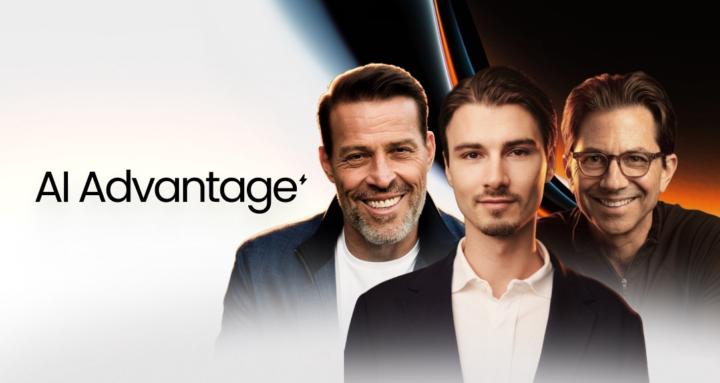
Founded by Tony Robbins & Dean Graziosi - AI Advantage is your go-to hub to simplify AI, gain "AI Confidence" and unlock real & repeatable results.
Leaderboard (30-day)
1

🔥
+1313
2
+903
3

+781
4
+723
5

+319
Powered by