
Write something
Pinned

1d •
I once heard a line that stuck with me:
You’re only as happy as your unhappiest child. If you’re a parent, you instantly get it. What surprised me is how often this shows up in business and life too. You can have 90% of things going right…and your mind still locks onto the one thing that feels off. The conversation you’re avoiding. The decision you keep delaying. The loose end you keep telling yourself you’ll deal with “later.” And the tricky part is this…That unresolved piece doesn’t stay contained. It fractures your focus. Clouds your judgment. Quietly drains energy from what is working. Sometimes it even follows you home. Here’s the shift that actually changes things: Find the constraint. Face it. Fix it. Because when your mind isn’t busy avoiding something, it finally has the bandwidth to amplify what’s already going right. So I’m curious…What’s the one thing you’ve been tolerating that’s quietly taxing everything else? Drop it below if you’re open to sharing.

6m •
⚙️ Simplifying AI: Turning Complexity into Confidence
When people first encounter AI, the reaction often alternates between fascination and frustration. We hear about revolutionary capabilities and limitless potential, but when we sit down to apply it, the gap between promise and practicality feels wide. The result is a quiet kind of fatigue, not from failure, but from complexity. The truth is, AI adoption does not fail because people lack intelligence or curiosity. It fails because the path to usefulness feels unclear. We try to do too much too soon. We chase transformation instead of traction. Real progress with AI begins not with ambition, but with simplicity, the kind of simplicity that makes tools feel natural, not intimidating. ---- The Real Barrier Isn’t Technology ---- Most professionals are not resisting AI. They are resisting confusion. When a tool’s purpose is unclear or when the outcomes are unpredictable, it triggers hesitation. People do not want another system to manage. They want support that fits smoothly into the flow of their existing work. The first wave of AI enthusiasm often focused on massive potential. Leaders promised efficiency gains, teams imagined new levels of creativity, and entire industries rebranded themselves around intelligence. But very few started with the real question: What do we actually need this to do today? Simplification begins with specificity. It means moving from the abstract to the applied, from buzzwords to workflows. The question is not, “How can AI transform our business?” but “What part of my work consistently slows me down?” This change in framing turns complexity into opportunity. Imagine a consultant who spends hours synthesizing research for a client proposal. When they use AI to generate structured outlines from raw notes, they do not just save time. They regain clarity. That clarity is the first step toward confidence. ---- Usefulness Builds Trust ---- Adoption depends less on sophistication and more on reliability. The first positive experience with AI should be so simple that it feels obvious in retrospect. When someone uses AI to summarize meeting notes or draft a first version of an email, they experience immediate relief. That relief creates trust, and trust creates momentum.
1
0




11m •
Drop your Daily workflow, I will suggest a simple AI install plan
If you want a specific recommendation, comment with 1. Your business type 2. Where leads come from 3. The workflow you want to improve, one sentence I will reply with • The best first AI use case • What to automate versus what to keep human • The metric to track so you know it is working

2d •
🚨 Photoshop Is Now Inside ChatGPT
This one is big. Adobe has officially integrated Photoshop, Adobe Express, and Acrobat directly into ChatGPT. That means you can now edit images, refine visuals, and design graphics using pro Adobe tools without leaving chat. No app-hopping. No exporting. No switching contexts. You describe the edit → it happens. 🔧 What this unlocks for AI visual creators: • Edit AI-generated images with real Photoshop tools via natural language • Clean up lighting, background, composition, and details instantly • Move from idea → generation → professional polish in one flow • Use Adobe Express for fast social and brand graphics • Handle visual + document workflows in a single interface This isn’t just “AI art” anymore — it’s AI + industry-standard post-production merged into one workflow. For anyone doing: • AI portraits • Fashion or product visuals • Brand campaigns • Ads and social content • Image editing for clients This massively shortens the gap between raw AI output and commercial-ready visuals. The direction is clear: AI will generate. Photoshop will refine. ChatGPT will orchestrate the whole process. We’re entering a phase where creative direction matters more than tools — because the tools are now embedded into the conversation. We’ll be breaking down practical workflows, limitations, and where this fits alongside Nano Banana, Seedream, and other pro tools inside AI Visual Lab. What’s the first thing you’d use Photoshop-inside-ChatGPT for — cleanup, compositing, or full creative edits?

1-30 of 10,211
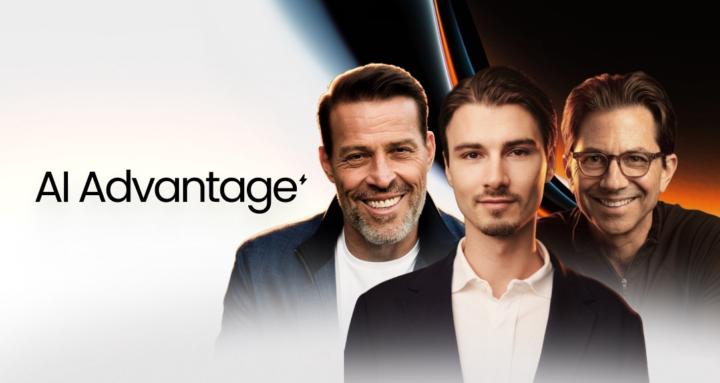
skool.com/the-ai-advantage
Founded by Tony Robbins & Dean Graziosi - AI Advantage is your go-to hub to simplify AI, gain "AI Confidence" and unlock real & repeatable results.
Leaderboard (30-day)
1

+916
2

+778
3

+667
4

+339
5

+254
Powered by