
Write something
Pinned
🔥
11d •
WELCOME - THE REAL WELCOME POST FOR HERE 🤣
You made it here because you can feel your animal long before you can explain them. That instinct is the doorway into this entire discipline. In this community, we don’t treat behavior as a mystery or a moral failing. We treat it as physiology speaking, through the gut, the immune system, the nervous system, the stress architecture, the coat, the sleep patterns, the micro‑behaviors most people overlook. If you’ve ever thought: - “Something is off, but I can’t name it.” - “My vet says everything is normal, but I know my animal.” - “Why does my pet do that?” you’re in the right place. Here, you’ll learn to decode the signals your animal has been broadcasting all along. You’ll learn why behavior changes before labs do. You’ll learn how the body tells the story long before symptoms show up. This is a community built on clarity, compassion, and physiology, not fear, shame, or guesswork. You belong here if you want to understand your animal in a way that finally makes sense. You belong here if you want to see what others miss. You belong here if you’re ready to learn the language your animal has been speaking since day one. Welcome to the future of pet medicine and understanding. Let’s begin.

Pinned
🔥
27d •
SIMCHA'S LEGACY
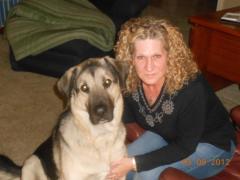
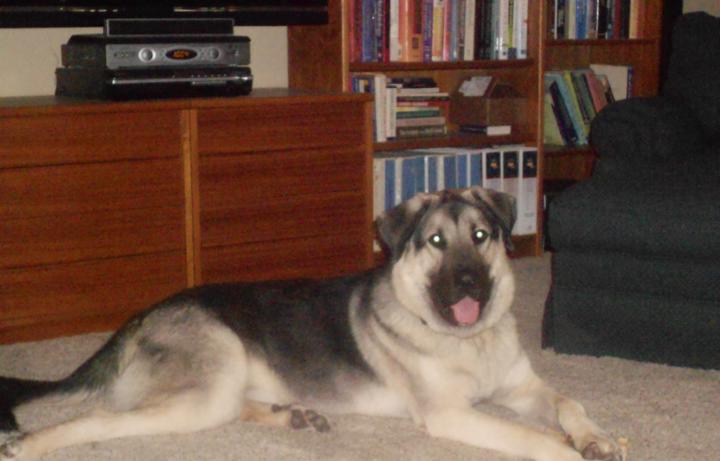
Some of you may ask why this community carries Simcha’s name. The truth is, his legacy is woven into every part of this work. Simcha was a gentle giant, 150 pounds of calm, steady presence. He was my son’s service dog, and after my son died, he became totally my dog. He moved through the world with a softness that didn’t match his size: gentle with humans, dogs, cats, and children, but fiercely protective of the two people he considered his purpose. My son and I. He taught me more about animal physiology, intuition, and the quiet language of a dog's body than any textbook ever could. But there were textbooks. Recently, I lost him to Degenerative Myelopathy, a progressive neurological disease often called “doggy ALS” because it mirrors human ALS. There is no cure, only a slow letting‑go of the body while the spirit stays bright. Simcha stayed bright and loyal until the end. This community exists because of him, because of what he showed me about connection, biology, resilience, unconditional love and loyalty, and the way animals speak long before the symptoms begin. It exists to help other pet owners read the signals before the symptoms begin. His legacy is the heartbeat of this work. This work is looking at animals through the eyes of Functional Medicine.
Pinned
🔥
6h •
FRIDAY BREAKDOWN: WHEN THE BRAIN STOPS GETTING FED
DOG ADDITION WHICH IS MUCH LIKE HUMANS Understanding Canine Cognitive Decline Through Physiology, Not Fear 1. The Real Story: Doggy Dementia Isn’t “Just Aging” When a senior dog starts pacing at night, staring at walls, forgetting routines, or getting lost in their own home, most people hear: “Old age.” But what’s actually happening is fuel failure. - The brain stops using glucose efficiently - Mitochondria slow down - Inflammation rises - Neurons lose their stability - The brain’s “map of the world” starts to glitch This isn’t random decline. It’s metabolic collapse inside a starving organ. 2. The Early Clues Everyone Misses These are the “quiet” signs that show up years before full cognitive dysfunction: - Subtle nighttime restlessness - Increased clinginess or sudden detachment - New anxiety around being alone - Slower processing of commands - Getting stuck behind furniture - Forgetting house training - Barking at nothing (actually: sensory misfires) - Sudden fear of thresholds or stairs These aren’t “quirks.” They’re neurological breadcrumbs. 3. What’s Actually Breaking Down (Physiology Edition) Fuel Supply Failure: The canine brain becomes insulin‑resistant just like the human brain. When neurons can’t access fuel, they dim. Mitochondrial Slowdown: Less ATP = less memory, less orientation, less emotional regulation. Neuroinflammation: Microglia stay switched on, pruning synapses that should stay. Oxidative Stress: Senior dogs lose antioxidant capacity, so damage accumulates faster. Neurotransmitter Drift: Serotonin, dopamine, and acetylcholine signaling weaken. This is why behavior changes long before memory collapses. 4. The Behaviors That Break People’s Hearts And what they really mean: - Night pacing = circadian rhythm collapse + brain energy crash - Accidents indoors = hippocampal disorientation - New aggression = fear‑based confusion, not “bad behavior” - Shadowing = limbic system seeking safety - Staring = sensory processing delays - Sundowning = mitochondrial fatigue + cortisol mis‑timing

🔥
2d •
Wednesday: The Spiritual Physiology of the Human–Animal Bond
This class will give you chills because it exposes the layer of your life you’ve always sensed but never dared to name, the layer where your spiritual work, your physiology, and the unseen field around you have been communicating behind your back. It’s the moment you realize your “intuition,” your “symptoms,” your “energy,” your “patterns,” and the beings around you have been part of the same conversation all along. When you see how your spiritual shifts alter your nervous system, how your nervous system alters your field, and how your field shapes the behavior of the animals and people closest to you, something ancient wakes up. It’s the shock of recognition, the kind that makes your skin prickle, when you understand that nothing in your life has been random. Every heaviness, every awakening, every emotional echo, every strange behavior in your environment has been part of a single, coherent system trying to get your attention. The chills come when you finally see the architecture of the unseen, and realize it’s been watching you the entire time. THE DEEP LAYER: The Body as a Spiritual Text, and Spirit as a Physiological Pattern 1. Physiology is the first spiritual language Before humans had words for God, purpose, or meaning, they had: - heart rate - breath - hunger - pain - pleasure - fear - safety These were the original “spiritual experiences.” Functional medicine calls them signals. Spirituality calls them messages. They are the same thing. Your mitochondria are the first prophets. Your vagus nerve is the first priest. Your immune system is the first oracle. This is not metaphor, it’s biology wearing mythic clothing. 2. Spiritual wounds show up as physiological architecture Not symptoms. Not emotions. Architecture. Meaning: - A person who believes “I must earn love” will have chronically elevated sympathetic tone. - A person who believes “I am alone” will have low oxytocin and impaired vagal signaling. - A person who believes “I am too much” will have constricted breath mechanics and dorsal vagal collapse. - A person who believes “I must be perfect” will have blood sugar instability from chronic cortisol micro-spikes.

1-30 of 51

skool.com/simcha-hub-of-pet-physiology-5304
Understand your pet through physiology. Learn the gut - immune - neuro patterns that shape behavior, mood, and resilience long before symptoms appear.
Leaderboard (30-day)
1

🔥
+67
2

+40
3

+16
4

🔥
+13
5

🔥
+4
Powered by