Activity
Mon
Wed
Fri
Sun
Aug
Sep
Oct
Nov
Dec
Jan
Feb
Mar
Apr
May
Jun
Jul
What is this?
Less
More
Owned by Dusty
A warm, judgment-free space for women ready to stop putting themselves last and start finding their way back to themselves.
Memberships
Digital Growth Community
60.7k members • Free
Canva to Cash: Elevated
48 members • $12/month
Canva to Cash: Foundations
922 members • $1/month
🎙️Skool Summit Stage🎙️
327 members • Free
Digital Products Academy
8.8k members • Free
DIGITAL PROFITS COLLECTIVE
1.9k members • Free
MADE FROM ZERO
10.3k members • Free
Boss Suite Lite
7.8k members • Free
The PLR Project
4.5k members • Free
105 contributions to Simcha Hub of Pet Physiology

🔥
1d •
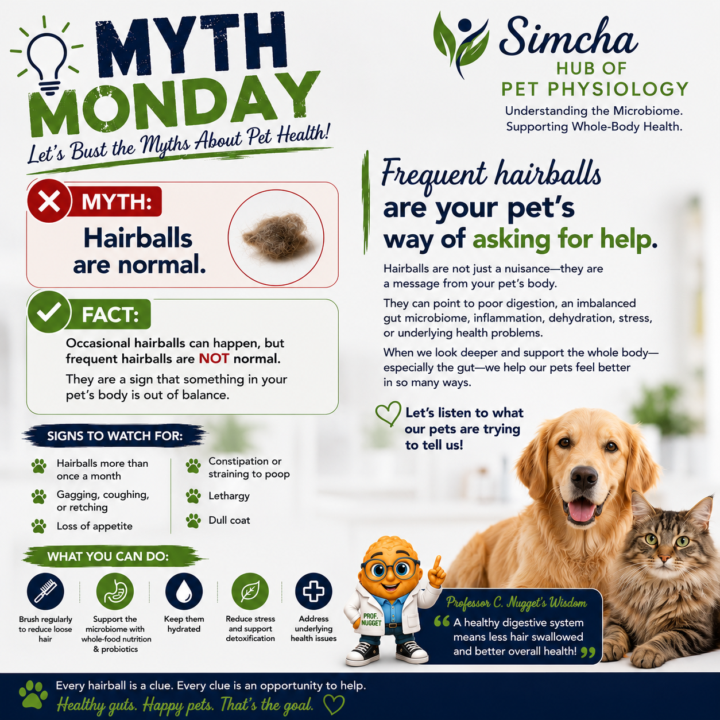
Myth Monday: Hairballs Are Normal...Or Are They?
MYTH: Hairballs are just a normal part of being a cat. FACT: While an occasional hairball can happen, frequent hairballs are not something to ignore. They may be your cat's way of telling you that something deeper is going on. Hairballs can be associated with: An imbalanced gut microbiome Poor digestion Dehydration Inflammation Nutritional deficiencies Stress or anxiety Other underlying health concerns Instead of simply treating the hairball, ask yourself: "Why is my cat swallowing so much hair, and why isn't their digestive system moving it through normally?" At Simcha Hub of Pet Physiology, we believe in looking beyond the symptom and understanding the physiology behind it. Every hairball is a clue, and clues help us better support our pets' long-term health. A healthy digestive system, healthy skin, and a balanced microbiome all work together to help reduce excessive hairballs. Professor C. Nugget's Wisdom: "Your pet's body is always communicating. Our job is to learn its language."

🔥
1 like • 21h
This is very good to know. We had 2 cats at one time and one was constantly having fur balls. They got exactly the same thing as one another but one ate us out of house and home if we let him and one ate in random spurts.
🔥
2d •
Today Is Pet Remembrance Day
Today we pause to honor the pets who forever changed our lives. They may have walked beside us for only part of our journey, but the love they gave remains with us every single day. Their wagging tails, gentle purrs, happy greetings, silly antics, and unconditional devotion become part of who we are. For those who have loved and lost a beloved companion, know that your grief is a reflection of a bond that was truly extraordinary. Love like that never disappears, it simply changes form. Today, light a candle, share a favorite photo, tell a cherished story, or simply take a quiet moment to remember the paw prints that will always remain on your heart. To every pet who has crossed the Rainbow Bridge, thank you for your loyalty, your comfort, your joy, and your unconditional love. You were never "just a pet." You were family. You were loved. You are remembered. You are missed. Remember to share them on our Memorial Page, the name and a photo of a pet you'll never forget in the comments. https://www.skool.com/simcha-hub-of-pet-physiology-5304/about

🔥
3 likes • 2d
I may not have known this day was designated to remember them but we definitely talked out all our little loves today. We were truly blessed with some amazing companions. Definitely miss my Gizmo, Noah and Spanky.

🔥
0 likes • 2d
So true
🔥
3d •
🇺🇸 250 Years of Freedom. 250 Years of Courage. 250 Years of America. 🇺🇸
Today, as our nation celebrates 250 years of independence, I find myself reflecting not only on the birth of the United States, but on the extraordinary sacrifices that made that freedom possible. I am deeply honored to be a Daughter of the American Revolution, a reminder that the courage of those who came before us is woven into my family's history. My ancestors stood among the brave men and women who believed that liberty was worth fighting for, risking everything, so future generations could live free. Their legacy reminds me that freedom is never something to take for granted. It was earned through sacrifice, perseverance, faith, and an unwavering belief that a new nation could rise from impossible odds. Today, I proudly fly the American flag in honor of every patriot who answered the call—those whose names fill our history books and those whose stories have been passed down through generations. Being an American means embracing our freedoms, loving our country, and standing against those who are evil that can cause harm to our country and those who support them. We will continue to build a nation worthy of the sacrifices made 250 years ago. To my ancestors, thank you for your courage. To those who have defended our nation throughout the generations, thank you for your service. And to America... Happy 250th Birthday. May we never forget where we came from and cherish the freedoms we enjoy today!

🔥
1 like • 3d
Amen and thank you.
🔥
5d •
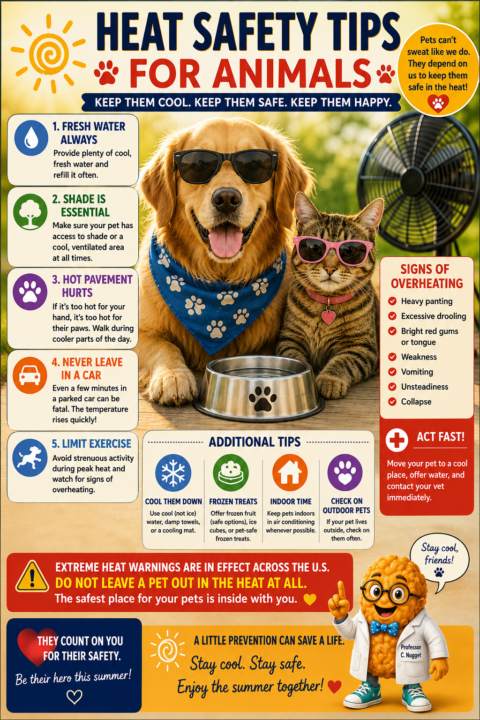
SIMCHA HUB OF PET PHYSIOLOGY DAILY NUGGET - HEAT WARNING
Extreme heat warnings are being issued across much of the United States. If you're uncomfortable outside, imagine wearing a fur coat. Please don't leave your pets outside in this dangerous heat. Even with shade and water, extreme temperatures can quickly become life-threatening. Bring your pets indoors where it's cool and only take them outside for brief potty breaks or necessary exercise during the coolest parts of the day, early morning or after sunset. Here are a few ways to protect your furry family members: - Keep fresh, cool water available at all times. - Keep pets indoors in air conditioning whenever possible. - If they must be outside briefly, make sure they have access to shade, but remember, shade alone may not be enough during extreme heat. - Test the pavement with the back of your hand. If you can't comfortably hold it there for 7 seconds, it's too hot for your pet's paws. - Walk early in the morning or later in the evening when temperatures are much lower. - Never leave a pet in a parked vehicle, even for one minute. Temperatures inside a car can become deadly in minutes, even with the windows cracked. - Offer cooling mats, fans, frozen pet-safe treats, or cool (not ice-cold) water to help regulate body temperature. Know the signs of heat stroke: - Excessive panting - Heavy drooling - Bright red gums or tongue - Weakness or lethargy - Vomiting or diarrhea - Staggering or collapse If you suspect your pet is suffering from heat stroke, move them to a cool area immediately, offer small amounts of cool water if they are alert, and seek emergency veterinary care right away. Heat stroke can become fatal very quickly. At Simcha Hub of Pet Physiology, we believe prevention saves lives. During this heat wave, the safest place for your pets is inside with you. Stay cool. Stay safe. Protect those who depend on you.
🔥
1 like • 5d
Great tips
1-10 of 105

🔥
@dusty-commons-9245
Helping women find their way back to themselves. If you’ve lost you — you’re in the right place. 💛
Active 18h ago
Joined Jun 9, 2026
Powered by