
🔥
11h • Pet Physiology 101
FRIDAY BREAKDOWN: WHEN THE BRAIN STOPS GETTING FED
DOG ADDITION WHICH IS MUCH LIKE HUMANS
Understanding Canine Cognitive Decline Through Physiology, Not Fear
1. The Real Story: Doggy Dementia Isn’t “Just Aging”
When a senior dog starts pacing at night, staring at walls, forgetting routines, or getting lost in their own home, most people hear: “Old age.”
But what’s actually happening is fuel failure.
- The brain stops using glucose efficiently
- Mitochondria slow down
- Inflammation rises
- Neurons lose their stability
- The brain’s “map of the world” starts to glitch
This isn’t random decline. It’s metabolic collapse inside a starving organ.
2. The Early Clues Everyone Misses
These are the “quiet” signs that show up years before full cognitive dysfunction:
- Subtle nighttime restlessness
- Increased clinginess or sudden detachment
- New anxiety around being alone
- Slower processing of commands
- Getting stuck behind furniture
- Forgetting house training
- Barking at nothing (actually: sensory misfires)
- Sudden fear of thresholds or stairs
These aren’t “quirks.” They’re neurological breadcrumbs.
3. What’s Actually Breaking Down (Physiology Edition)
Fuel Supply Failure:
The canine brain becomes insulin‑resistant just like the human brain. When neurons can’t access fuel, they dim.
Mitochondrial Slowdown:
Less ATP = less memory, less orientation, less emotional regulation.
Neuroinflammation:
Microglia stay switched on, pruning synapses that should stay.
Oxidative Stress:
Senior dogs lose antioxidant capacity, so damage accumulates faster.
Neurotransmitter Drift:
Serotonin, dopamine, and acetylcholine signaling weaken.
This is why behavior changes long before memory collapses.
4. The Behaviors That Break People’s Hearts
And what they really mean:
- Night pacing = circadian rhythm collapse + brain energy crash
- Accidents indoors = hippocampal disorientation
- New aggression = fear‑based confusion, not “bad behavior”
- Shadowing = limbic system seeking safety
- Staring = sensory processing delays
- Sundowning = mitochondrial fatigue + cortisol mis‑timing
When you explain this to pet parents, they finally exhale. It’s not their fault. It’s not the dog’s fault. It’s physiology.
5. What Helps (Practical, Physiology‑First Interventions)
- High‑quality fats (MCT oil, sardines, omega‑3s)
- Antioxidants (blueberries, turmeric, green‑lipped mussel)
- Brain‑safe proteins
- B vitamins + choline
- Daily sniff walks (neuroplasticity stimulation)
- Predictable routines (reduces limbic load)
- Low‑inflammation diet
- Environmental enrichment
- Gentle strength training (mitochondrial support)
And the big one: Ketone‑accessible fuel for the brain when glucose stops working.
6. The Emotional Layer: What Pet Parents Need to Hear
You’re not losing your dog. You’re learning a new version of them.
And they’re not “fading away.” Their brain is asking for help.
When you understand the physiology, you can support them with clarity instead of fear.
If you’ve ever watched your senior dog wander, pace, or look confused and thought, ‘This isn’t who they used to be,’ you’re right. And it’s not random. It’s metabolic. It’s mitochondrial. It’s fixable‑enough to matter.”
Fat, cholesterol, and protein are the three currencies an animal’s body uses to keep the brain, hormones, and survival systems online. But each species spends those currencies differently, and that’s where the physiology gets spicy.
Below is the animal‑specific, physiology‑first breakdown you can teach your community. This is the version that makes people go: “Oh, this is why kibble never made sense.”
HOW FAT, CHOLESTEROL, AND PROTEIN FIT IN FOR ANIMALS
The survival math their bodies never stop doing.
1. PROTEIN - The Non‑Negotiable Currency
Animals don’t use protein the way humans do. For them, protein is:
- Structure (muscle, organs, enzymes)
- Neurotransmitters (serotonin, dopamine, GABA)
- Detox pathways
- Immune function
- Hormone precursors
- Tissue repair
Dogs: Flexible omnivores, but still heavily protein‑dependent. They can survive on carbs, but they thrive on protein.
Cats: Obligate carnivores. Their liver is permanently locked into high‑protein metabolism. They cannot downshift. If protein drops, their body cannibalizes muscle to keep the brain alive.
Senior animals:
Protein becomes even more critical because:
- Muscle loss accelerates
- Neurotransmitter production drops
- Detox slows
- Inflammation rises
Low‑protein senior diets? Physiology malpractice.
2. FAT - The Primary Fuel for Most Animals
Fat is not a “macronutrient” for animals. It’s fuel, insulation, hormone support, and brain protection.
Fat does four major jobs:
- Energy (cleaner than carbs)
- Brain fuel (especially when glucose metabolism declines)
- Hormone production
- Anti‑inflammatory signaling
Dogs: Built to run on fat. Their ancestors ate prey with 50–60% of calories from fat.
Cats: Even more fat‑dependent. Their pancreas is not designed for starch. Fat is their safest, most stable energy source.
Senior animals: Fat becomes brain medicine when cognitive decline begins. Why? Because the aging brain becomes insulin‑resistant. Fat = ketones = alternative fuel.
This is why MCT oil, sardines, and omega‑3s help dementia dogs.
3. CHOLESTEROL - The Forgotten Brain Nutrient
This is the one nobody talks about, and the one that changes everything.
Cholesterol is required for:
- Myelin (nerve insulation)
- Synapse formation
- Memory consolidation
- Hormone production
- Vitamin D synthesis
- Cell membrane stability
Dogs & Cats: They make cholesterol internally, but they also rely on dietary sources. Low‑fat, low‑animal‑product diets = low cholesterol = low brain resilience.
Senior animals: Cholesterol becomes a repair molecule. When the brain is inflamed, damaged, or degenerating, cholesterol is sent in as:
- a patch
- a stabilizer
- a signaler
- a protector
This is why extremely low‑fat or plant‑heavy diets accelerate cognitive decline.
THE TRIAD: How They Work Together
Think of it like this:
- Protein = the building blocks
- Fat = the fuel
- Cholesterol = the wiring and insulation
If any one of these drops too low, the system compensates by stealing from another area:
- Low fat = body burns protein
- Low protein = body steals muscle
- Low cholesterol = brain loses insulation
- Low all three = cognitive decline, anxiety, behavior changes, organ stress
Animals don’t have the metabolic flexibility humans do. Their physiology is tighter, narrower, and more survival‑coded.
Why This Matters for Doggy Dementia
Cognitive decline is not random. It’s the result of:
- fuel failure (fat)
- neurotransmitter shortages (protein)
- myelin breakdown (cholesterol)
- mitochondrial slowdown
- inflammation
When the brain stops getting fed, it stops functioning.
Your Dog Doesn’t Need Carbs, Your Vet Does.
The post that breaks the internet and fixes the physiology.
Most people think dogs need carbs because someone in a lab coat told them so.
But here’s the part no one says out loud:
Your dog doesn’t need carbs. Your vet does.
Not because vets are bad. Not because they’re hiding something. But because the entire pet‑food industry is built on one biological loophole:
Dogs can survive on carbs. They just can’t thrive on them.
And “survive” is a very profitable business model.
MYTH #1: “Dogs need balanced carbs for energy.”
Reality: Dogs evolved to run on fat and protein. Carbs are the backup generator, not the main power grid.
Fat = clean fuel. Protein = structure + neurotransmitters. Carbs = cheap filler that keeps kibble from crumbling.
If wolves needed sweet potatoes and pumpkin to survive, they’d be extinct.
MYTH #2: “Carbs are necessary for brain health.”
Reality: The senior dog brain becomes insulin‑resistant. Carbs = glucose = can’t get into neurons = brain fog = pacing = confusion.
Fat = ketones = the only fuel that bypasses the metabolic crash.
Your dog’s brain isn’t starving because of age. It’s starving because the fuel source is wrong.
MYTH #3: “Low‑fat diets are safer for senior dogs.”
Reality: Low‑fat senior diets are the fastest way to accelerate:
- cognitive decline
- muscle loss
- anxiety
- nighttime restlessness
- inflammation
- mitochondrial fatigue
Fat is not the enemy. Fat is the species‑appropriate fuel.
MYTH #4: “Dogs need carbs for fiber.”
Reality: Fiber comes from:
- vegetables
- organs
- connective tissue
- cartilage
- fur (yes, fur)
Not Cheerios in disguise.
MYTH #5: “Kibble is balanced because it meets AAFCO standards.”
Reality: AAFCO standards are based on minimum survival requirements, not optimal physiology.
It’s the difference between:
- “You won’t die,” and
- “Your brain, hormones, joints, and mitochondria are thriving.”
One is cheap to manufacture. One is not.
Guess which one wins.
THE REAL REASON CARBS DOMINATE DOG FOOD
It’s not biology. It’s not physiology. It’s not what dogs need.
It’s what the industry needs:
- Carbs are cheap
- Carbs bind kibble
- Carbs extend shelf life
- Carbs increase profit margins
- Carbs keep manufacturing consistent
- Carbs allow “complete and balanced” claims
Your dog’s body doesn’t benefit from carbs. The supply chain does.
THE TAKEAWAY (THE LINE THAT HITS HARD)
“Your dog’s brain isn’t failing. It’s starving. And the solution isn’t more carbs, it’s the fuel their physiology actually recognizes.”
Your Dog Doesn’t Need Carbs, Your Vet Does.”
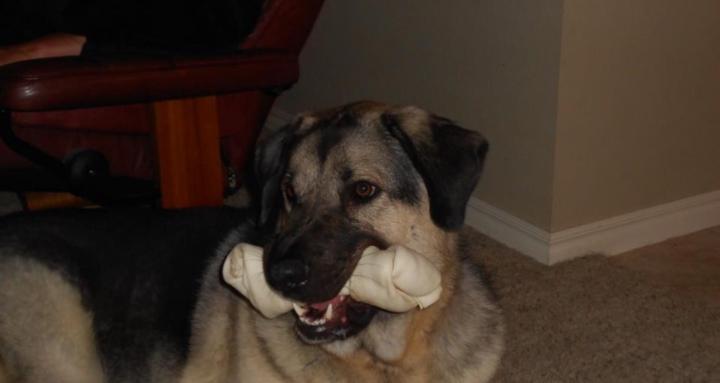
Simcha Edition: The Dog Who Proved the Physiology Before Anyone Explained It
Most people think dogs need carbs because someone in a white coat said so.
But Simcha taught you something long before the textbooks caught up:
Dogs don’t run on carbs. They run on fat, protein, and instinct.
And when those fuels drop, the body compensates quietly, until it can’t.
Simcha’s Lesson #1: Fuel Failure Shows Up as Behavior First
Before his diagnosis, before the words “degenerative myelopathy” ever entered the room, Simcha was already whispering the truth:
- the subtle hesitation
- the quiet recalculations
- the micro‑pauses
- the gentle, dignified adjustments
Not “old age.” Not “slowing down.” Not “quirks.”
Fuel failure. A brain running on the wrong currency.
Carbs didn’t help him. Fat did.
Protein did. Cholesterol did.
The things his physiology was designed to recognize.
Simcha’s Lesson #2: The Brain Doesn’t Forget, It Starves
When the senior dog brain becomes insulin‑resistant, glucose stops getting in.
Carbs = glucose = blocked Fat = ketones = access granted
Simcha wasn’t confused. He wasn’t fading. He wasn’t “losing himself.”
His neurons were asking for a fuel they could actually use.
And when I fed him the right way, he responded. Not magically. Not cured. But present, connected, still himself. That’s physiology, not sentiment.
Simcha’s Lesson #3: Fat Is Not the Enemy, It’s the Lifeline
Low‑fat senior diets would have broken him faster.
Fat kept:
- his brain lit
- his nerves insulated
- his mitochondria supported
- his personality intact
Fat wasn’t indulgent. It was medicinal.
Simcha’s Lesson #4: Cholesterol Is the Brain’s Repair Crew
Every time his gait shifted, every time his body compensated, every time his nervous system rerouted around damage, cholesterol was there:
- patching
- stabilizing
- insulating
- protecting
Not a villain. A guardian.
Simcha’s Lesson #5: Protein Is Identity
Protein kept his muscles from wasting faster than the disease demanded. Protein kept his neurotransmitters firing. Protein kept his dignity.
When protein drops, the body steals from itself. Simcha taught me that in real time.
Simcha didn’t need carbs. He needed fuel his brain could actually use. And when I fed him like a dog, not like a human, he stayed himself longer.
Your dog doesn’t need carbs. Your vet does. Your dog needs physiology. Your vet needs a product that holds its shape in a bag.
Simcha is the reason I teach this now. He’s the reason I built this. He’s the reason pet parents finally understand what their dogs have been trying to say.
FOLLOW THE MONEY: Why Your Dog’s Food Looks Nothing Like Their Physiology
The part no one wants pet parents to ask about.
Everyone thinks pet food is about “nutrition.” But when you follow the money, a different picture shows up, one that has nothing to do with canine physiology and everything to do with industry economics, supply chains, and who funds veterinary nutrition education.
Let’s walk through it.
1. The Pet Food Industry Is a $51.7 Billion Machine
In 2024 alone, U.S. dog and cat food sales hit $51.7 billion, representing 9.8 million tons of product built from more than 600 ingredients. This isn’t a nutrition system, it’s an industrial supply chain.
When an industry is this large, it doesn’t optimize for physiology. It optimizes for:
- ingredient availability
- manufacturing efficiency
- shelf stability
- margins
- regulatory simplicity
And guess what fits that model?
Carbs. Lots of them.
2. Carbs Aren’t There for Your Dog, They’re There for the Factory
Carbohydrates bind kibble, extend shelf life, and keep production cheap and consistent. They’re not there because your dog needs them, they’re there because the industry does.
The IFEEDER report shows the system relies heavily on plant‑based ingredients because they’re abundant, inexpensive, and easy to process at scale.
Your dog’s physiology didn’t ask for that. The supply chain did.
3. Who Teaches Your Vet About Nutrition?
Follow the funding.
Major pet food companies directly fund veterinary school programs, research, and student training.
Example: Purina recently donated $4.5 million to top U.S. veterinary schools to support programs in aging, mobility, and GI health.
Is that inherently bad? No.
But it does mean:
- the curriculum is influenced by industry priorities
- the research questions align with product development
- the nutritional frameworks vets learn are shaped by the companies selling the food
So when a vet says, “Dogs need carbs,” ask yourself:
Do they believe that because of physiology, or because that’s what the industry funds?
4. AAFCO Labeling Rules Lock Carbs Into the System
AAFCO regulations and state feed laws are built around crude protein, crude fat, crude fiber, and moisture, not species‑appropriate nutrition. Changing these rules is expensive, slow, and resisted by industry groups due to testing costs, packaging changes, and regulatory complexity.
Translation: Even if carbs aren’t biologically necessary, they’re structurally embedded in the regulatory framework.
Your dog didn’t choose that. The rulebook did.
5. Meanwhile...Your Dog’s Physiology Is Over Here Like:
“Hi, I’m built to run on fat, protein, and cholesterol. Why are you feeding me peas, corn, and rice?”
The disconnect isn’t accidental. It’s profitable.
Your dog doesn’t need carbs. The $51.7 billion pet food industry does.
2
1 comment
FRIDAY BREAKDOWN: WHEN THE BRAIN STOPS GETTING FED
skool.com/simcha-hub-of-pet-physiology-5304
Understand your pet through physiology. Learn the gut - immune - neuro patterns that shape behavior, mood, and resilience long before symptoms appear.
Leaderboard (30-day)
1

🔥
+67
2

+40
3

+16
4

🔥
+13
5

🔥
+4
Powered by