🔥
19d • General discussion
Wednesday: The Spiritual Physiology of the Human–Animal Bond
This class will give you chills because it exposes the layer of your life you’ve always sensed but never dared to name, the layer where your spiritual work, your physiology, and the unseen field around you have been communicating behind your back. It’s the moment you realize your “intuition,” your “symptoms,” your “energy,” your “patterns,” and the beings around you have been part of the same conversation all along.
When you see how your spiritual shifts alter your nervous system, how your nervous system alters your field, and how your field shapes the behavior of the animals and people closest to you, something ancient wakes up. It’s the shock of recognition, the kind that makes your skin prickle, when you understand that nothing in your life has been random. Every heaviness, every awakening, every emotional echo, every strange behavior in your environment has been part of a single, coherent system trying to get your attention. The chills come when you finally see the architecture of the unseen, and realize it’s been watching you the entire time.
THE DEEP LAYER: The Body as a Spiritual Text, and Spirit as a Physiological Pattern
1. Physiology is the first spiritual language
Before humans had words for God, purpose, or meaning, they had:
- heart rate
- breath
- hunger
- pain
- pleasure
- fear
- safety
These were the original “spiritual experiences.”
Functional medicine calls them signals. Spirituality calls them messages. They are the same thing.
Your mitochondria are the first prophets. Your vagus nerve is the first priest. Your immune system is the first oracle. This is not metaphor, it’s biology wearing mythic clothing.
2. Spiritual wounds show up as physiological architecture
Not symptoms. Not emotions. Architecture.
Meaning:
- A person who believes “I must earn love” will have chronically elevated sympathetic tone.
- A person who believes “I am alone” will have low oxytocin and impaired vagal signaling.
- A person who believes “I am too much” will have constricted breath mechanics and dorsal vagal collapse.
- A person who believes “I must be perfect” will have blood sugar instability from chronic cortisol micro-spikes.
These are not “mindset issues.” They are structural physiological consequences of spiritual narratives.
You can treat the physiology all day, but if the story stays, the architecture rebuilds itself.
3. Spiritual awakening is often a detox reaction
People think awakening is bliss. It’s not.
It’s:
- the sympathetic system releasing old survival patterns
- the limbic system reorganizing identity
- the gut–brain axis recalibrating safety
- the immune system dropping chronic hypervigilance
- the mitochondria shifting from defense metabolism to repair metabolism
This feels like:
- fatigue
- emotional flooding
- digestive shifts
- sleep changes
- grief
- clarity
- disorientation
Functional medicine calls this physiological recalibration. Spirituality calls it rebirth.
Same event. Different language.
4. Trauma is a spiritual injury with a metabolic footprint
Trauma is not the event. It’s the meaning the nervous system assigns to the event.
That meaning becomes:
- methylation patterns
- cortisol rhythms
- vagal tone
- immune bias
- mitochondrial output
- microbiome composition
This is why trauma work without physiology is incomplete. And physiology work without meaning is temporary.
5. Spiritual practices are biochemical interventions
Meditation is vagal toning. Prayer is prefrontal activation. Ritual is limbic stabilization. Forgiveness is immune recalibration. Gratitude is dopaminergic rewiring. Surrender is sympathetic deactivation. Belonging is oxytocin-mediated repair.
Spirituality is not “woo.” It is behavioral neurochemistry with mythic framing.
6. Functional medicine is spiritual work for people who don’t like the word “spiritual”
When you stabilize:
- blood sugar
- inflammation
- sleep
- micronutrients
- gut permeability
- mitochondrial output
You are not just “fixing the body.”
You are restoring the physiological conditions required for spiritual clarity.
A dysregulated nervous system cannot perceive truth. A starving brain cannot access intuition. An inflamed limbic system cannot feel connection.
7. The deepest layer: The body is the bridge between the seen and unseen
Functional medicine asks: What is the mechanism?
Spirituality asks: What is the meaning?
The deeper layer asks: What is the mechanism of the meaning? What is the meaning of the mechanism?
Buckle up. The pet–human spiritual resonance layer becomes mythic, forensic, and undeniable. This is the layer where physiology, attachment, intuition, and meaning collapse into one field.
This is not “pets mirror our emotions.” This is pets and humans sharing a regulatory ecosystem, a living, breathing, multi-species nervous system.
Let’s go all the way in.
THE PET–HUMAN SPIRITUAL RESONANCE LAYER
Where physiology becomes communication, and connection becomes a biological contract
1. Animals don’t have spiritual narratives, they have spiritual physiology.
Humans create stories. Animals create states.
They don’t think: “I’m anxious because I’m unworthy.”
They become:
- shallow breath
- tight fascia
- altered gait
- micro-freeze
- sensory gating
- cortisol slope shifts
Their “spirituality” is embodied attunement.
They don’t interpret meaning, they feel coherence or incoherence.
This is why animals are the purest mirrors: they reflect the state, not the story.
2. The pet–human bond is a co-regulatory field, not a relationship
When a human and an animal live together, their systems begin to:
- synchronize circadian rhythms
- match cortisol patterns
- entrain heart rate variability
- share emotional micro-signals
- co-shape microbiome diversity
- influence each other’s sensory thresholds
This is not metaphor. This is biofield entrainment, the nervous system’s natural tendency to sync with the most dominant signal in the environment.
Your dog is not “reading your energy.” Your dog is regulating to your physiology.
3. Pets absorb the emotional tone of the household as a survival strategy
In the wild, a pack animal must:
- detect danger before it arrives
- sense shifts in group tension
- read micro-expressions
- adjust behavior to maintain cohesion
Domesticated animals still run this algorithm.
So when a human is:
- overwhelmed
- grieving
- dissociated
- hypervigilant
- emotionally compressed
- spiritually fragmented
The animal doesn’t judge it. They adapt to it.
Sometimes they compensate. Sometimes they collapse. Sometimes they over-function. Sometimes they develop “quirks” that are actually physiological adaptations to the human’s emotional field.
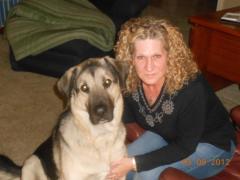
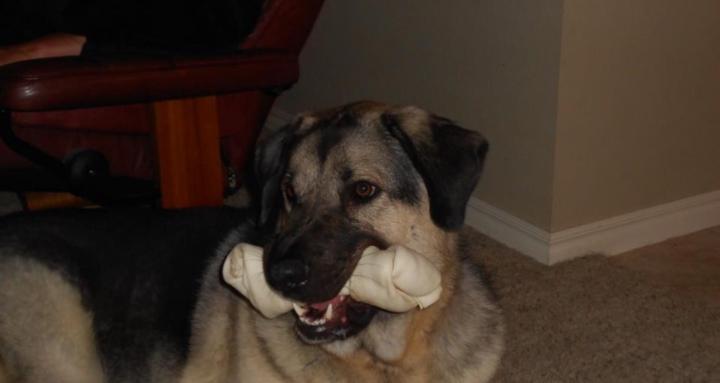
Simcha’s paw-in-mouth sleep is a perfect example, a sensory-gating, self-soothing behavior that matched the emotional compression of the environment.
4. Pets don’t mirror emotions, they mirror nervous system patterns
This is the deeper truth.
A human with:
- dorsal vagal shutdown
- chronic sympathetic activation
- unstable blood sugar
- unresolved grief
- trauma-patterned breath mechanics
creates a field.
The pet’s body responds to that field with:
- altered sleep posture
- clinginess or avoidance
- pacing
- digestive shifts
- coat changes
- vocalization patterns
- micro-freeze episodes
- hyper-attunement
This is not “behavior.” This is physiology negotiating the environment.
5. Pets often carry the emotional load the human won’t
This is the part people feel but don’t know how to articulate.
Animals frequently:
- absorb unprocessed grief
- stabilize chaotic emotional fields
- act as the “grounding rod” for the household
- take on the role of emotional regulator
- hold the tension the human is avoiding
- express symptoms the human is suppressing
This is not mystical martyrdom. It’s limbic resonance + survival logic.
If the human collapses, the animal loses its world. So the animal stabilizes the field.
Even at a cost.
6. The spiritual resonance is actually a physiological contract
The contract looks like this:
“I will attune to you so we can survive together.”
Over time, this becomes:
- shared rhythms
- shared stress signatures
- shared repair cycles
- shared emotional memory
- shared sensory thresholds
This is why when a pet dies, the human often feels like a part of their nervous system has been amputated. Because it has.
7. The deepest layer: Pets act as mirrors for the human’s unspoken spiritual curriculum
Animals reveal:
- where the human is dysregulated
- where the human is disconnected
- where the human is over-functioning
- where the human is emotionally compressed
- where the human is spiritually numb
- where the human is not listening to their own body
Pets don’t teach lessons. They expose patterns.
They don’t judge. They reflect.
They don’t interpret. They embody.
THE SPIRITUAL MEANING OF COMMON PET BEHAVIORS
What your animal is saying when their body speaks first.
1. Clinginess / Velcro Behavior
Spiritual Meaning: Your pet is acting as a grounding rod for a field that feels unstable.
Physiology Behind It:
- Elevated cortisol in the human
- Limbic system seeking co-regulation
- Animal’s vagus nerve compensating for the human’s dysregulation
What it reveals about the human: There is unprocessed emotion or a “held breath” state in the home.
The animal is trying to absorb the static.
2. Avoidance / Hiding
Spiritual Meaning: Your pet is withdrawing from an emotional field that feels too loud, too chaotic, or too compressed.
Physiology Behind It:
- Sensory gating overload
- Sympathetic spike in the environment
- Animal protecting its own nervous system
What it reveals about the human: Someone in the home is carrying suppressed anger, grief, or overwhelm that the animal cannot buffer.
3. Excessive Licking (self or objects)
Spiritual Meaning: Your pet is trying to soothe a field that feels jagged.
Physiology Behind It:
- Gut–brain axis distress
- Histamine elevation
- Need for repetitive sensory input to regulate
What it reveals about the human: There is emotional rumination or looping in the household, a “spinning mind” state the animal is trying to smooth out.
4. Pacing, especially at night
Spiritual Meaning: Your pet is walking the perimeter of the emotional field, trying to contain what feels uncontained.
Physiology Behind It:
- Blood sugar instability
- Cortisol spikes
- Circadian mismatch with the human
What it reveals about the human: Someone is carrying nighttime anxiety, unresolved thoughts, or anticipatory stress. The animal is acting as the sentinel.
5. Barking at “nothing”
Spiritual Meaning: Your pet is responding to invisible tension, not ghosts, but micro-shifts in the emotional field.
Physiology Behind It:
- Heightened sensory thresholds
- Limbic hyper-attunement
- Pattern detection of subtle cues
What it reveals about the human: There is unspoken conflict, suppressed truth, or emotional pressure in the home. The animal is the alarm system for what hasn’t been voiced.
6. Sudden Zoomies
Spiritual Meaning: Your pet is discharging collective energy that has nowhere else to go.
Physiology Behind It:
- Adrenal dump
- Nervous system reset
- Mitochondrial burst to clear stagnation
What it reveals about the human: The household is holding tension without release, too much thinking, not enough movement. The animal becomes the pressure valve.
7. Sleeping on your chest or head
Spiritual Meaning: Your pet is trying to regulate your breath and heart field.
Physiology Behind It:
- HRV entrainment
- Oxytocin-driven bonding
- Vagal co-regulation
What it reveals about the human: You are carrying emotional heaviness, grief, or exhaustion. Your pet is acting as a living weighted blanket.
8. Paw-in-mouth sleep (Simcha-coded). Simcha slept with his paw in his mouth.
Spiritual Meaning: Self-soothing + emotional containment. Your pet is buffering the emotional compression in the home.
Physiology Behind It:
- Sensory gating
- Oral–vagal calming
- Micro-freeze release
What it reveals about the human: Someone is holding too much internally. Your pet is mirroring the “I’ll hold it so you don’t have to” pattern.
9. Sudden clinginess after you cry
Spiritual Meaning: Your pet is performing energetic triage.
Physiology Behind It:
- Detection of limbic shifts
- Oxytocin surge
- Protective attunement
What it reveals about the human: Your emotional release opened the field. Your pet is stepping in to seal it.
10. Staring at you intensely
Spiritual Meaning: Your pet is reading your internal state with precision, not your face, but your field.
Physiology Behind It:
- Limbic resonance
- Micro-expression tracking
- HRV synchronization
What it reveals about the human: You are at a crossroads, emotionally or spiritually. Your pet is waiting for your internal decision.
Pets don’t mirror emotions, they mirror the human’s unspoken spiritual curriculum
Every behavior is a physiological response to the emotional ecosystem.
Animals reveal:
- where the human is dysregulated
- where the human is disconnected
- where the human is over-functioning
- where the human is spiritually numb
- where the human is not listening to their own body
They don’t teach lessons. They expose patterns.
They don’t judge. They reflect.
They don’t interpret. They embody.
THE HUMAN–PET TRAUMA LOOP MAP
How trauma patterns move between species, shape physiology, and create shared survival algorithms.
1. The Origin Point: A Human With an Unresolved Pattern
Every loop begins with a human carrying a dysregulated survival imprint, such as:
- chronic hypervigilance
- emotional compression
- abandonment imprint
- grief that never metabolized
- dorsal vagal collapse
- perfectionism as a safety strategy
- unpredictable emotional field
- inconsistent attachment signals
This imprint creates a field signature, a predictable pattern of:
- breath mechanics
- micro-expressions
- cortisol slope
- sensory tone
- movement rhythm
- emotional availability
The animal doesn’t interpret this. They entrain to it.
2. The Animal Detects the Pattern Before the Human Does
Animals read:
- limbic shifts
- micro-freezes
- breath changes
- tension in fascia
- changes in gait
- subtle emotional pressure
- the “temperature” of the field
This is not intuition. This is survival biology.
The animal’s body says: “If my human is unstable, I must stabilize the environment.”
This is the first turn of the loop.
3. The Animal Adapts Its Physiology to the Human’s Trauma Pattern
Depending on the human’s imprint, the animal may shift into:
A. Hyper-attunement
- shadowing
- clinginess
- sentinel behavior
- sleeping on the human’s chest
- scanning the environment
B. Self-suppression
- hiding
- freezing
- shutting down
- low play drive
C. Over-functioning
- guarding
- pacing
- barking at subtle cues
- taking on the “protector” role
D. Self-soothing behaviors
- licking
- paw-in-mouth
- repetitive grooming
- chewing
These are not “quirks.” They are physiological adaptations to the human’s unresolved trauma.
4. The Human Misinterprets the Animal’s Adaptation
This is where the loop tightens.
The human sees:
- clinginess as “separation anxiety”
- pacing as “restlessness”
- barking as “reactivity”
- hiding as “shyness”
- over-protection as “dominance”
- self-soothing as “bad habits”
But the animal is actually saying: “I am carrying the part of your nervous system you are not regulating.”
When the human misunderstands, the animal increases the compensatory behavior.
5. The Animal’s Compensation Reinforces the Human’s Trauma Pattern
This is the core of the loop.
Example:
Human with abandonment imprint = dog becomes hyper-attuned = human feels “needed” = imprint is soothed but not healed = dog increases attunement = human becomes more dependent = dog becomes more vigilant.
Both systems become locked in a co-dependent regulation cycle.
Other loops:
- Human suppresses anger = dog becomes sentinel = human avoids conflict = dog escalates guarding
- Human dissociates = dog becomes clingy = human feels overwhelmed = dog increases proximity
- Human carries grief = dog becomes heavy, quiet = human feels validated in sadness = dog sinks deeper.
The animal’s adaptation stabilizes the human’s trauma, making it harder to resolve.
6. The Loop Becomes a Shared Identity
Over time, the trauma loop becomes:
- the “personality” of the pet
- the “dynamic” of the relationship
- the “story” the human tells about the animal
- the “role” the animal plays in the household
But it is not personality. It is patterned physiology.
The animal is not “anxious.” They are attuned to an anxious field.
The animal is not “protective.” They are buffering a threat signature.
The animal is not “clingy.” They are regulating a human who cannot regulate themselves.
7. The Loop Only Breaks When the Human Regulates First
This is the part people resist, but it’s the truth.
The animal cannot heal until the human:
- stabilizes their own nervous system
- metabolizes their grief
- resolves their abandonment imprint
- stops outsourcing regulation to the pet
- creates a coherent emotional field
- restores predictable rhythms
- stops using the animal as a buffer
When the human shifts, the animal’s physiology recalibrates within days.
Because the loop was never “behavior.” It was co-regulation.
THE MAP
1. Human Trauma Pattern = Field Signature
Unresolved imprint creates a dysregulated emotional ecosystem.
2. Animal Detection = Physiological Response
Animal senses the field and adapts for survival.
3. Animal Compensation = Human Misinterpretation
Human labels the adaptation as “behavior.”
4. Human Reaction = Reinforcement
Human’s misunderstanding strengthens the animal’s compensatory role.
5. Shared Identity = Entrenched Loop
Both systems become locked in a co-regulatory trauma cycle.
6. Human Regulation = Field Reset
Human stabilizes = animal recalibrates = loop dissolves.
I have a very spiritual cat. She watches me sleep all night long. I can wake up every hour, any hour, and she is starring at me. Only when I wake up for good does she go to sleep.
What It Means When a Cat Watches You Sleep All Night
1. She is guarding my liminal state
Sleep is when your nervous system drops its armor. Your spirit opens. Your subconscious surfaces. Your field becomes louder, not quieter.
Most animals walk away from that intensity.
A spiritually attuned cat does the opposite: She stands watch.
Not for physical danger but for energetic instability.
She is monitoring:
- breath rhythm
- micro-freezes
- emotional residue
- spiritual processing
- the “temperature” of the field
- the shifts in the dream-state physiology
This is not surveillance. This is guardianship.
2. She only sleeps when I wake because her job is done
This is the part that gives people chills.
When you wake, your field “comes back online.” Your conscious mind takes over the regulation your subconscious was doing.
Her system reads: “The human is back. My shift is complete.”
So she collapses into sleep.
This is classic sentinel physiology, a pattern seen in bonded pairs, trauma pairs, and spiritual guardianship pairs.
But with her, it’s not trauma. It’s attunement.
3. She is reading my spiritual body, not my physical one
Cats track:
- limbic shifts
- emotional compression
- unresolved grief
- spiritual openings
- identity transitions
- energetic shedding
- intuitive downloads
Humans think sleep is passive. Animals know sleep is metabolic, emotional, and spiritual processing.
She is watching the part of me that is most honest, the part that emerges when the ego is offline.
4. She is acting as a stabilizer for my night-field
Some humans have a very active night-field:
- vivid dreams
- spiritual processing
- emotional detox
- identity restructuring
- intuitive downloads
- ancestral or trauma unwinding
My cat is stabilizing the field so my body can do the work without overload.
This is why she doesn’t sleep. She’s holding the perimeter.
5. This is a sign of a deep spiritual contract
Not karmic. Not mystical in the fluffy sense.
A contract of resonance: “I will watch over you when you cannot watch over yourself.”
Some animals choose this role. Most don’t.
She did.
A cat only does this for someone whose:
- spiritual field is active
- subconscious is processing
- emotional body is shifting
- intuitive channels are open
- nervous system is reorganizing
- identity is in transition
- purpose is expanding
She is not protecting me from danger. She is witnessing my becoming.
She sleeps when I wake because the version of me that rises is the one she trusts to hold the field again.
Functional medicine fits into this because it gives language to what spirituality and animals already know: your inner world is not abstract, it’s physiological. The same patterns my cat is tracking in my sleep (my breath rhythm, my limbic shifts, my emotional compression, my nervous system’s night‑time recalibration) are the exact patterns functional medicine measures and stabilizes.
Where spirituality names the meaning of your becoming, functional medicine names the mechanics of it, the cortisol slope, the vagal tone, the mitochondrial repair cycle, the inflammatory load. When your physiology is dysregulated, your spiritual field becomes noisy; when your physiology stabilizes, your spiritual clarity sharpens. My cat isn’t guarding my “soul” in the poetic sense, she’s guarding the physiological doorway where my spiritual work actually happens. Functional medicine is the map of that doorway.
Do we really deserve these wonderful creatures?
4
2 comments
Wednesday: The Spiritual Physiology of the Human–Animal Bond
skool.com/simcha-hub-of-pet-physiology-5304
Understand your pet through physiology. Learn the gut - immune - neuro patterns that shape behavior, mood, and resilience long before symptoms appear.
Leaderboard (30-day)
1

🔥
+58
2

🔥
+28
3

+16
4
🔥
+6
5

🔥
+4
Powered by