
Pinned

Jan 18 •
🗽 START HERE: How to join our Group Calls!
We built this community for people who want to connect, debate, and strategize, not just scroll. The real action happens in our group calls, where we argue ideas in good faith and tackle the week's biggest global events. Here is how you can participate: 🔥 1. Open Calls These are our public town halls. Open to everyone. Whether you want to take the stage to challenge a point or just listen in, this is the "public square." 💎2. Premium Calls For members who want to go deeper. These calls are exclusive to our supporters and offer a space for more focused discussion and priority access. 👑 3. VIP Calls Reserved for our top-tier members. These are intimate, mastermind-style sessions where you get direct Q&A access with special guests and deep dives into high-level strategy. - 📅 Check the Schedule & Join Here: https://www.skool.com/libertypolitics/calendar - 💎👑 Become a Premium or VIP Member: https://www.skool.com/libertypolitics/plans Heads up: We believe these conversations are worth sharing! Our group calls are recorded and may be posted to our social media channels. By joining the stage, you’re helping us bring these important discussions to a larger audience. By participating in group calls and voice discussions, you consent to being recorded. You can read our community rules here: https://www.skool.com/libertypolitics/-/rules Moderation decisions and bans by mods are made with Armin's approval. 👋 New to the group? Say hello! We want to get to know you. Drop a comment below to introduce yourself. Tell us where you're from and what you like to do for fun (outside arguing politics!). Welcome to the community!
Pinned

Jun 16 •
Feed Traffic
We have received comments that the feed feels heavily congested, difficult to get through as well as intimidating due to such high volume of posts. We’d ask that individual members limit their daily posts to 2 or 3, so that we don’t monopolize on the space and keep it inviting for new contributors, as well as make it easier to catch up on the feed for those who log in. Thank you for your attention to this matter. -Mods

1m •
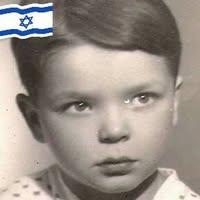
Between the Historical Muhammad and the Muhammad of Tradition
Truth, Memory and the Making of the Islamic Story The central question in understanding the origins of Islam is not simply who Muhammad was, but what we can actually know about him—and how the image of Muhammad preserved by Islamic tradition was created. Much of the detailed narrative about Muhammad and the early Muslim community was written down generations after the events it describes. This does not automatically make those sources false, but it means they must be read as historical traditions rather than as contemporary eyewitness accounts. The Muhammad who emerges from them may therefore tell us not only about the seventh-century Arabian prophet, but also about the Muslim society that transmitted, interpreted and eventually idealized his image. This distinction is fundamental. A historical figure can gradually become a model: the perfect prophet, political leader, warrior and religious authority. Once that model becomes authoritative, later legal and political ideas can be attributed to him, giving them an authority far greater than that of an ordinary human opinion. The Jews Who Disappear from the Record This problem becomes especially striking when examining the traditional accounts of Muhammad's conflicts with Jewish tribes in Arabia—Banu Qaynuqa, Banu Nadir and Banu Qurayza. The traditional narrative describes expulsions, killings, enslavement and flight. Yet independent Jewish documentation of these dramatic events is remarkably scarce. The absence of such evidence does not prove that the events never occurred, but it raises an important historical question: how much of the narrative reflects seventh-century events, and how much reflects the concerns of later generations? Another unresolved question is the identity of these communities. Were they rabbinic Jews? Arab tribes that had adopted Judaism? Communities connected to the Jewish centers of Babylonia or Yemen? These questions matter because the traditional labels may not tell us precisely what these communities actually were.
0
0


3h •
THAT SCARES THE HELL OUT OF ME
'THAT SCARES THE HELL OUT OF ME': A retired Air Force officer who carried the nuclear "football" for President Bill Clinton says President Donald Trump's Air Force One decoy operation in Ankara was "brilliant" — but warns that whoever leaked the details of how it was done was "highly placed" and should be prosecuted to the fullest. Lt. Col. Robert "Buzz" Patterson told Fox News Digital that presidential decoys and aircraft swaps are routine tools used to protect commanders in chief — and that he personally participated in a nearly identical operation with Clinton that was never publicly reported. The difference now: someone on the inside exposed the playbook. "There's only a few people who actually know exactly what's going down, and that's by design," Patterson said. "So if somebody leaked it, it was somebody involved in the process." https://x.com/foxnewspolitics/status/2087912937499553937?s=46&t=gT6uLhaVod8uwzT4p6povA

17h •
Who was behind Ceuta? Will we ever know?
I just asked this question in the current Open Politics Discussion and I'd like to continue the discussion here. Israel has been blamed, USA, Algeria, Moroccan government, etc. I believe it is important to know who is behind this and not just move on to the next thing, because events like these are used for propaganda and it's good to be able to not fall into that those traps like "blame the jews", but illegal immigration is a big problem in Europe and it's good to build a (collective) understanding based on reality, not ideology. Curious what you have to say! Please share sources so we can verify and really build an understanding together.
1-30 of 6,018
skool.com/libertypolitics
Talk politics with others who care, in live calls and community posts. Share your views, ask questions, or just listen in.
Leaderboard (30-day)
1

🔥
+997
2

+718
3
🔥
+604
4

+574
5
+562
Powered by