
Write something

May 24 •
Systema and the System of Strategies
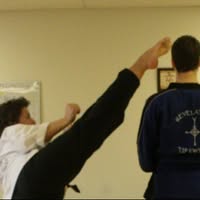
I’ve had some time on my hands (perhaps the main benefit of rain) and began to look at the influences on James Williams Kaicho in his creation of Nami Ryu. I noted that Williams studied and was certified in Systema. There is a “world” headquarters in Toronto (surprised me a bit to find this in Canada) for one branch of Systema, and I watched some video’s of their Sensei and then found another practitioner (Val) who did a seminar in Florida where he focused on the concept of the “ballistic punch” which is central to Systema methods. In Florida, Val, taught this to some fighters (one MMA fighter who is an absolute tank- probably weighing in at 250 and who had a 7 and 0 record with 6 by knockout; another guy who was a former College linebacker weighing in at 275, and then the owner of the gym which trained MMA fighters). All of these trained MMA fighters were heavy hitters but the Systema method brought about 30-50% more power and devastating impacts. This method is clearly part of Nami Ryu as integrated by Williams Kaicho as it uses both centrifugal and spiral motion to generate huge impact from even short punches. These Systema masters do not explain the method to any degree but if you look at their hip motion it appears to involve significant releases and allowing the fist to follow a rotational rather than linear force path. I believe this method of striking open-handed and with weapons is seen clearly in videos by Williams Kaicho and George Sensei as they almost casually tap people who then crumple. This Val (above) hit the MMA tank and folded him like a card table, and then the linebacker (foolishly or bravely) volunteered to be the demonstration dummy for a series of taps in sensitive areas. He barely hit him but the result was painful even to watch, and he likely needed a few days to recover while his spleen and liver made their way back to their functional positions and the crushed areas of his diaphragm started to unfold. For James Williams Kaicho to incorporate these Systema methods in his System of Strategies and integrate them into Samurai Training is remarkable and I am very pleased to have access to this training. Deep Gasho to Sensei George and to James Williams Kaicho!
May 11 •
Self defense section
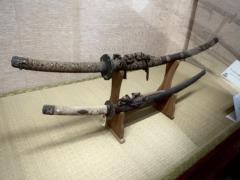
Hi Sensei. In regards to tools for self defense I think it would be helpful for us for you to go into a little more detail on non lethal items such as flashlights, tactical pens, pepper spray. Are there brands you recommend? What are strengths and weaknesses of each? What is most effective use of these tools? Thanks!
Apr 23 •
Breaking down movement.
S1. Initially, train movement in a vacuum; “Move like this in order to do this.” S2. Then, add pressure. I.e. The weight and feel of a sharp blade (spear/katana/wakazashi/tanto etc) “This can go wrong for me if done incorrectly. I must pay attention to myself.” S3. Then add context. You must visualize your opponent. “What is the attack and does my movement reflect the katas intention?” “Have I practiced the kata from both sides to know what to expect?” How I like to chunk things down. We often get stuck on Step 1 and seldom spend significant time in Step 2. Then, we typically don’t get to Step 3 (or 2) until we enter the dojo and by then the chain is broken and we’re spending time being coached on best practices for Step 1. I was working on kata the other day and the thought about pressure was in the forefront of my mind. Without increased pressure (not to be confused with speed) the onus to learn is absent and what we end up doing borders on esoteric practice (in any practice). Something to consider. Thoughts and critique are welcome as always!
Apr 8 •
Weapons handling vs performance in kenjutsu
Recently I’ve been rethinking how I approach weapons training in kenjutsu and Nami Ryu. For a good while, I thought of practice mainly as what happens in the dojo: techniques, kata, corrections, and trying to keep up with class material. I understand not every practitioner has military experience, but bear with me—this analogy comes from my time in the Marines. Strategy is a core tenet of war and, as Williams Sensei teaches, part of the craft of the warrior. It seems natural that the same principles I learned there could apply here in the dojo. Not all of my time with a rifle was spent on the range practicing marksmanship. Virtually all of my familiarity came from everything outside of shooting: carrying rifles and pistols, moving with them, maintaining them, inspecting, disassembly, reassembly and simply handling them constantly. That constant and consistent daily contact removed a lot of the awkwardness that comes from marksmanship. By the time I needed to shoot all that I needed to concern myself with was shooting itself. I realized that weapons training in the dojo can run into the same awkwardness if our only meaningful contact with the sword/spear happens during class. Much the same as if one were to only handle the firearm the day they arrive at the range. Then we’re trying to learn familiarity, handling, awareness, and technique all at once. Williams Sensei has taught that timing, distance, relationship, and energy are crucial to martial application. When I train, I typically ask myself how these principles apply to simple movements: walking with the weapon, transitioning from kamae, bowing in, carrying it, and handling it confidently. Once I’ve developed that baseline, kata and cutting practice feel more natural and easier to correct over time. Before a weapon can be a weapon it must first feel familiar in the hands, at least, that’s been my experience. I’d love to hear everyone else’s thoughts and experiences as well!
Mar 22 •
Leaning
Hi Sensei. I noticed with partner drills, particularly when trying to slowly displace someone with a cut they feel me lean. It is subtle and honestly I don't notice it doing solo work. Any suggestions on solo practice that will help me recognize that or is it strictly partner training to resolve. I am happy to hear from anyone who has same issue and found way to resolve it. Thanks.
1-9 of 9
skool.com/learn-kenjutsu-online
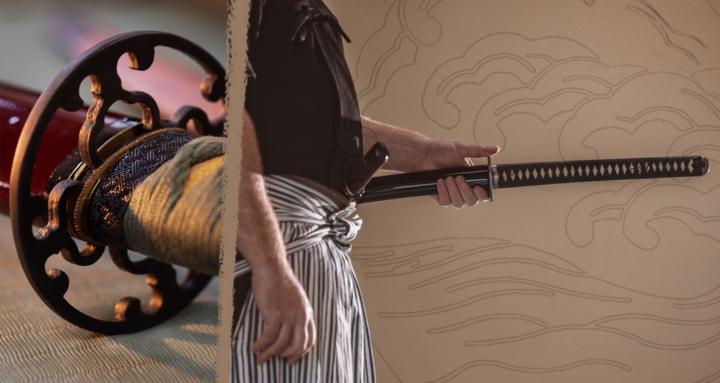
Join our online Kenjutsu classes to learn Japanese swordsmanship. Explore mastery of body, mind, and spirit through traditional samurai martial arts.
Leaderboard (30-day)
1
+54
2
+48
3
+7
4

+6
5
🔥
+5
Powered by