
Write something

3d •
Senate passes Protect College Sports Act
The Senate passed the Protect College Sports Act (PCSA) by a 77-22 vote on Monday night, sending the bipartisan bill to the House, which would usher in sweeping reform to college athletics. Authored by Sen. Ted Cruz and Sen. Maria Cantwell, the Senate vote marks an unprecedented moment in college sports after years of lobbying for federal legislation. Monday night’s Senate vote moves the bill another step closer to becoming law. It still needs to pass the House and receive President Donald Trump’s signature. Trump has long supported the legislation. • Limit athletes to one transfer without penalty • Standardize the new five-year, age-based eligibility policy • Increase the revenue-sharing cap to nearly $50 million • Put more enforcement in place around the rev-share cap • Create an agent registry with a maximum 5% fee • Allow schools to pool together their media rights The bill now moves to the House, which is not expected to return to Washington, D.C., until after the midterm elections in November. Cruz has said he hopes to get it signed before the Nov. 3 elections. “This bill is about what makes college sports uniquely American,” Cruz said on the Senate floor Monday. The bill underwent revisions this summer, as Senators struck a deal with the SEC and Big Ten to garner support from college sports’ two biggest conferences. Want to know more? > https://www.on3.com/news/senate-passes-protect-college-sports-act-sends-bill-to-house?utm_source=Sailthru&utm_medium=email&utm_campaign=Breaking%28On3%29%20-%20On3%20-%202026-09-29&utm_term=On3%20NIL%20and%20Sports%20Business%20News
3
0

Aug 26 •
Wow.
These are the highest paid college football players for this season.... Although there isn't a kicker even close to these marks, understand, just like in the NFL, as the price for QB's goes up, so too does it for specialists. (i.e. — NFL: Mahomes $65MM vs. Aubrey $7MM) From On3.com: Darian Mensah, Miami: $6M+ Darian Mensah entered the transfer portal on the final day of the January transfer window and, after a legal battle and settlement, ended up at Miami. His deal calls for more than $6 million, sources tell On3, but that includes incentives. He’s one of the highest-paid players in college football history. Dante Moore, Oregon: $5M Dante Moore walked away from first-round NFL draft quarterback money to return to Oregon for a final season following an exit in the CFP semifinals. Moore told On3 this offseason he’s motivated by his teammates and a final shot at a national championship. Sources told On3 that Moore’s deal with Oregon for the 2026 season sits at roughly $5 million. Trinidad Chambliss, Ole Miss: $5M Trinidad Chambliss signed a revenue-share contract with Ole Miss in excess of $5 million annually in January to return to Oxford for another season, sources told On3 at the time. He later received an injunction against the NCAA to return for the 2026 season and enters the fall as a Heisman Trophy frontrunner. Sam Leavitt, LSU: $4.5M The most sought-after transfer quarterback in January’s portal window, Leavitt visited Kentucky, Miami, LSU and Tennessee. But the chance to play for Lane Kiffin in Baton Rouge was too much to turn down. Sources told On3 that Leavitt will be making roughly $4.5 million this season with the Tigers.

18d •
Read the last sentence of this article
THE CURRENT SYSTEM IN D1 SPORTS IS NOT SUSTAINABLE. From On3.com Headline: Minnesota inks first helmet bumper ad sponsorship deal with Verizon's Visible. _ _ _ Minnesota football is entering a new era of sponsorships. The Golden Gophers have signed a partnership with Verizon’s Visible in what’s believed to be college football's first helmet bumper ad deal. Beginning with last week’s game against Mississippi State, the Visible logo will appear on the back of every Golden Gophers football helmet. Learfield's Gopher Sports Properties facilitated the deal. "As college athletics continues to evolve, it's important that we identify innovative opportunities that strengthen our programs and department and continue to help provide a world-class experience for our student-athletes," said Minnesota AD Mark Coyle in a statement. "We are excited to welcome Visible and proud to be among the first programs in the country to introduce helmet bumper branding. This partnership reflects the continued momentum of our department and our commitment to building relationships with organizations that invest in the future of Gopher Athletics." The agreement marks a new revenue stream for Minnesota in an era when schools are looking to maximize those opportunities. The university is projecting another $9 million budget deficit in fiscal year 2026, according to the Pioneer Press.

Jul 6 •
The NIL Era is here...
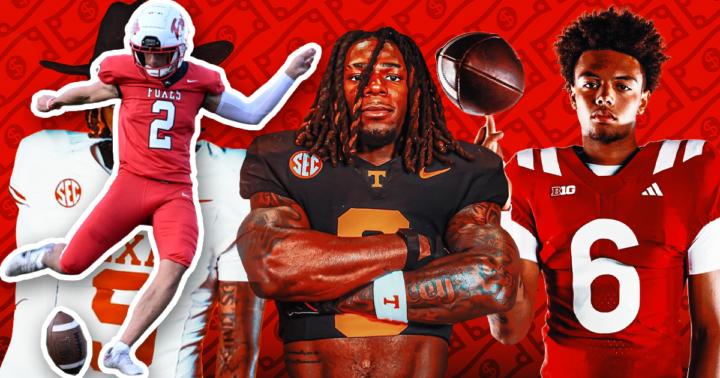
but where is it for kickers and punters? THAT'S A REALLY GOOD QUESTION... (I'm working on the answer — see below) 🏈 _ _ _ KNOW THIS — from On3.com: Five years into the NIL era, June's sprint to host official visits and lock down commitments turned into a rather expensive month of the recruiting trail for Power Four programs. With the dawn of revenue sharing a year ago, more programs than ever before have dollars to funnel to top recruits. General managers across the Power Four told On3 the price to land talent has never been greater. "It feels like $350,000 was the starting price for a low four-star this year," an SEC general manager said. "We've reached the period where everyone has an agent. "There are no layups anymore in high school recruiting. Nothing is even reasonably priced." While the overall price for a five-star recruit has held fairly steady, the price for four-star recruits has climbed significantly. As one source told On3, "the kid we might value at $400,000 is now getting offers to be the $750,000 recruit in another school's recruiting class." _ _ _ THE ANSWER IS... it's a moving target. Here's what's generally known (I am working on specifics and would love to hear anything from our tribe in K-Skool if you have info you can share with us)... For a starting kicker at a Power 4 (P4) Division I school, typical monetary deals range from $10,000 to $75,000 per year in NIL compensation. The specific value of a deal for a kicker varies based on several core factors: - The Market Rate: Industry specialists and media outlets estimate the standard specialist (Kicker/Punter) market value is roughly $60,000. - Exceptional Value: Exceptional kickers can break the baseline range. For example, when All-American kicker Dominic Zvada transferred, he netted a deal worth at least $500,000. - At a P4 school, you're liklier to get a full scholarship now. The newly enacted NCAA revenue-sharing rules and the shift from scholarship limits to strict roster caps are eliminating the traditional walk-on specialist. College football rosters were limited to 85 scholarships, but teams could carry up to 120+ players total. This allowed coaches to hoard "walk-on" kickers, punters, and long snappers who paid their own tuition. Under the new model born from the House v. NCAA settlement, everything has changed.
Jun 8 •
New College Eligibility Rule...
This looks like it will become the rule (but is NOT yet). _ _ _ TLTR: • 5 years to play 4 starting at age 19 or date of college enrollment. • No more 25 year olds playing for 7 years. The NCAA Division I Board moved forward with age-based eligibility on Friday, changing the clock to start when the athlete turns 19 or enrolls in college, sources told On3. The formal vote is not set until the end of June, when it is widely expected to pass. The adjustment follows recommendations from stakeholders in hockey, college basketball and service academies. The Cabinet plans to consider the age-based eligibility model at its June 23-24 meeting. The previous age-based eligibility proposal would start the clock at high school graduation. The Cabinet also reiterated that for current athletes, any waivers regarding eligibility under current rules must be submitted by schools and conferences no later than July 31. The NCAA previously stated that athletes whose fourth year of college eligibility ended by spring 2026 would not receive any additional eligibility under the new model. NOTE: It also would give flexibility to currently enrolled athletes with eligibility after the 2025-26 academic year to apply the age-based model or continue previous eligibility rules, whichever is more beneficial to that individual.
1-30 of 49
skool.com/kickerscamp
Kickers & punters, learn HOW to kick at the next level — a community for high school and college players, parents and coaches!
Leaderboard (30-day)
1
+22
2
+5
3
+3
4

+2
Powered by