
Write something
Pinned

5d •
College eligibility rules - ALL DIVISIONS
Eligibility Rules are Changing: What College Athletes & Parents Need to Know NCAA Divisions I & II By now, most of you are familiar with the new age-based eligibility model adopted by NCAA Division I and Division II, commonly referred to as the “5-for-5” eligibility rule. Under this new model, Division I and II athletes will have the opportunity to compete in all five years of their five-year eligibility clock. An athlete’s five-year eligibility clock will begin at the earlier of these two points: - Their initial full-time enrollment at a college or university, or - The academic year immediately following their 19th birthday. Here’s a reminder of the current rules for the other levels of college athletics: NCAA Division III NCAA Division III student-athletes are allowed four seasons of participation during their first 10 semesters (or 15 quarters) of full-time college enrollment. In Division III, an athlete does not have to compete in a game or other intercollegiate contest to use a season of participation. Simply practicing with the team after the season beginswill count as using one of their four seasons. Therefore, the only way for a Division III athlete to redshirt is to completely stop participating with the team before the first contest of the regular season. NAIA The NAIA generally charges an athlete with a season of competition if they participate in more than 20% of the maximum number of allowable contests or dates for their sport. Scrimmages are not included in that calculation. Participation on a junior varsity or freshman team at an NAIA school also counts toward the 20% limit. NAIA athletes must complete their four seasons of competition within their first 10 semesters (or 15 quarters) of full-time college enrollment. There is an important exception to the 20% rule: An athlete who participates in an NAIA-approved postseason event will be charged with a season of competition, even if they competed in 20% or less of their team's contests during the regular season.

Pinned
11d •
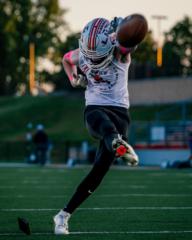
Senior season so far
As we head into Friday it’s already hard to believe we are in week 4 already! We (the lomira lions) are heading into this game 3-0! Tomorrow we face the team that ended our season last year. The final score was 17-14, I had one missed field goal that game that has helped me and fueled me to do so much better this season. This season so far has been absolutely incredible! I’m leading division 6 Wisconsin football, along with the flyway conference in kicking yards, and lead the flyway conference in touchbacks, along with that I am 2/2 for field goals, 21 yd, and 23 yd, yes it’s not that far, however I’ve already doubles the amount of field goals from last season in the first 3 games. And finally I am 11/13 for extra points which has made me realize that misses even happen on extra point!! But I always keep my head up and go on to the next kick.

Pinned
12d •
COMPARE YOURSELF TO THE PROS?
Why not? What's different about them from you? Age? Size? Body Type? Ask yourself what are they doing differently that you are? Speed? Flexibility? Body Position?
3
0
7d •
Read the last sentence of this article
THE CURRENT SYSTEM IN D1 SPORTS IS NOT SUSTAINABLE. From On3.com Headline: Minnesota inks first helmet bumper ad sponsorship deal with Verizon's Visible. _ _ _ Minnesota football is entering a new era of sponsorships. The Golden Gophers have signed a partnership with Verizon’s Visible in what’s believed to be college football's first helmet bumper ad deal. Beginning with last week’s game against Mississippi State, the Visible logo will appear on the back of every Golden Gophers football helmet. Learfield's Gopher Sports Properties facilitated the deal. "As college athletics continues to evolve, it's important that we identify innovative opportunities that strengthen our programs and department and continue to help provide a world-class experience for our student-athletes," said Minnesota AD Mark Coyle in a statement. "We are excited to welcome Visible and proud to be among the first programs in the country to introduce helmet bumper branding. This partnership reflects the continued momentum of our department and our commitment to building relationships with organizations that invest in the future of Gopher Athletics." The agreement marks a new revenue stream for Minnesota in an era when schools are looking to maximize those opportunities. The university is projecting another $9 million budget deficit in fiscal year 2026, according to the Pioneer Press.

7d •
For your snapper...
This is an interview by former Falcon Coach John O'Grady with a very good D3 snapper Brandon Bedalov at UW-River Falls (the defending D3 National Champs). When's the last time a snapper got an interview? 😄 🏈 For technique and preparation tips, skip to the 3:00 mark.
3
0
1-30 of 407
skool.com/kickerscamp
Kickers & punters, learn HOW to kick at the next level — a community for high school and college players, parents and coaches!
Leaderboard (30-day)
1
+16
2

+5
3
+4
Powered by