
Write something
Pinned
Jan 2 •
Your Voice Matters Here
Assalamu Alaikum dear members, I want to gently remind you why this space exists. This community is here for real conversations — the kind we often hesitate to have on social media. You are welcome to use this space to: - Voice a concern you’re struggling with - Ask for perspectives or ideas - Share something you’re trying to understand - Reflect on a situation and seek clarity You don’t need to have perfect words. You don’t need to arrive with solutions. Sometimes a sincere question opens doors that silence never will. 🌷 If something is weighing on your heart, post it. 🌷If you’re unsure about a decision, ask. 🌷 If you’ve learned something through your journey, share it — it may help someone quietly reading. This is a collective learning space. We grow not only through guidance, but through shared lived wisdom. Speak with honesty. Respond with adab. And allow this community to support you. May Allah place barakah in our conversations and guide us through one another. — From The School of Nafs Coaching, a humble means.
Jun 8 •
Thought Of The Week 💭
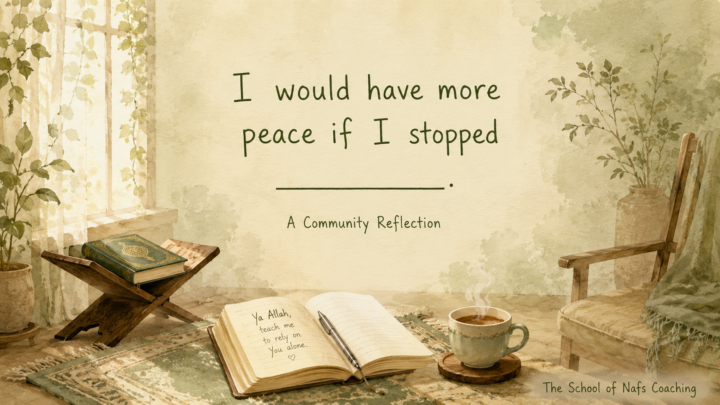
Complete this sentence honestly: “I would have more peace if I stopped _________ .”

Sep 2 •
Introduction
Assalamu’alaikum everyone! My name is Radhwa, I am currently studying in Jordan, but I am originally from Indonesia. I joined this community because I want to expand my network with fellow Muslims globally. I'd love to learn from multicultural perspectives and grow here by taking valuable lessons from international Muslim brothers and sisters🫶🏻💗

Aug 28 •
Assalam o alikum
Has anyone here studied Islamic Psychology from International Open University? I’m considering taking admission, but I’m very confused about whether I’ll be able to complete it. There are a few reasons for my concern. First, I have four young children, so managing my time can be difficult. Second, the degree takes four years, which feels like a very long time. Third, my English is quite weak. But despite all these challenges, I’m genuinely passionate about Islamic Psychology and really want to pursue it. I would really appreciate your advice. Do you think I should go for the full Psychology degree, or would it be better for me to start with the one-year Psychology certificate program first? If anyone has studied from International Open University or has experience with their Psychology program, I would especially love to hear your honest advice. Do you think it is manageable for someone in my situation?
Aug 22 •
When support goes missing
Assalamu alaikum ma'am When your potential is recognised and acknowledged by outsiders but your own never seem to see it... Yes, we neither chase insiders or outsiders recognition or acknowledgement, because we seek Allah swt. However, sometimes to move forward, and to take risks especially as women we need the support of people/that one person who close to us or is Islamically our guardian. How do we navigate this? What does 'tie your camel' look like in this regard for women like us? Do we trust Allah swt without doing our part?
1-30 of 43
powered by
skool.com/how-to-self-coach-your-nafs-4445
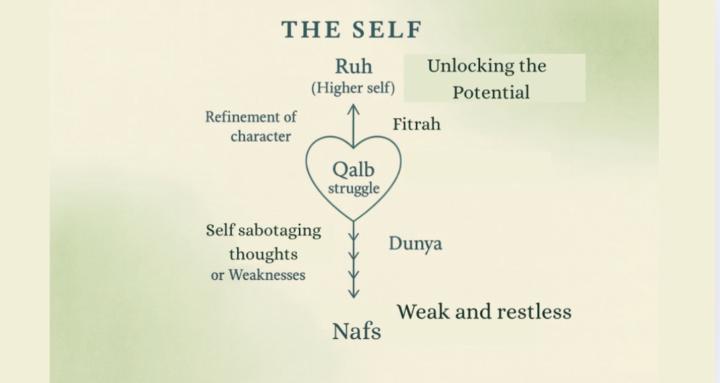
We cannot achieve a sound heart unless we coach our nafs to align with our Ruh. Ready to self coach your nafs? Then please join this community.
Suggested communities
Powered by