

Jul 3 •
(CALL REPLAY) The Electric Body, Coherence & Healing with Eileen McKusick
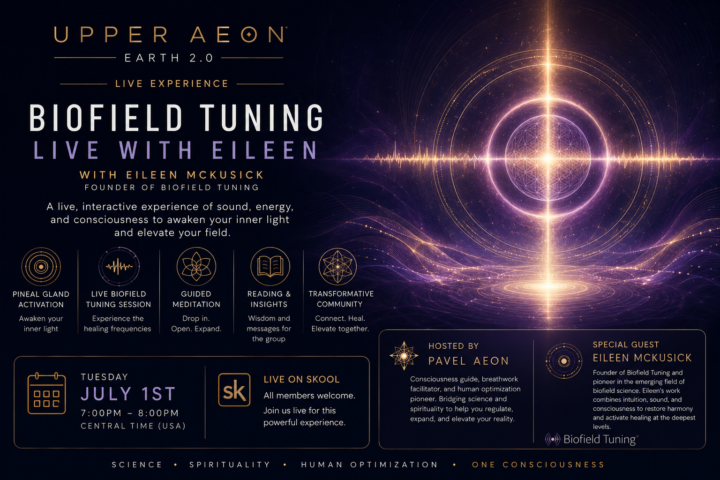
What an extraordinary evening together. A heartfelt thank you to every one of you who joined us live for another If I Can, You Can gathering inside Earth 2.0. These evenings continue to remind us that true transformation doesn’t come from consuming more information—it comes from slowing down, becoming present, asking better questions, and experiencing life differently. This week’s conversation with Eileen McKusick was one of those experiences. For over three decades, Eileen has explored the relationship between sound, electricity, the human biofield, and healing. Rather than asking us to believe anything, she invited us to become curious—to observe, experience, and reconnect with the incredible intelligence already present within our own bodies. If you missed the live event, we highly encourage you to watch the replay with a journal nearby. There were many moments that deserve to be listened to more than once. Some of the Biggest Takeaways: Your body is electric. Every heartbeat, every thought, every nerve impulse is electrical. Our biology isn’t just chemistry—it’s also electricity, vibration, frequency, and information. When we begin understanding ourselves this way, health becomes more than simply treating symptoms. We begin asking deeper questions about communication, coherence, and the quality of the signals moving throughout the body. The body remembers. One of Eileen’s most fascinating insights is that our experiences don’t simply disappear. Stress, trauma, injuries, emotional events, and even long-forgotten memories can leave informational patterns within our energetic field. The goal isn’t to relive them—it is to help the system process, reorganize, and return to greater harmony. Healing often begins with becoming aware of what the body has been holding onto. Noise vs. Signal One of the most powerful concepts from the evening was improving our signal-to-noise ratio. Life constantly adds “noise”—stress, overwhelm, emotional reactivity, unresolved experiences, environmental inputs, and distraction.
Jul 15 •
Join Us at One of the Most Beautiful Experiences We’ve Ever Created
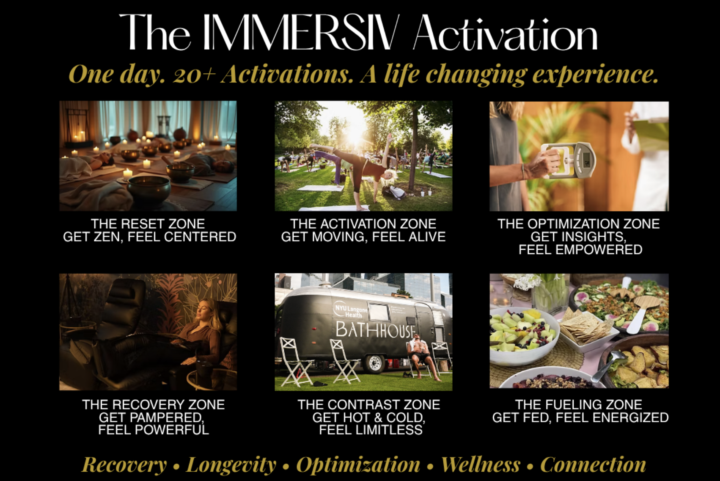
Beautiful Earth 2.0 family, There are certain gatherings that become milestones in your life—not because of how many people attend, but because of how deeply they impact you. This is one of them. On August 1st & 2nd, Fairy and I will be joining an extraordinary group of world-class practitioners, educators, biohackers, and healers for The IMMERSIV Activation at what may be one of the most breathtaking venues we’ve ever had the privilege of hosting. Hempstead House at the historic Sands Point Preserve on Long Island is a stunning castle overlooking the water, creating the perfect environment to slow down, reconnect, and immerse yourself in two unforgettable days of health, nervous system regulation, longevity, and human optimization. If you’ve been looking for a reason to travel and spend a weekend with our community, this is it. And if you have friends or family anywhere in New York—or within driving distance—please invite them. This is the perfect introduction to the work we do and a beautiful opportunity to experience it together. Here’s what we’ll be leading On Saturday evening (August 1st) we’ll guide the exclusive VIP experience featuring: • Our signature System Reset journey • Breathwork & somatic regulation • Meditation & nervous system recalibration • Music, movement, and an unforgettable conscious dance experience inside the castle Then on Sunday (August 2nd) you’ll spend the day exploring six immersive wellness experiences designed to help your body recover, optimize, and thrive. You’ll experience: • Breathwork & meditation • Recovery technologies • Cold plunges & contrast therapy • Human optimization tools • Movement experiences • Functional nutrition • Longevity education • Incredible practitioners and wellness brands from around the country This isn’t another conference where you sit and listen. It’s a fully immersive experience where you’ll leave feeling different than when you arrived. As many of you know, our mission with Earth 2.0 has always been to bring together the very best of science, consciousness, nervous system regulation, community, and human connection.
Jul 23 •
🌎 STATE OF COHESION RECAP: FROM “ME” TO “WE”
Beautiful Earth 2.0 family, Thank you to everyone who joined us for tonight’s journey. What we created together was far more than a breathwork session—it was a shared field of remembrance, release, recalibration, and embodiment. We began by calling our energy back from the people, places, responsibilities, and demands of everyday life—while lovingly returning any energy that was not ours to carry. From that grounded place, we connected through the vortex of the heart and amplified our individual intentions through the power of the collective. Here is the recording: https://zoom.us/rec/share/7VhOhDGYkrrlWZQuD3Kuz1I49c4zsYc-CA9V6-4EpZsUtEU3Jhbg61YDlZ4rjbY.Z3H1bxaPIU3whljC?startTime=1784765322000 Passcode: pi^ab0#m The world doesn’t need more information. It needs more embodiment. Through three deep rounds of breath, we explored: ✨ RELEASE & FORGIVENESS We connected with our highest selves and breathed into past experiences, relationships, and repeating patterns that were ready to be released. We practiced acceptance and forgiveness—of others and, perhaps most importantly, ourselves. ✨ ENERGETIC CLEARING We expanded beyond the limitations of the physical body and cleared beliefs, emotions, and energetic patterns absorbed from other people, society, media, and our environment. We used breath, movement, sound, and surrender to restore our natural field. ✨ ALIGNMENT WITH THE FUTURE We chose one clear wish or commitment for the next 30–90 days. We visualized the path ahead and breathed through every symbolic obstacle until the way became open. Rather than simply hoping for the outcome, we entered the feeling and memory of already having lived it. We then returned to regulation—grounding the energetic body back into the physical, moving awareness through the energy centers, and reconnecting with Earth below and Source, God, and Love above.

Jul 30 •
Call Replay - Sarah Grace - THE BODY REMEMBERS — AND IT ALSO KNOWS THE WAY HOME
Earth 2.0 family, Our session with Sarah Grace was one of those calls that is difficult to summarize because so much of the teaching wasn’t simply intellectual. It was something we experienced. “One of the most beautiful teachings from the evening was Sarah’s concept of layers of support from Somatic Pioneer, Dr. Ray Castellino.” We explored a question that sits underneath so much of the work we do here: What if some of the patterns we keep trying to “fix” in adulthood began before we even had words to describe them? Sarah took us into the world of prenatal and early developmental somatics — exploring how our earliest experiences of safety, belonging, support, birth, family and relationship can become patterns held within the nervous system. And one of my biggest takeaways was this: Healing isn’t always about understanding more. Sometimes the body needs a NEW EXPERIENCE. A new experience of being supported. A new experience of being witnessed. A new experience of expressing without being rejected. A new experience of feeling safe while someone else is present. A new experience of being able to soften and actually LAND inside the body. Sarah described this as returning to the “blueprint” — the part of us that remains whole beneath everything we have experienced. And this is where the conversation became incredibly practical. WHY DO WE KEEP REPEATING CERTAIN PATTERNS? Sarah shared how unfinished experiences in the nervous system can sometimes appear later as repeating relational or behavioral patterns. We may intellectually know: “I am safe.” “I deserve love.” “I don’t need to rush.” “I can receive support.” Yet the body may still be operating from an older reference point. This is why insight alone doesn’t always create transformation. The nervous system needs an embodied reference for something different. THE POWER OF “LAYERS OF SUPPORT” One of the most beautiful teachings from the evening was Sarah’s concept of layers of support. The child is held by the mother.

Jul 16 •
🌍 Earth 2.0 Call Recap: Discover Your Soul Blueprint with Tatum
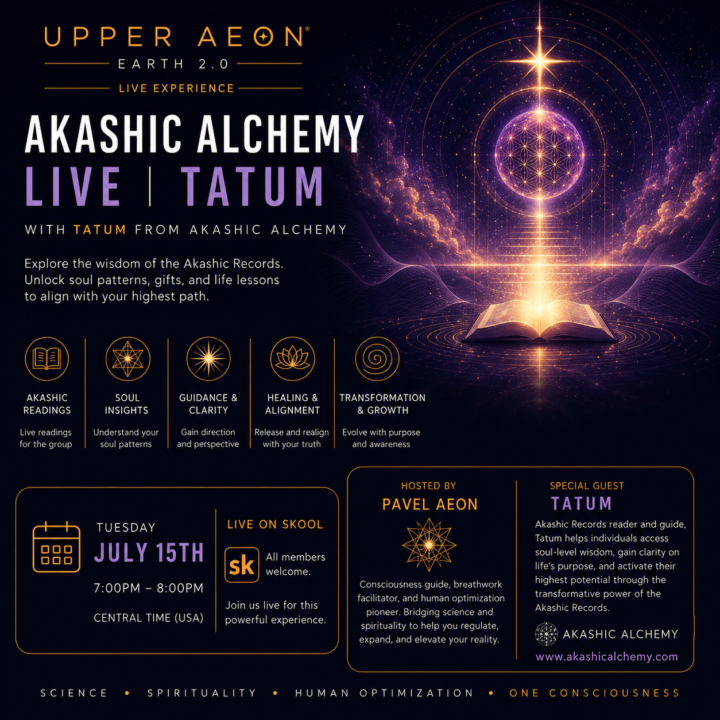
Thank you to everyone who joined us for another Earth 2.0 gathering and special thanks to @Tatum Christina for being there for us! Each week our intention is simple: create a space where science, consciousness, and lived experience come together in a practical way that helps us become healthier, happier, and more aligned with who we truly are. Here is your recording: https://zoom.us/rec/share/kiHdlUqK177pV489VVfwYyIHyK994F_CFo1_59qwVkodUEYFOmaH1rTTp1kpI0ik.UXCu6tZ1dnvGYJfi?startTime=1784160181000 Passcode: 6+^&J1g9 This week we explored one of the deepest subjects we’ve covered so far—our Soul Blueprint. We began, as we always do, by entering a shared state of coherence. Before seeking answers, we first slowed down. We regulated our nervous systems, synchronized our breath, and shifted from the noise of everyday life into a state where insight becomes more accessible. It was a reminder that clarity rarely comes from thinking harder—it comes from becoming more present. The Akashic Records as a Practical Tool One of the most valuable perspectives Tatum shared was that the Akashic Records are not simply a fascinating collection of past-life stories. Instead, they become valuable when they reveal what is actively influencing your life today. Knowing that you may have lived as a priestess, healer, or knight may be interesting, but information alone does not create transformation. The real question is: What patterns, beliefs, energetic agreements, or unresolved experiences are still shaping the decisions, fears, relationships, and opportunities in your life today? That is where meaningful work begins. Rather than collecting spiritual information, the goal is to identify what continues to create distortion between who you truly are and how you are currently living. Your Blueprint Exists Beneath the Conditioning
1-30 of 74
skool.com/earth2
Nervous system reset community for breathwork, biohacking, meditation, healing, and the 7-Day System Reset journey & Earth 2.0 Global Community.
Leaderboard (30-day)
1

🔥
+298
2
+245
3
+151
4
+143
5

🔥
+140
Powered by