
Write something
Pinned

6d •
5050AI: How to Use Gemini Browser for SEO - EP 1
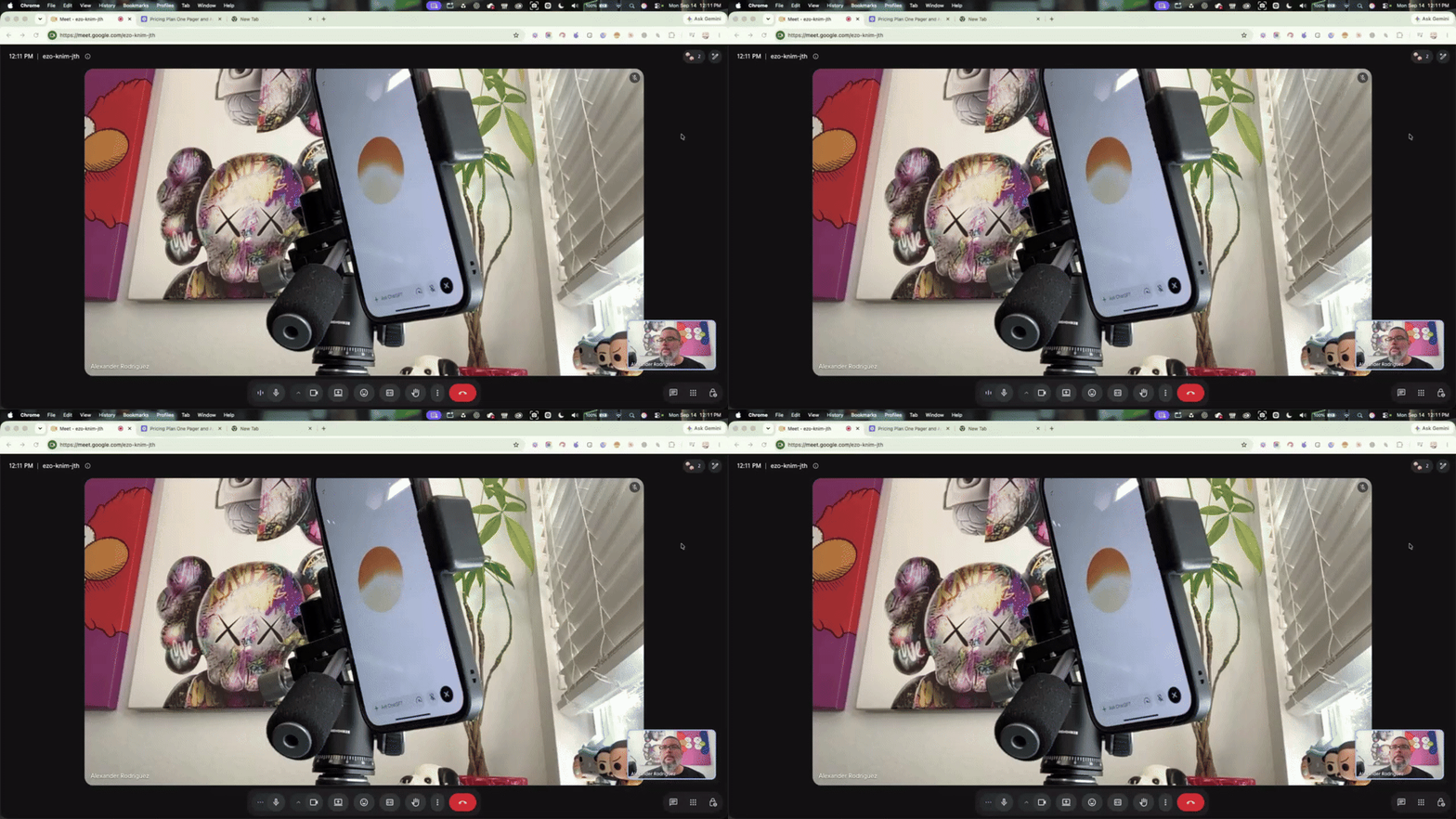
1. Introduce the 50-50 AI workflow and the goal of the demo 0:00 - Frame the video as a human + AI collaboration: - Alex brings experience, judgment, and context. - AI brings speed, pattern recognition, and pressure testing. - State the purpose of the demo: - Show how to use Gemini in Chrome. - Demonstrate a practical, underused tool that everyone can access. - Set expectations: - This is a live workflow, not a polished case study. - The goal is to show how AI can help analyze a real business site. 2. Pick a real local business and inspect the search results 0:48 - Use a real query to keep the example grounded: - Search for something like “painters for roofs near me”. - Scan the results page like a user and an SEO: - Note paid ads. - Note map pack results. - Identify the first organic listings. - Choose one business to analyze: - In this case, Ranger Painting. - Ask the key first-impression question: - Can you tell in 5 seconds who they are, what they do, where they work, and how to take action? 3. Check the site’s current positioning and identify dilution 1:55 - Copy the business URL and inspect indexed pages using a site: search. - Look for signs of weak focus: - Multiple pages targeting different locations at once. - Mixed intent across Cedar Park and greater Austin. - Call out the core issue: - The site is fragmented. - One page is trying to serve too many audiences. - Explain the SEO implication: - A focused page for one location and one intent usually performs better than a diluted page. 4. Run the Deep Entity Visibility Scan prompt in Gemini 2:36 - Use a prepared prompt called Deep Entity Visibility Scan and AI Retrieval Reinforcement. - Paste the business website into the prompt and submit it in Gemini. - Show the exact prompt on screen for transparency. - Explain why this matters:
4d •
Day 2: Using GrokBot to build a real Brand + Commerce agent while they build a business live
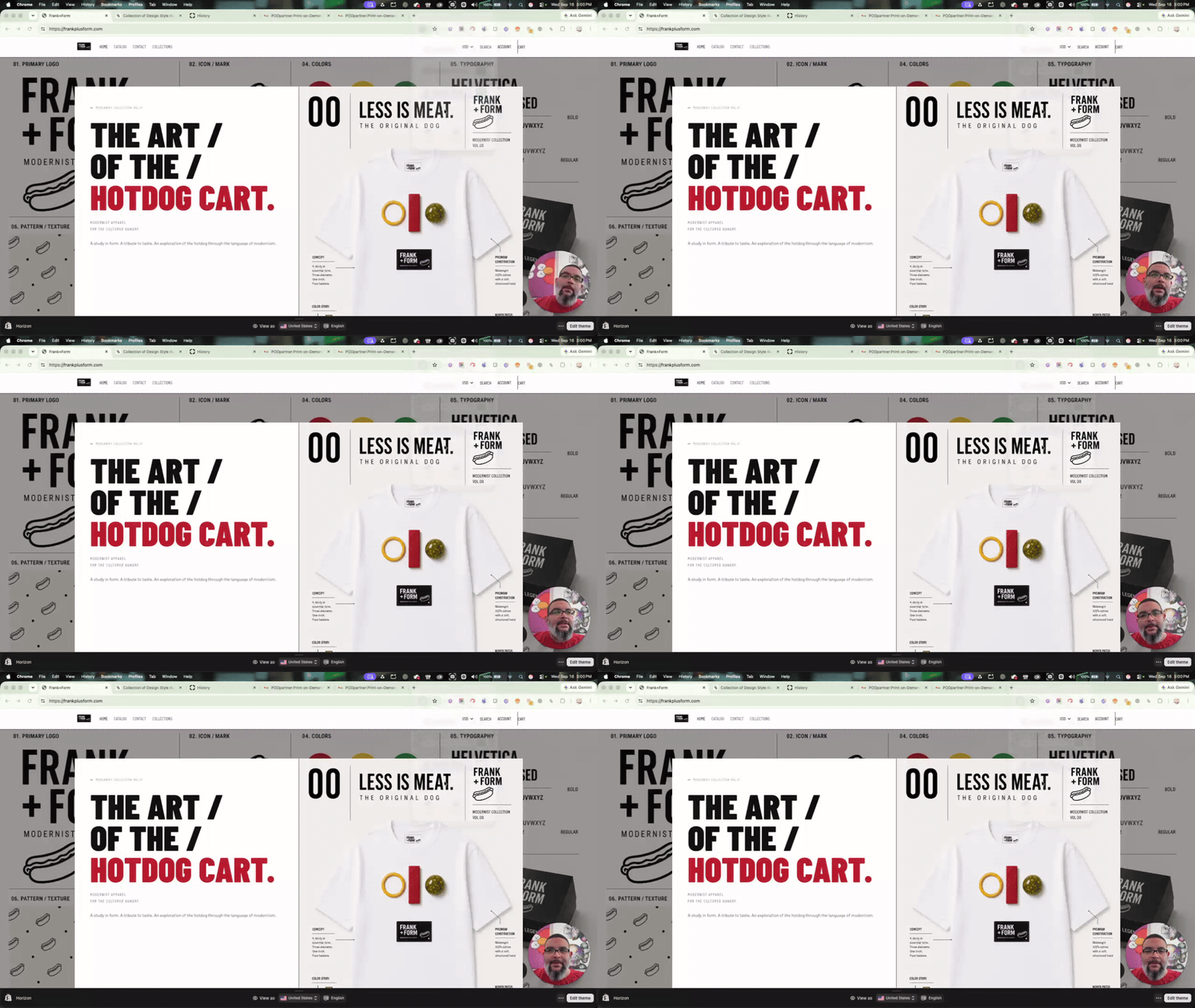
I’m doing something a little different with the GrokBot livestream. While they’re on Day 2 of building a business live, I’m using GrokBot for the first time to build an actual Brand + Commerce Operator for Frank + Form. Not a demo. Not a fake workflow. A real one. The flow I’m trying to automate is basically: Design creation → upscaling → POD Partner → naming/templates → approval → Shopify → content → performance → iteration The biggest thing I’m learning so far: Building the bot is easy. Giving it enough context to do real work reliably is the hard part. Things I’m having to think through: exact file names naming conventions what state the workflow starts in what the agent is allowed to change what it should never do where it has to stop for approval how one agent references work from another what “finished” actually means For example, I have a batch of 15 product designs. The agent can update the POD templates and rename them, but it is specifically told: Do not order. Do not sync to Shopify. Do not add to the store. Finish the batch and wait for sign-off. That sounds basic, but watching the agent actually work is exposing all the assumptions I normally keep in my own head. One thing that surprised me: the new operator checked the original Frank + Form operator for context instead of just recreating everything from scratch. That got me thinking less about “building a bot” and more about building a group of operators around a business. I also noticed Shopify is already exposing information specifically for AI agents, including commerce instructions and human approval around checkout. That feels like a glimpse of where this is heading. Around 13 minutes into the video, I actually pull the GrokBot livestream into the screen and talk less. So at that point, their stream is discussing how people are using agents while my own agent is literally working inside POD Partner in parallel. Kind of a weird accidental experiment, but it ended up being useful.
Aug 7 •
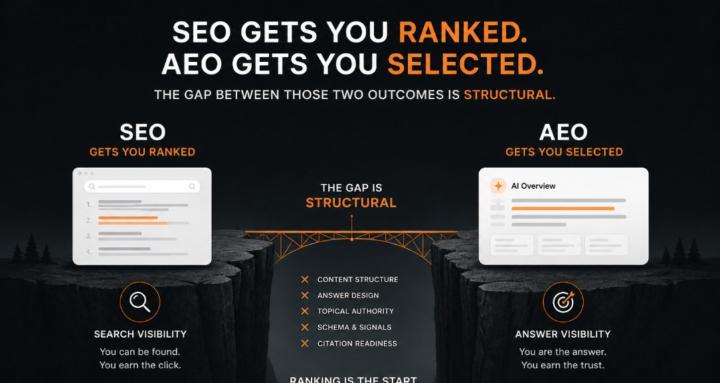
AI visibility and agent readiness are not the same problem.
Google: you don’t need AI files. Shopify: here’s an AI agent file. Why both make sense.
9d •
SEO is becoming the operating system for how AI understands your business
There is a useful shift happening in SEO right now. We are moving away from asking, “How do I rank this page?” And toward asking, “Can a person or machine understand this business correctly from its digital footprint?” That includes the website, Google Business Profile, service pages, location pages, reviews, photos, videos, social profiles, citations, and every supporting signal around the brand. AI systems do not discover businesses by intuition. They work with what they can retrieve and connect. They need clear names, clear relationships, current information, structured pages, evidence, and context. Think about the difference between these two businesses: Business A has strong services and happy customers, but its website is vague, its locations are inconsistent, its images have no context, and its important pages are disconnected. Business B has comparable services, but its information is structured: every location, service, proof point, image, video, and internal link helps explain the business accurately. Which one is easier for Google, Maps, ChatGPT, Gemini, and future AI systems to understand and recommend? That is the real value of SEO now. It is not a trick for traffic. It is the organization layer between your actual business and the systems that introduce customers to it. The work starts with a few questions: - Can a machine identify exactly what you offer? - Can it connect each service to the correct location? - Can it find credible proof? - Can it tell what is current and what is historical? - Can it follow the relationships across your site without guessing? Share one part of a local business’s digital footprint that is usually disorganized in your experience. If you want help auditing or building this organization layer for your own business or clients, message me. I provide local SEO, entity clarity, structured content, and AI visibility services.

5d •
I Paid $20 to Test GrokBot—Here’s What I’m Building
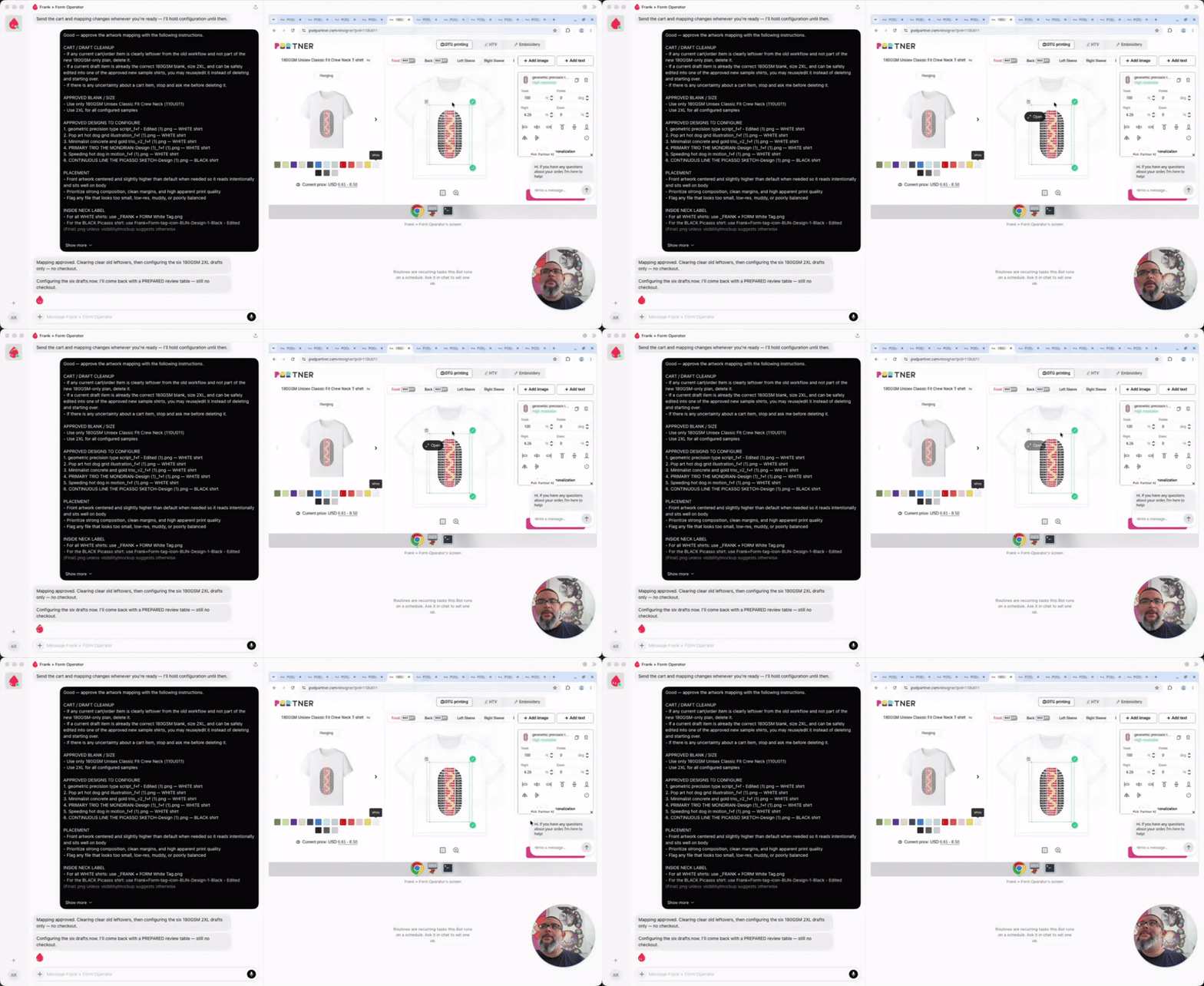
With nearly 400,000 people watching the GrokBot Galaxy livestream, I decided to stop watching from the sidelines and test it myself. Link to the live stream: https://x.com/i/broadcasts/1AxRnZbVpjaxl I gave GrokBot a real task connected to one of my own passion projects: Frank & Form, an apparel brand I’ve built but haven’t consistently promoted because client work usually comes first. The problem I needed to solve My current shirts are printed on premium 280 GSM cotton. The quality is excellent, but they’re heavier than I’d like—especially when it’s close to 100 degrees outside. I want to move the designs to lighter, approximately 180 GSM shirts that are more comfortable for everyday wear. That requires several steps: - Find suitable replacement shirts through PODpartner - Rebuild the products using the correct designs - Place graphics correctly on the front, sleeves, and collar - Create new product mockups - Prepare sample orders - Review the physical samples before publishing anything Instead of handling every step manually, I’m building a Frank & Form Operator inside GrokBot. What the bot is doing The operator is currently: - Navigating the PODpartner workflow - Selecting and configuring shirt products - Applying the appropriate designs - Positioning artwork on different areas of the shirts - Preparing the products for sample ordering - Keeping the process organized so I can review everything before moving forward The bot isn’t meant to make the final quality decision for me. Once the samples arrive, I’ll evaluate the material, printing, placement, fit, and overall feel. If the samples pass, I can tell the operator they’re approved and activate the next part of the workflow. What happens after product approval The next stage will be a connected content engine that helps turn the approved products into promotional content for channels such as: - Instagram - Facebook - Agent Opus - Other relevant marketing platforms
0
0
1-30 of 40
skool.com/alex-rodriguez-seo
Learn how to make your businesses easier to find, understand, trust, and choose across Google and AI search. Without the unnecessary jargon.
Leaderboard (30-day)
1

+3
2

+1
Powered by