Activity
Mon
Wed
Fri
Sun
Oct
Nov
Dec
Jan
Feb
Mar
Apr
May
Jun
Jul
Aug
Sep
What is this?
Less
More
Freedom Labs
2k members • Free
LinkedIn Skool 📈
894 members • Free
LinkedIn Content Minds Academy
521 members • Free
Ghostwriters Anonymous
17.1k members • Free
Creator Party
5.6k members • Free
AI Creators Circle
1.7k members • Free
Learn LinkedIn with Alex
1k members • $50/month
AI Automation Agency Hub
334.7k members • Free
10 contributions to Learn LinkedIn with Alex

Jun 8 •
Finding Buyer intent signal Pattern
My system checked 2,183 comments. 167 real questions. 13 buyers. Everything else was applause. "Engagement was up" isn't a signal - it's a feeling. Comment quality is the signal.

Nov '25 •
👻🖋️Ghostwriting on LinkedIn🟦
2 ways to ghostwrite LinkedIn post for an individual client. ✳️ You let the client post themselves, or ✳️ You get client’s login credentials and post on their behalf. Which one is better?
2 likes • May 26
@Mohamad Afendi Othman I was genuinely eager to ask this question to an experienced ghostwriter like you. When you onboard a new client, how do you personally analyze their past LinkedIn posts?
May 14 •
Why do people never fully read content and still like the post?
While analyzing LinkedIn creators profiles, we repeatedly noticed one thing (this clarity is insane for many) : LinkedIn creators mistakenly think: “High likes = deeply understood content.” - (Drums rolling in the background.) - Big False. Why? Point 1 : Humans naturally evolve to save metal energy, Click on Likes allows us to feel involved while keeping our brains on "low-power mode." without reading whole post. Point 2 : On platforms like LinkedIn, a "Like" is often a strategic tool for visibility and relationship maintenance - a way to say "notice me" rather than "I read this." Point 3 : LinkedIn is built for speed, not for deep understanding of content, so users subconsciously adapt by skimming instead of reading. That changes how you should analyze content performance.
3 likes • May 15
@Alex Colhoun 100%. Alex, in your journey, did you ever feel: “Wow, this is one of the most valuable things I should post,” and then literally see very low engagement on it? If so, what did you do afterward? I hope this will help our community.
2 likes • May 23
@Muhammad Salih Ah, good to hear, If possible could you please share : What is your value prep for your client, what is your business?
May 22 •
Question on Linkedin Analysis
Curious to know : How serious linkedin creator/ content writer/ Ghostwriter validation content performance? What metrics to follow?
May 17 •
I reverse engineer my brain as audience.
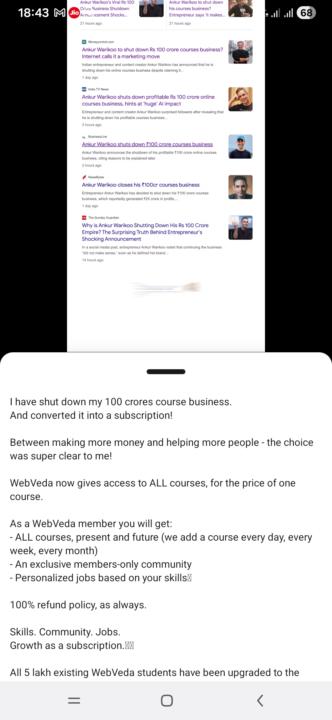
What signal encourages my brain to continue reading this Ankur Warikoo's post? : "Attention Layer" Observation : It feels effortless to read, while also giving the brain a strong reason to continue. This is where effective hooks usually exist. How? We’ve built an internal system that measures psychology and engaged audience behavior for ghostwriter of B2B founders, and during one of our analyses, this post landed strongly within the target zone. Two key signals we track: HDS : Hook Decodability Score : Before reading, the brain estimates within fractions of a second: “Should I spend energy consuming this?” A high HDS means the hook feels easy and low-effort for the brain to process. OLT : Open Loop Tension (Pull) : Is the brain detecting unresolved information : Pull is a psychological state - the gap between what the reader knows and what they sense they're missing. If we map this into a simple 2x2 model: • High HDS > effortless to process • High OLT > strong curiosity gap 𝗧𝗵𝗮𝘁 𝗯𝗲𝗰𝗼𝗺𝗲𝘀 𝘁𝗵𝗲 𝘁𝗮𝗿𝗴𝗲𝘁 𝘇𝗼𝗻𝗲. This is usually where the attention layer gets passed, increasing the probability that the post performs as intended for the creator or founder.
2
0
1-10 of 10

@yash-sharma-7957
Scaling local business using AI client Acquisition system | 8+ years in Data and Business
Active 28d ago
Joined May 8, 2026
India
Powered by