Activity
Mon
Wed
Fri
Sun
Aug
Sep
Oct
Nov
Dec
Jan
Feb
Mar
Apr
May
Jun
What is this?
Less
More
Owned by Rutger
Embodied healing of physical pain for the modern man, especially those with A(u)DHD & nice guy traits. Explore causes, reduce pain, improve wellbeing.
Memberships
Neurodiverse Minds Leaders
10 members • Free
ADHD Reset System
5.2k members • Free
ADHD Masters
1.7k members • Free
Neurodiverse Minds
170 members • Free
Thrive Vegan Marketing
56 members • $5/month
KaleidoBrains ADHD Tribe
21 members • Free
Parenting With Autism and ADHD
19 members • $1/month
Audaciously AuDHD
1.1k members • Free
A(u)DHS - leicht (er) leben
82 members • Free
70 contributions to Brojo: Confidence & Integrity

May 18 •
Monday Accountability
Comment below by calling your shot for this week: What healthy, value-based action do you commit to doing this week to improve your life? And how did you get on with last week's commitment?

3 likes • May 19
As so much of my experience takes place inside my head, I often forge to share with I'm thinking of and base my decisions on, especially with my girlfriend. So, my goal, more transparency. But more open, explain more what I'm thinking of, what is like to do. Being honest and transparent.
May 15 •
The Hidden Narcissism of People Pleasers (Kindness vs Selfishness)
Most Nice Guys and people pleasers think their problem is that they’re too kind, too generous, too thoughtful, too compassionate, too selfless. But what if that’s not actually true? What if your problem isn’t kindness at all? What if the thing you call kindness is actually control? That’s a brutal idea to sit with, especially if you’ve built your entire identity around being a “good person.” However, if you’re willing to look honestly at yourself, this realization can completely change your life, because there’s a kind of narcissism hiding inside many nice guys and people pleasers. I am not talking about the loud, arrogant, flashy narcissism everyone talks about online. I mean a quieter version: a more socially acceptable version. A version that disguises itself as generosity, empathy, and helpfulness. The strange thing is, the people trapped in this pattern often genuinely care about others. That’s what makes it so hard to spot. You’re not trying to dominate people by intimidating them. You’re trying to dominate people by pleasing them. You’re constantly trying to manage: - how people feel - how they see you - how situations turn out - whether everyone is okay - whether anyone is upset with you - whether you’re still viewed as a good person You become emotionally exhausted because you think you’re responsible for everything, and underneath all of that is what I call the Inept God Complex. Check out the full podcast episode below: If you prefer written content, click here to keep reading the full written version on Dan’s blog. Or click on your preferred option below - Watch on YouTube - Listen on Soundcloud - Listen on Apple Podcasts - Listen on Spotify - Listen on Amazon Audible
1 like • May 15
I'm almost finished with the greenlight syndrome one. Love it so far. I'm already looking forward to this one too.👍🤩
1 like • May 19
@Daniel Munro Great episode, and the one on the narcissism. I notice I have left quite a bit of these things behind me, already, though there is some residue to work with here and there still.
May 8 •
Congrats to the winners!
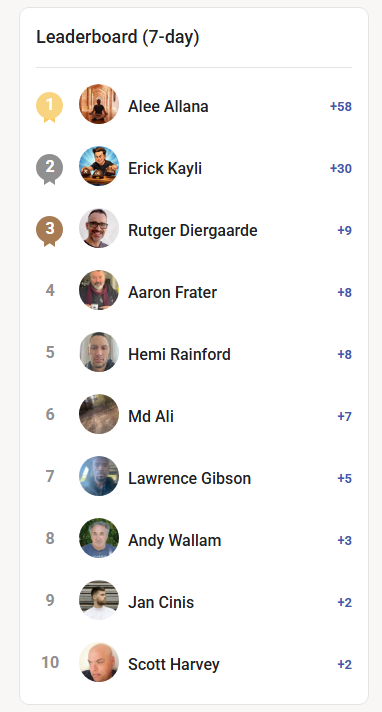
Congratulations to @Alee Allana @Erick Kayli and @Rutger Diergaarde for winning this week's competition. Thanks to your posting, comments and other engagement, you've each one a FREE coaching session with me (worth $650). I'll be in touch shortly with details. Next competition will be coming soon...
3 likes • May 8
Oh wow! That is a huge surprise. 🤩 Thanks you @Daniel Munro
May 7 •
12 hours left to win free coaching!
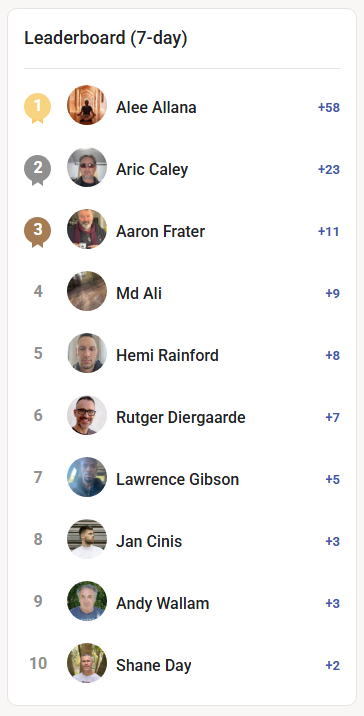
Hey guys I'll be tallying up the points on the leaderboard at the end of my day today. This is your last chance to be in the top 3 to win a coaching session worth $650. Posting, commenting, and completing course videos will move you up! Winners to be announced next Monday. Cheers Dan
1 like • May 7
That's a great looking leaderboard, and some very deserving leaders for the grand price. 🤩👍
May 1 •
The influence of autism on nice guy behaviour.
Hi all, I've been a member of this group for some time now and when I became a member, I had no idea about my autism. I've recently been diagnosed. Now, most of the things Dan posts here I find totally logical I can totally comprehend the concept, but something is holding me back to execute the behaviour properly. I mean, I've improved somewhat. I notice I can be in serious conversations with my girlfriend now, about stuff she isn't happy about in my behaviour, and I can last longer before I shut down or get angry and stop listening. What I have learned so far about autism is that most people have a totally over-reactive nervous system. People tend to feel overwhelmed and or anxious without interactions with others...As soon as a perceived criticism is felt, this may well lead a meltdown or shutdown. So... My question here is, perhaps more to those who identify as autistic or neurodivergent in a different way, do you think steering away from nice guy behaviour is genuinely more difficult, compared to neurotypical people?

1 like • May 5
@Erick Kayli No, it's not like she's deliberately taking advantage of me, but I do trigger the fuck out of her, which then often end up being thrown back into my face. The again, she does have a lot of trauma to work through, in part caused by my behaviour.
1 like • May 6
@Erick Kayli Yeah...gotta find a different way around things now. We just get stuck in the same patterns over and over again.
1-10 of 70

@rutger-diergaarde-9715
I help men release chronic tension and pain, often in relation to A(u)DHD and C-PTSD. 30+ years experience as a physiotherapist and yoga teacher.
Active 1d ago
Joined Sep 2, 2025
Málaga
Powered by