Activity
Mon
Wed
Fri
Sun
Jun
Jul
Aug
Sep
Oct
Nov
Dec
Jan
Feb
Mar
Apr
May
What is this?
Less
More
Owned by Renee
Create, market, and profit from digital products using AI tools, ready-to-use assets, and simple systems.
Memberships
Beginner Friendly Money (BFM)
57 members • Free
RAKI AI Digital DEN
450 members • Free
14 contributions to INFLAMELESS LIVING

🔥
23d •
It´s time to open the fridge...
... and there are only these 2 options. Nothing else. What do you choose and why?


7 likes • 23d
Neither for me, I'm Pescatarian, eating mostly fish, shellfish and veggies. I don’t like red meat, chicken or pork and allergic to dairy, wheat and eggs. I eat a lot of TVP and plant-based, as well.
🔥
Mar 20 •
🥑 Avocado Seed : don´t throw it away!
I was posting on another community about the avocado seed and how good it is and I have just realized that most people do not know that it is edible. The avocado seed contains antioxidants, fiber and anti‑inflammatory compounds. Some cultures have used it traditionally and early studies show interesting potential: - Antioxidant support: the seed contains polyphenols similar to green tea, which may help reduce inflammation. - Digestive health: its fiber content may support gut function. - Heart health (early evidence): some studies show possible benefits for cholesterol and blood pressure. One word of caution: the avocado seed is really bitter (we talked about how bitterness is good for us) so it has to be used in small amounts and not every day. A very easy and step-by -step "tutorial" on how to prepare the seed: 1. Remove & clean the pit. 2. Dry it: 3. Peel off the thin skin. 4. Chop the seed into pieces or grate it (it has the same texture as a mature cheese) 5. Blend or grind into a fine powder (a spice grinder works best). 6. Store in an airtight jar or freezer. Because the powder is very bitter, pair it with strong flavors: you can add it in smoothies with banana, berries, cacao, or ginger. You can use it in hot watter for making tea, you can grate fresh seeds on salads (it will brown rapidly). Have you ever used the avocado seed? For food or cosmetics? (yeah, it´s one of the most used seed for hair growth:))

3 likes • Mar 20
Wow! I didn't know that and I love avocados, I always have at least 2 in the house at all times.
🔥
Mar 19 •
Welcome to our newest member
@Alberta Nkembe , welcome and happy to see you here. As there are some loooong posts from me :)) and lots of stuff around, you can start here : https://www.skool.com/anti-inflammatory-lifestyle-1274/classroom/eea63fd4?md=232479ebd98849708efbe0aff232bbe5 Just take you time, explore the community at your own pace and let me know if you need any help with anything.

3 likes • Mar 19
@Alberta Nkembe
🔥
Mar 19 •
Yupyyyy
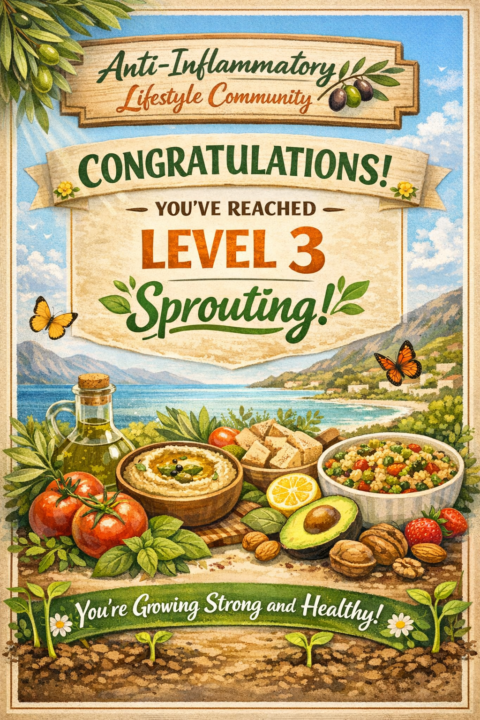
Congratulations, @Kimberly Wright and @Theresa Elliott you have reached Level 3 and you can start now the protocols in the Classroom. 🤗❤️ @Dana Stoerkel and @Adam Thomas - you are next so let´s go! :))
4 likes • Mar 19
@Kimberly Wright and @Theresa Elliott
🔥
Mar 16 •
What kind of drug is Ozempic, anyway?
Lately, Ozempic, Wegovy and other similar drugs have become really popular, often framed as a "miracle" for weight loss. But what are these drugs? They are calld Glucagon-Like Peptide-1 (GLP-1) receptor agonists. When you eat, your gut releases a hormone called GLP-1. It tells your brain you’re full and tells your stomach to slow down. Drugs like Ozempic and Wegovy are "GLP-1 agonists", which is just a fancy way of saying they stay in your system much longer than your natural hormones do. GLP-1 drugs are a class of medications primarily developed for the treatment of Type 2 Diabetes. They achieve this through several mechanisms : •Stimulating Insulin Release: They signal the pancreas to release more insulin when blood sugar levels are high. •Inhibiting Glucagon: They reduce the production of glucagon, a hormone that raises blood sugar. •Slowing Digestion: They delay gastric emptying, which prevents sugar spikes after meals and promotes a feeling of fullness. While weight loss is a significant side effect, and sometimes a secondary benefit, of GLP-1 drugs, it is not their original primary indication . While some versions are now waiting for FDA approval for chronic weight management in individuals with obesity or weight-related conditions, many people are using the diabetes-specific versions (like Ozempic) "off-label" for weight loss . And now, let me put here the (very long) list of side effects: •Nausea: very common, especially when starting or increasing the dose. •Vomiting: often accompanies nausea. •Diarrhea or constipation: digestive changes are frequent. •Loss of appetite: a direct consequence of slowed gastric emptying and brain signals. •Pancreatitis: inflammation of the pancreas, which can be life-threatening. •Gallbladder disease: Including gallstones. •Kidney issues: rare cases of kidney damage have been reported. •Gastroparesis (stomach paralysis): a condition where the stomach slows down too much, leading to chronic vomiting and severe discomfort .

3 likes • Mar 16
Reasons why I'm leary of such drugs..........and others.
1-10 of 14

@renee-montgomery-5648
I help people with ADHD turn ideas into action and teach beginners to create and sell digital products using simple marketing and AI tools.
Active 4h ago
Joined Feb 13, 2026
TN