Activity
Mon
Wed
Fri
Sun
Aug
Sep
Oct
Nov
Dec
Jan
Feb
Mar
Apr
May
Jun
Jul
What is this?
Less
More
Memberships
Syntropic Sunlands w/ Milan
178 members • Free
Food Forest Fellowship
184 members • $1,000/y
Food Forest Family (FREE)
3.7k members • Free
4 contributions to Syntropic Sunlands w/ Milan

Mar 4 •
The Infestation - How to do syntropic ag amendments free
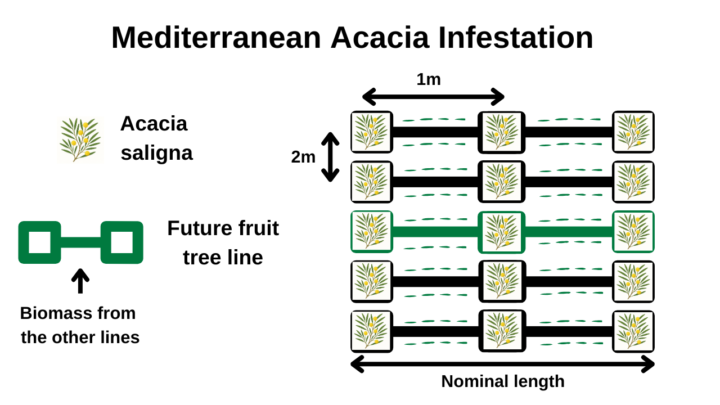
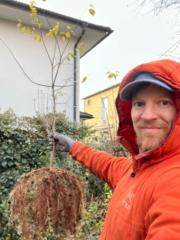
Hey everyone ! For the past two years I’ve been working toward something I’m finally beginning to implement: "the Infestation" a term coined by Scott Hall. Those of you on his platform will likely be familiar with it. Scott actually shared a design with me, and I’m currently in the middle of preparing the soil. - What is an infestation, and what’s the purpose? The concept of an infestation is simple—it’s essentially how nature most efficiently drives succession forward from bare or infertile soil. In natural ecosystems, a tough, fast-growing pioneer species colonizes poor ground because it’s the most adapted to those harsh conditions. It rapidly occupies space, outcompetes other plants, and establishes dominance so effectively that even grasses have little impact on its growth. After a few years, this often results in a dense hedge or stand of that species—you can clearly observe this along many roadsides. In my area, the species that naturally behaves this way is Acacia saligna. It self-seeds readily and is extremely resilient. Successional Accumulation Inspired by this natural process, Scott has been developing the concept of “Successional Accumulation.” The goal is to run syntropic agroforestry systems without external amendments by harnessing the initial growth and biomass production of the infestation phase. The system progresses through: - Infestation phase (pioneer dominance and biomass buildup) - Stabilisation phase - Succession phase - The end goal is the same abundance we seek in syntropic ag - but achieved only through plant power rather than external inputs. I won’t dive too deep into each phase here, but I’m happy to discuss further. Why acacias in the Mediterranean? Scott and I have discussed extensively how to adapt this to Mediterranean climates. We both see Acacia species as particularly promising pioneers (e.g., Acacia saligna, Acacia dealbata, Acacia pycnantha, etc.).
3 likes • Mar 5
Here in east Austria, not mediterrane, we have around 500-600 mm precipitation, i see buddleja at train ways, ailanthus, robinia, also acer negundo, poplar and cornus sanguinea, . Ailanthus altissima and robinia p. building mono stands most of times, though robinia sometimes seen also with sambucus nigra interspersed.
Feb 28 •
Interview with Scott Gallant !
Hey you all ! I've been super busy planning out some interviews lately and working on developing my Instagram account to draw more members to the platform, while planting out the last systems for this year on the farm. Over time I'll cover them all here ! This interview with Scott is a gem, Scott is a really practical guy with a real proficiency with Syntropic ag, he's been installing many syntropic systems in Central America over 16 years of practice ! Enjoy the conversation !
1 like • Feb 28
Thanks for doing these great Interviews milan, have been very inspiring so far! Keep it on!
1 like • Feb 28
@Milan Marquis What is your main motivation for doing this Plattform?
Jan 13 •
Emergent Powerhouse Trees for the Mediterranean
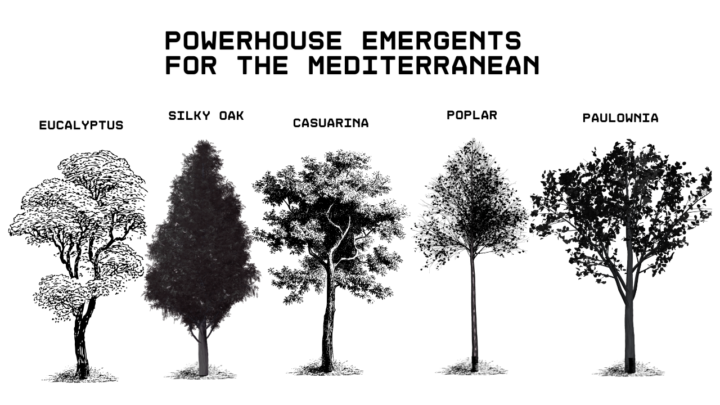
As you may know, if you work in the Mediterranean climate, the Summer sun is a tough one and can have certain plants absolutely scorched by the Summer sun. Tomatoes are quite an example of that, and that happens with many nightshades and other summer vegetables. The same can happen to bushes and trees if planted in full sun. And for me this is one of the main reason I stick with syntropic agroforestry to this day. I've made observations of Summer crops planted in full sun vs between syntropic lines. And the difference can be massive sometimes. Not only are they protecting the crops from intense sunlight but as well from evaporation which is another consideration. So, it's why I want to share with you 5 of the emergent powerhouse trees that work quite well in the Mediterranean. The emergent strata/layer is key in the Mediterranean for our dappled sunlight trickling through our canopy layer and below. And I will share quick considerations about all 5 of them. You'll understand by the end of this article that these 5 different emergents are adapted to different conditions and there's always drawbacks in using any of them but also advantages that you can benefit from for your specific context Eucalyptus (camaldulensis/globulus) Everyone who's planted a syntropic system in the Mediterranean has tried planting eucalyptus. After all it's been referred to as "the king" for its fast growth and enormous biomass that it can offer. I've had many grow to 2m tall in 1 year with little irrigation. Now one consideration, eucalyptus trees grow much faster if they have access to underground water, but it is is still possible to grow them with driplines, after all these eucalyptus that grew 2m in one year did not have access to ground water. But for a very limited water supply they might not be your best bet. As well, it's important to discern eucalyptus growth in the subtropics from the semi-arid climate. In the subtropics you'd see many people taking their heads completely off. Same in Mediterranean plantations that have access to groundwater but if that's not your case, it's important to keep stubs and/or branches that have the potential to become new leaders rather than taking off 100% of its foliage.
0 likes • Jan 14
@Milan Marquis oh i see, at which time of the year most of the precipitation?
0 likes • Jan 22
[attachments]
Jan 7 •
Stratification Mini - Course Incoming
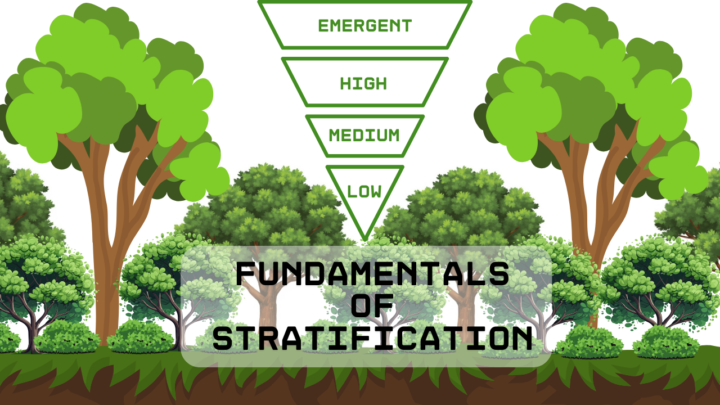
Hi, you all - little announcement - I am in the process of making a mini-course on stratification or plant layering. Meaning the way plants arrange themselves in nature according to their needs of light and how we can use this principle to accumulate the most energy, - photosynthesis therefore biomass therefore topsoil in one's system. These videos will be "whiteboard" style teachings with clear examples and identifications of plant stratas. While in the process, I am still open to receive feedback to make this course even more valuable for you. Any suggestions, any doubts for some of you that still have an issue understanding the basics of stratification properly ? Share them here and we can have a good talk about it !
2 likes • Jan 7
Hi Milan, I am still struggling with Stratas and Distances between Plants throughout the temperate climates. As for example the Stratas, or how much Stratas you can overlay in the various climates like dry warm temperates like in the Mediterranean compared to humid cold temperate or cold temperate climates where we have also quite some drought issues throughout the year. I would like to get quite close with distances and layering plants as we have drought here in the Pannonic area but am not sure if we also have enough light then for some species to set mature out fruit for example when layering to much or having rows too close to each other..
0 likes • Jan 7
@Milan Marquis i understand that, but more specific when it comes to your target fruit/nut crop like for example Almond you would take commercial distances in your area or could you even get closer with distances? Its more about filling up with other species and Strata and the pruning of all in cycles or ?
1-4 of 4
Active 2d ago
Joined Dec 29, 2025
Königsbrunn im Weinviertel