
Jan 13 (edited) • Mediterranean
Emergent Powerhouse Trees for the Mediterranean
As you may know, if you work in the Mediterranean climate, the Summer sun is a tough one and can have certain plants absolutely scorched by the Summer sun. Tomatoes are quite an example of that, and that happens with many nightshades and other summer vegetables. The same can happen to bushes and trees if planted in full sun.
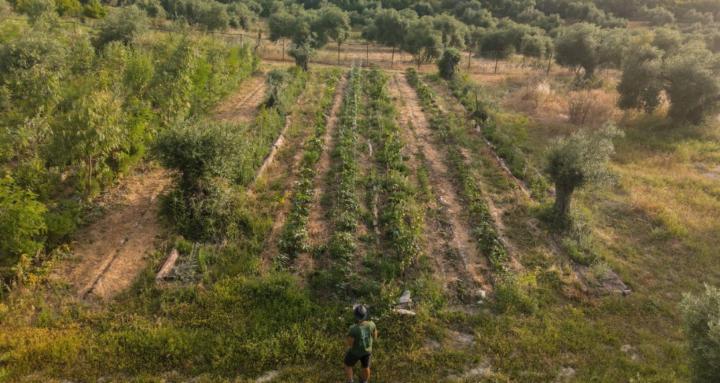
And for me this is one of the main reason I stick with syntropic agroforestry to this day. I've made observations of Summer crops planted in full sun vs between syntropic lines. And the difference can be massive sometimes. Not only are they protecting the crops from intense sunlight but as well from evaporation which is another consideration.
So, it's why I want to share with you 5 of the emergent powerhouse trees that work quite well in the Mediterranean. The emergent strata/layer is key in the Mediterranean for our dappled sunlight trickling through our canopy layer and below. And I will share quick considerations about all 5 of them.
You'll understand by the end of this article that these 5 different emergents are adapted to different conditions and there's always drawbacks in using any of them but also advantages that you can benefit from for your specific context
Eucalyptus (camaldulensis/globulus)
Everyone who's planted a syntropic system in the Mediterranean has tried planting eucalyptus. After all it's been referred to as "the king" for its fast growth and enormous biomass that it can offer.
I've had many grow to 2m tall in 1 year with little irrigation.
Now one consideration, eucalyptus trees grow much faster if they have access to underground water, but it is is still possible to grow them with driplines, after all these eucalyptus that grew 2m in one year did not have access to ground water. But for a very limited water supply they might not be your best bet.
As well, it's important to discern eucalyptus growth in the subtropics from the semi-arid climate. In the subtropics you'd see many people taking their heads completely off. Same in Mediterranean plantations that have access to groundwater but if that's not your case, it's important to keep stubs and/or branches that have the potential to become new leaders rather than taking off 100% of its foliage.
That will ensure a faster recovery and sometimes even the fact that it may continue living.
Casuarina (Cunnighamiana)
Casuarina biomass seems underwhelming compared to what eucalyptus can offer but in certain conditions it's the best bet you have. It's tough as nails and doesn't need access to underground water and much irrigation to react well to pruning. I was very underwhelmed by this plant but now I understand its potential for a very low maintenance syntropic system.
They don't make much shade which actually makes a lot of sense to use for quasi-emergent tree crops beneath - such as olive or almond, especially when fruiting when they basically need full light.
One way to compensate for the underwhelming biomass would be to plant more of them or to combine them with one other emergent species. I wouldn't just plant one every 5m but 3 and once they mature only one will stay. One consideration when planting them is to depend on other plants for biomass in the first years. That can easily be done by using high strata trees such as peruvian pepper trees or acacias alongside the casuarinas.
One more consideration, casuarinas hate compacted soil, it is important to do a good soil prep, decompact deeper, if you have a very compacted clay soil.
Poplar (Populus Nigra/Alba/X Canadensis)
Poplar for me is the most controversial one. It doesn't work for everybody. If you have a very limited water supply, don't even consider them. I've planted some with eucalyptus and the eucs turned 5m tall in one year and a half, had to use both my hands to go around the entire trunk, but the poplars were barely my height with a trunk as thick as my thumb. And that was a system where we were very generous with the water we were giving to it
I think poplar is meant for you if you can water infinitely and/or have a sufficient rainfall and/or have a water table they can reach into. Poplars have potential but only in certain scenarios, depending on where you are.
One good thing about them though is their deciduous nature meaning there's no rush to prune and light is allowed in the canopy and below during the winter
Paulownia (Tomentosa,..)
Paulownia is one emergent tree many people want to try, thinking it'll do miracles. Yes it can but again, it depends on your conditions. With good watering they'll grow fast, sometimes faster than eucalyptus. But with not enough they can just stagnate like "What am I even doing here". They can be a miracle in the right context, and especially if you have some fertility in your soil.
Other considerations, plantings are hard to find and expensive to buy usually, unless you've got your own specimens and can dig out some root cuttings and propagate them yourself
Silky Oak (Grevillea Robusta)
And best for last. The silky oak. It is by far the slowest one of them all. In Australia it would be considered a secondary species, but here I almost consider it a climax species, as it can be very slow - even though, bear with me it doesn't live more than 100 years.
But for now I still haven't seen an emergent that can do the job well of being a climax species in a syntropic system. We do need these pyramidal-shaped emergents that react well to apical pruning. Ash or oak don't offer that as they are a more bushy type of emergent.
So yes, although slow, grevillea robusta is not dependent on a water table to thrive, it just needs deeper undergound moisture which isn't a problem within a syntropic system.
One benefit of the silky oak too is its capacity to be used as valuable furniture wood down the line. My friends at Permadynamics in New Zealand cut down a mature one and I was surprised by the beauty of the grain. Other good thing is it can sit in shade for a long time before fully emerging. It doesn't need full light from the beginning like eucalyptus or casuarina do. In fact it will enjoy shade in the first couple years. So I find it the perfect replacement below shorter term emergents such as the ones I speak of above. In fact I added grevillea robusta over all our syntropic systems - below our main emergents to take over in the future.
Hope you enjoyed this post, plenty of details that can be very useful. Any other suggestions of emergent trees that can be used in the Mediterranean ? Set the comment section on fire !
8
22 comments
Emergent Powerhouse Trees for the Mediterranean
powered by
skool.com/syntropic-agroforestry-w-milan-3000
Mediterranean Syntropic Agroforestry made practical.
Efficient design, minimal water, low inputs — maximum impact.
Suggested communities
Powered by