Activity
Mon
Wed
Fri
Sun
Aug
Sep
Oct
Nov
Dec
Jan
Feb
Mar
Apr
May
Jun
Jul
What is this?
Less
More
Owned by Moni
Accountant by day, Crochet Designer by night
Memberships
28 contributions to Inspired Life, Empowered Being

🔥
Apr 5 •
Attachment Styles 🧠
Thought I'd do a few posts about attachment styles because I do think that these play an important part in the health of relationships and I think that it's helpful to recognize where we are/the things that contribute to our interactions with others. :) 𝐎𝐯𝐞𝐫𝐯𝐢𝐞𝐰 Attachment theory suggests that early caregiving experiences shape our internal working models and these serve to answer two core questions: 1)Am I worthy of love and care? 2)Are other people reliable and safe? Those answers guide our emotional regulation patterns, fight/flight response, and relationship behaviors. I actually think that attachment styels, while foundationally built when young, can also be impacted later in life with different types of experiences....Someone can be securely attached but if they encounter an unsafe relationship (or a relationship where signals are mixed, where one doesn't really know where they stand with the other person )it can potentially create an environment where someone secure can all of a sudden appear more anxious/insecure because that's the appropriate response to the situation. If they stay in a situation like this long enough, it can contribute to longer term effects that will then potentially lead to a more insecure attachment. (thinking about the impact that trauma has on this as well). 𝐁𝐫𝐞𝐚𝐤𝐝𝐨𝐰𝐧 𝐨𝐟 𝐄𝐚𝐜𝐡 𝐓𝐲𝐩𝐞 (I maaaaay do a more in depth one for each of these in the future, but here's a brief overview). 1. 𝗦𝗲𝗰𝘂𝗿𝗲 𝗔𝘁𝘁𝗮𝗰𝗵𝗺𝗲𝗻𝘁 Core belief: I am worthy. Others are dependable. Yay! Nervous system: More regulated baseline; able to tolerate distress without catastrophizing; more CURIOUS. :) Curiosity is our friend, people. :) Conflict style: Direct communication, repair-oriented., honest/transparent; ability to take risks; Psychological strength: High emotional resilience and integration of autonomy and intimacy. 2. 𝗔𝗻𝘅𝗶𝗼𝘂𝘀 (𝗣𝗿𝗲𝗼𝗰𝗰𝘂𝗽𝗶𝗲𝗱) 𝗔𝘁𝘁𝗮𝗰𝗵𝗺𝗲𝗻𝘁 Core belief: I might not be enough. I could be abandoned/rejected. Nervous system: Hyperactivated threat response (heightened sensitivity to rejection cues).
Poll
11 members have voted

2 likes • Apr 5
Hi Georgiana ♥️ Thanks for bringing up this important topic! I highly recommend the videos from Dr. K (HealthyGamerGG) as a great addition to this. He explains attachment styles and our reactions to them perfectly 🤩
🔥
Sep '25 •
💡 Curbing Micro-Spending and Building Mindful Money Habits
Follow up from earlier post: Small purchases may feel harmless, but they add up quickly. With intentional strategies, you can take control of your money and make spending purposeful. ✨ Strategies to Curb Micro-Spending: - 📝 Track Every Dollar: Keep logging your expenses to stay aware of where your money goes. Awareness is the first step to change. - 🚫 Pause Before You Buy: Wait 24 hours before making a non-essential purchase. Many impulses fade with time. - 💳 Set Spending Limits: Create a small, budgeted allowance for micro-purchases each week. This allows flexibility without overspending. - 🛍️ Avoid Triggers: Identify stores, apps, or routines that lead to unnecessary purchases and reduce exposure. - 📦 Unsubscribe and Delete: Cancel unused subscriptions and remove shopping apps from your phone. - 🎯 Focus on Goals: Keep your larger financial goals visible, like savings, investments, or debt repayment, to motivate mindful choices. - 🏦 Use Cash Envelopes: Allocating physical cash for discretionary spending can make micro-purchases feel more real and controlled. ***Live humbly--think about your relationship with others and with money. The video below mentions on how in Swiss culture it is frowned upon to be flashing one's money and how status is not dependent on how someone 'shows off' what they have but rather their ability to manage what they have responsibly. *** I appreciated this because a lot of the U.S. culture (and media that we ingest) is counter to this*** - 💬 Reflect Weekly: Review wins and challenges each week. Celebrate when you make intentional choices and adjust strategies as needed. 💬 Question to consider: What small habit could you change this week to reduce micro-spending and save more toward your goals? (for me? It's going out to eat...It's my biggest expense I would say)
2 likes • Sep '25
@Georgiana D ❤️❤️❤️ speaking of transformation 😂 My financial advisor used to be my husband, and let me tell you, his advice wasn’t that good 😅 Now that I'm a single mom, my financial advisor is my kid's college fund, and it's a lot less flexible but way more honest 🏆🫶🏻🥰
1 like • Sep '25
@Georgiana D ♥️

🔥
Sep '25 •
The Hidden Key to Success: Letting Go and Making Space
I used to think success meant doing more — more clients, more hours, more commitments. But in reality, it just left me drained. The shift came when I realized success wasn’t about how much I could cram in… but about creating space for what mattered. 👉 What’s one thing you’ve let go of recently that created more peace in your life?

2 likes • Sep '25
@Christa Lovas 🍁 it’s about being present, clear, and free to spend energy on things that actually feed us ☺️ Saying no isn’t selfish, it’s taking care of our life, isn‘t it?
2 likes • Sep '25
@Christa Lovas 🌹 thank you 🫶 Saying “no” is like giving myself a little high-five ✋😂 Sometimes, the best way to say “yes” to what I/we really need is to just say “no” to the stuff that doesn’t work for me/us 😄
🔥
Sep '25 •
Favorite books or current reads!
I'd love to get a list going of people's favorite books or current reads! (or if you've written a book yourself, feel free to share that as well!). If you'd be so inclined, please feel free to share in this space. Also, if there's a book you would NOT recommend, share that too. I'm curious! My current reads: The scout mindset How to win Friends and influence people The Bible-trying to make this a daily habit My most recent reads: The rhythm of Life The art of communicating The power of now Podvig Thinking Fast and Slow An Arsenal of Gratitude-Waging War on Mediocrity and Regret aaaand pissed off with a purpose: waging war on Fear(shoutout to @Dan 'Remmy' Stourac --it's written by him and they're both fantastic!--made me want to throw the book on the bed and go do amazing things!). The Bible Dune Crazy busy The Great Alone In the Realm of Hungry Ghosts: Close Encounters with Addictions Fight Club Scattered Minds: The Origins and Healing of Attention Deficit Disorder Disappointment with God Kasher in the Rye (NOT to be confused with Catcher in the Rye) Favorite Books: Man's Search for meaning-viktor frankl Elements-Transfiguration of Elijah -anonymous priest in the oriental orthodox church Daring Greatly (and a bunch of Brene Brown's other work--Gifts of Imperfection; I thought it was just me but it wasn't; Braving the Wilderness) Screwtape Letters and the Great Divorce by C.S. Lewis Atomic Habits Brother's Karamazov and Crime and Punishment by Dostoevsky Welcome to the Orthodox Church by Fredericka Matthews Greene (I'll continue adding, these are just top of mind right now! ) Thank you for the inspiration @Dan 'Remmy' Stourac Please add to the list: @Aleksandra Nedelkoski @Anastasia Cocioaba @Andres Mateo @George Arhip @Loren Angelo @Britni Burton @Tim Blacke @Christa Lovas @Anastasia Cocioaba @LaTanya Carter @Dan 'Remmy' Stourac @David Pepper @David Pepper @Dayna Kanouna @Dr. Melissa Partaka @John D @Rachel Featherstone @Julia Groth @William Guy @Kimberly Poirier @Lisa Papiez @Lisa Vanderveen @Mary Seguin @Michael Mcknight @Michelle Mann @Moni Matysiak @Rina Maniou @Ronnie McCabe @Peter Oconnell @Ruth aka Grace Rose @Ryanne Ryan @Tracy Stewart @Adriana Filip @Jennifer Doppke @Anna Lh @Brittany Hone @Chris Wendt @Jose Colon @Yvonne Green @Linda Short @Nicole Johnson @Julie Nelson @Stephanie Riley @Tharuk M @Vasi Smith @Wesley Penner @Chris Wendt
9 likes • Sep '25
@Georgiana D 🥇 What a fantastic list you have! 📚 It's great to see such a diverse selection of reads. Four Thousand Weeks - Oliver Burkeman Summary & Workbook: $100M Leads - Alex Hormozi How Emotions Are Made - Lisa Feldman Barrett
🔥
Sep '25 •
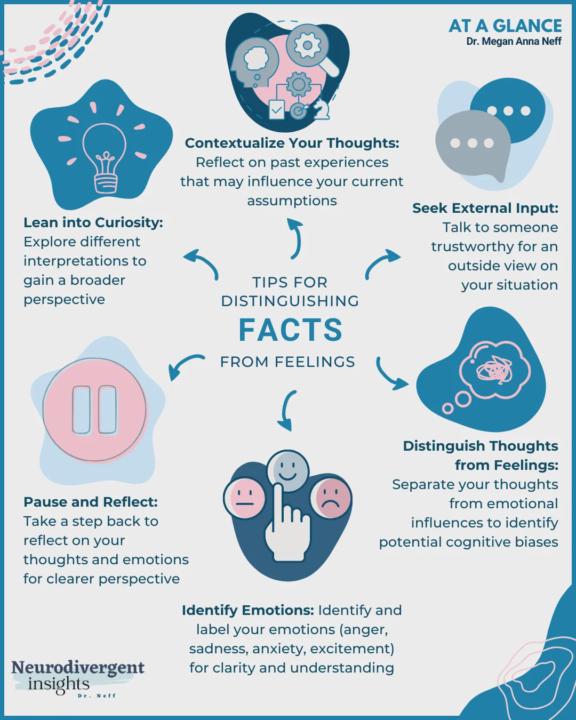
🌀 Cognitive Distortion Spotlight: Emotional Reasoning
Emotional reasoning happens when we believe our feelings are facts. Instead of checking reality, we assume that because we feel something, it must be true. This distortion can quietly shape how we see ourselves, others, and the world around us. We don't want to dismiss/ignore the feelings, but we don't want to let them override decision making either. (this is similar to the idea of emotions as informers rather than CEOs). I thought we'd bring it back because it's one that's fairly common! ✨ Examples of Emotional Reasoning: - 😔 “I feel worthless, so I must not have any value.” - 😨 “I feel anxious about this situation, so it must be dangerous.” - 😡 “I’m angry at you, so you must have done something wrong.” - 😩 “I feel overwhelmed, so I can’t handle this.” 💡 Why it’s a problem:Emotions are powerful, but they are not always accurate signals of reality. They can signal/inform us about something, but they could be mistaken in their target. Emotional reasoning can lead to unnecessary fear, self-doubt, and conflict. It traps us in a cycle where feelings reinforce distorted beliefs, making it harder to break free. 🌱 Healthier Perspective:Feelings are information, not proof. We can acknowledge them without letting them dictate the truth. By pausing and asking, “What evidence do I have that supports or challenges this feeling?”, we create space for balance and clarity. By asking, "What are you actually trying to tell me?" , we can get beneath the first layer and actually address what's going on. 🌱 Overcoming Emotional Reasoning It’s natural to trust our feelings, but when emotions start to dictate reality, we can fall into the trap of emotional reasoning. The good news is that with awareness and practice, we can create healthier patterns of thinking. Woo hoo!! :) :) ✨ Practical Strategies: - 🔍 Reality Check: Ask yourself, “What are the facts that support this thought? What evidence goes against it?” - ✏️ Write It Out: Journaling helps separate feelings from facts. Seeing thoughts on paper makes them easier to challenge. I've done this many times and it is effective! Saying it out loud and recording it and playing it back can do something similar. - 💬 Talk It Through: Share your feelings with a trusted friend, mentor, or therapist who can offer perspective. :) - 🧘 Mindfulness: Notice emotions without judgment. Remind yourself, “This is a feeling, not a fact.”--we talked about cognitive defusion previously; we can do some similar things with feelings as well! - 🎯 Reframe the Thought: Replace “I feel like I can’t do this” with “This feels hard, but I’ve overcome challenges before.” - 🕰️ Pause Before Reacting: Give yourself time to calm down before making decisions when emotions run high. It can be challenging to want to pause (sometimes we go into fight/flight) and want to resolve an issue right away or flee from it. A pause can give some space to breathe and allow room for other things to come through too!
1 like • Sep '25
@Georgiana D ♥️ You’re not alone in that pattern... If you want, tell me: what usually makes it flip from “I got this” to “game over”?
1 like • Sep '25
@Georgiana D I love sushi 🤩
1-10 of 28
@moni-matysiak-3232
Curious how an accountant got into crocheting? 😅 Blending numbers with creativity! ♥️
This is our journey, inspired by people we love and admire ♥️
Active 95d ago
Joined Aug 26, 2025
Germany