Activity
Mon
Wed
Fri
Sun
Jul
Aug
Sep
Oct
Nov
Dec
Jan
Feb
Mar
Apr
May
What is this?
Less
More
Owned by Michael
Stop overthinking travel ✈️ This is where trips go from idea → booked. Plan smarter. Find your people. Join free.
🔥 Stop spinning. Grow through partnerships 🤝 Find builders, make deals: turn connections into growth 🚫 For lurkers. 🎯 Builders ready to move 🚀
Memberships
The Portfolio Life Project
7 members • Free
Solo Abroad
7 members • Free
Nomad Rainmakers 🎯
10 members • Free
The Hobby Hub
10 members • Free
Luxury Travel Network
14 members • Free
Enjoy the Journey of Life
14 members • Free
Ireland Travel & Art
18 members • Free
Wanderwise
23 members • Free
Odyssey Travel Academy
25 members • Free
64 contributions to Travel Trainers

13d •
Marketing idea
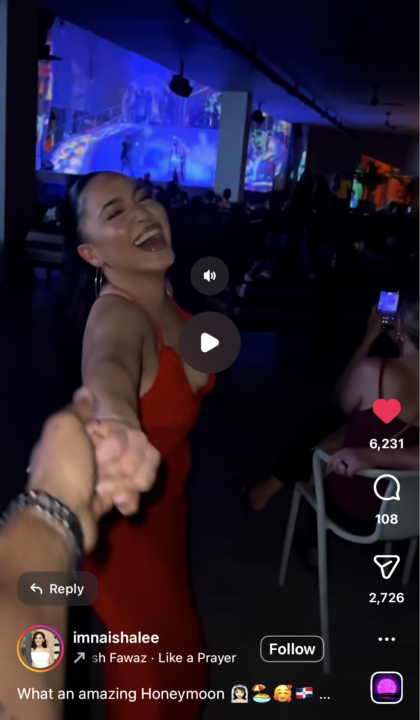
@Juan Landaverde thought of you! This was at Excellence El Carmen in Punta Cana. https://www.instagram.com/reel/DXh9qjCD4-T/?igsh=MXFzb2RhMDZzcDJ2Zw==

1 like • 8d
I love this . As a dancer this is awesome but the spin is a metaphor for taking a step and each step takes you to a new location.
1 like • 11h
@Christine Berencz Lol every lady needs to pack a great looking red dress. The color red does something to mens minds!
8d •
Rooming Compatibility — Is This Actually a Pain Point for You?
Been getting some questions about something I've been quietly building , so figured I'd open it up to the group. I run group trips for adults 50+ and rooming compatibility has always been one of the trickiest parts. Wrong pairing kills the trip experience before it starts. So I built a traveler compatibility and rooming match system intake form plus an AI-assisted screening tool that analyzes travel style, rooming preferences, lifestyle compatibility, and flags potential friction points before anyone books. It's designed for advisors and group trip operators who want to reduce rooming drama and streamline the intake process. The interest has been enough that I'm now looking for 3–5 travel advisors who run group trips to beta test it with a real client group. You use it, I refine it based on your feedback. If it saves you one uncomfortable rooming conversation, it's probably worth it. Two questions: 1. Is rooming compatibility actually a pain point in your group trips? 2. If this were a polished tool you could license and use with your clients what would make it worth paying for? Drop a comment or DM me. Genuinely want to know if this is useful to the people in this room before I build it out further.
1 like • 11h
@Christine Berencz Thank you Christine
2 likes • 11h
@Shirley Cress Dudley Thank you Shirley
14d •
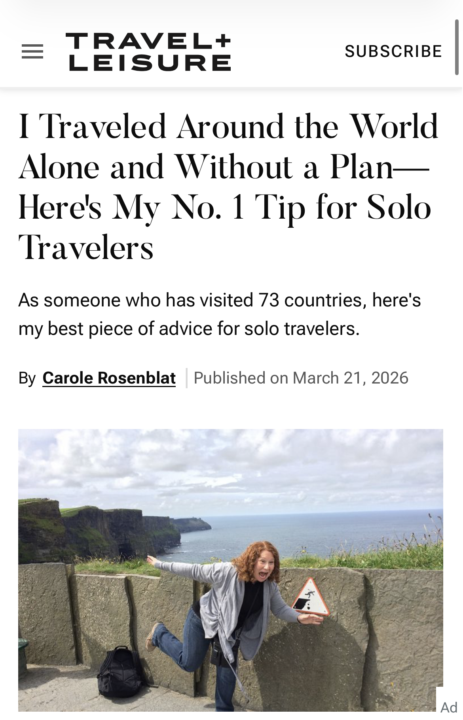
Is a solo trip on your mind?
Link to the full article from Travel and Leisure: https://www.travelandleisure.com/best-solo-travel-advice-11931112
1 like • 14d
@Christine Berencz That's awesome thanks Christine!! You are the best!!
2 likes • 8d
@Chyna SingLing 😊 Chyna SingLing absolutely — here's a look at what I've been building. It's a traveler compatibility and rooming match system designed specifically for advisors running group trips. Screens travel style, rooming preferences, lifestyle compatibility, and flags friction points before booking. Still tightening it up but the core workflow is solid. Drop me a DM happy to walk you through it.
10d •
🎶 The Pied Piper Model — The Most Underused Income Strategy in Group Travel
You've probably heard the term. A trusted person uses their social credibility to fill a group trip, and the operator rewards them for it. Most advisors learn about it, nod, and move on. Here's what I think gets missed: the model isn't just a free-trip perk. It's a structured system for filling group departures without depending entirely on your own reach and it works whether you're running custom trips or booking groups onto established itineraries. The concept breaks down into three roles: 1. You — the Guide. You design or select the experience, hold the trust, and lead the group. Every trip runs through your credibility. 2. The Co-Leader. Someone already booked on your trip who agrees to invite people from their own network onto the same departure. They don't plan anything. They just say "I'm going come with me." You reward them with trip credits, a room upgrade, or a reduced rate depending on how many convert. 3. The Referral Connector. Someone who doesn't travel but sends people your way a local connector, a community contact, a trusted friend. A simple cash or credit thank-you per converted booking is enough. What makes this work is matching the reward to your trip economics before you make any promises. A $150 credit on a $3,000 trip is a 5% cost. That same Co-Leader's converted referral earns you $300–$400 in commission. The math holds. The real shift is in how you identify Co-Leaders. The best ones aren't strangers you recruit. They're people already inside your community or client list who are enthusiastic about a specific trip. They comment on your posts, tag friends, ask about roommates. That excitement is the signal. The ask isn't a pitch it's an honor. "I thought of you first. If you know 2–3 people who'd love this trip, just tell them about it and send them my way. I'll take care of the rest." I've been formalizing this system inside my own community and it's changed how I think about trip launches. Instead of one channel (me), every departure has 2–3 people actively talking about it in their own networks.
Apr 17 •
PRICING DECISION
Working through pricing on a New Orleans group trip right now… Curious how others approach this: Do you anchor higher with a premium hotel option first, or lead with the most accessible price point? I’m seeing pros/cons both ways depending on the audience.
2 likes • Apr 23
@Lary Neron Great distinction, but I think there's a difference between anchoring as context and anchoring as sales pressure, and that line matters more than we admit. The real con isn't anchoring itself. It's when the premium option is so out of reach that the client feels steered rather than informed. At that point you've lost trust, not gained a sale. The other thing I watch for: more options don't always mean more clarity. For a group planner who has to justify the budget to 20 other people, three price points can create three new arguments they have to have. Sometimes a confident recommendation closes faster than a menu. The variable I use is who's actually making the call. Solo decision maker with authority? Lead high, it flatters their judgment. Committee or group planner accountable to others? I'll often lead with the most defensible number and let the upgrade sell itself.
1 like • Apr 23
@Christine Berencz Exactly, and Exoticca figured something out that a lot of independent agents are slow to adopt. When the experience itself is fixed, the hotel tier becomes the only variable the client is actually deciding on. That simplicity removes a ton of friction. The deeper thing they got right is that it stops the client from comparing apples to oranges. They're not weighing a better hotel against a different itinerary or fewer included meals. It's a clean decision with a clear trade off. Where it gets interesting for us as agents is knowing when to borrow that structure versus when to build something more custom. Not every group wants the same days. But when you have a group where the activities are already agreed on and the real negotiation is just budget comfort level, that tiered hotel model is honestly one of the cleanest closes in the business. The clients who struggle most with decisions usually struggle because there are too many moving parts at once. Lock the experience, free up the budget conversation, and you'd be surprised how fast people commit.
1-10 of 64

@michael-johnson-8543
Helping 55+ solo travelers go from overwhelmed → confident through community, not deals.
Clarity before booking. Confidence before committing.
Active 33m ago
Joined Nov 7, 2025
ENFP
San Antonio TX
Powered by