Activity
Mon
Wed
Fri
Sun
Apr
May
Jun
Jul
Aug
Sep
Oct
Nov
Dec
Jan
Feb
Mar
What is this?
Less
More
Memberships
Davie's Free Ecom Course
72k members • Free
Imperium Academy™
54.3k members • Free
AI Automation Society
276.7k members • Free
Hamza's Automation Incubator™
45.4k members • Free
AI Automation Agency Hub
299.4k members • Free
Data Alchemy
37.8k members • Free
17 contributions to AI Automation Society

6h •
Need help connecting n8n → Buffer (GraphQL API) for LinkedIn posting
Need help connecting n8n → Buffer (GraphQL API) for LinkedIn posting Hey everyone, I’m building an automation to publish LinkedIn posts through Buffer using n8n, but I’m stuck on the API mutation step. Stack I'm using - n8n (self-hosted via Docker) - HTTP Request node - Buffer GraphQL API - Bearer API token - JSON request body What works so far• API authentication works• I can run GraphQL queries successfully• I retrieved my organization ID and channel ID• Queries like fetching account / organizations / channels return data correctly Where it breaksWhen I try to run the createPost mutation to create a LinkedIn post, I consistently get a 400 error. I suspect the issue is related to the CreatePostInput schema requirements (fields like shareModel, schedulingType, text, etc.) or how n8n formats the JSON request. GoalAutomatically create or schedule LinkedIn posts in Buffer from an n8n workflow. If anyone has successfully done n8n → Buffer API → LinkedIn posting, I’d really appreciate seeing: - the correct GraphQL mutation structure - required input fields for createPost - or a working example Thanks in advance!
Sep '25 •
My Intro
Hey everyone 👋 I’m Mahad, based in Sydney. I’m currently working in IT and while building skills in AI, data, and automation. My goal is to grow an AI automation agency and create scalable systems that save time and money for businesses. Outside of work, I enjoy chess, badminton, and learning new things. Looking forward to connecting and exchanging ideas with the community! 🚀 How about you guys?

Sep '25 •
How to Measure the ROI of AI in Your Business
AI is no longer a futuristic concept—it’s a business reality. Companies across industries are using AI to automate processes, enhance customer experience, and make smarter decisions. But one question always comes up: “How do I know if my AI investment is paying off?” This is where measuring ROI (Return on Investment) comes in. Unlike traditional tools, AI ROI isn’t just about cost savings—it’s about efficiency, insights, and growth. Here’s how to do it right. 1. Define Clear Objectives Before Implementing AI Before you can measure ROI, you need to know what success looks like. AI can serve multiple purposes—automation, customer engagement, predictive analytics, personalization, and more. Ask yourself: - What problem am I solving with AI? - What outcomes am I expecting? (e.g., reduce costs, increase revenue, improve conversion rate) - Which business units will benefit most? Defining these objectives early makes measurement meaningful. For example, if your goal is to improve customer support using AI chatbots, your metrics will focus on response time, ticket resolution, and customer satisfaction. 2. Identify Relevant Metrics AI ROI can be measured using quantitative and qualitative metrics. Quantitative Metrics: - Cost Savings: How much are you saving by automating repetitive tasks? For example, AI-powered invoice processing can reduce manual labor costs. - Revenue Increase: Has AI-driven personalization or predictive recommendations led to higher sales? - Time Saved: Measure hours saved by automating tasks (e.g., AI scheduling, data entry). - Conversion Rate Improvement: AI-driven marketing campaigns or lead scoring can increase the percentage of prospects converted into paying customers. Qualitative Metrics: - Customer Satisfaction: AI can improve experience (e.g., chatbots providing 24/7 support). Use surveys or Net Promoter Score (NPS). - Employee Experience: AI reduces mundane tasks, allowing employees to focus on high-value work. - Decision-Making Quality: Evaluate if AI insights lead to better strategic decisions.
0 likes • Sep '25
Great breakdown 👌 Most businesses jump into AI expecting instant magic, then get frustrated when they can’t “see” the value. Laying out ROI in both numbers (time, cost, revenue) and intangibles (customer experience, employee focus) is the only way to make AI a real business asset instead of a shiny experiment. Thanks for framing it so clearly. 🚀 @Nazmul Hasan

Sep '25 •
The Systems Behind Successful Businesses: Automations That Work for You Daily
Repetitive tasks drain time. Smart automation gives it back, to focus on growth, service, and strategy. 🔹 Client onboarding – With Make.com or n8n, every new client gets a seamless, professional welcome. 🔹 Email sequences & reminders – Follow-ups land on time, nurturing relationships and boosting conversions. 🔹 Invoices & payments – Triggers keep cash flow steady and reduce overdue balances. 🔹 Task & project updates – Teams stay aligned, projects move faster, and miscommunication drops. 🔹 Reports & dashboards – Real-time insights for sharper, quicker decisions. Who benefits? ✔️ Businesses – Coaches, agencies, consultancies, e-commerce brands that need efficiency and consistency. ✔️ Individuals – Freelancers, solopreneurs, and professionals looking to save hours each week and scale without overwhelm. My approach: map workflows, design in Make.com or n8n, test for reliability, then optimize until it runs smoothly. The results: fewer errors, happier clients, steady revenue, and more time for what truly matters. One setup. Continuous impact.
1 like • Sep '25
Well said 👌 The real power of automation isn’t flashy bots, it’s the boring-but-critical systems that run every day without fail. Onboarding, invoices, follow-ups — when those are airtight, growth feels 10x easier. Love how you framed it as “one setup, continuous impact.” That’s the dream. 🚀

Sep '25 •
From Workflow to Revenue Share...My Biggest Win Yet!
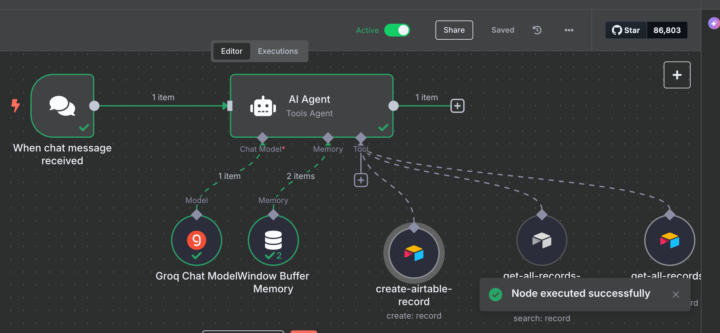
A few weeks ago, I met Salim. He runs a garment sourcing business, connecting factories in Bangladesh with buyers across Europe. Great guy, solid product, but he was struggling hard with outreach. No system, no automation, just manual hustle and missed opportunities. So I built him a full-stack engine: lead generation, personalized email campaigns, appointment booking, and even an AI voice agent that cold calls and qualifies leads. I handled the whole funnel...from scraping to scheduling to CRM tagging. He paid me $3,500 for the build. But here’s where it got interesting. Instead of just maintaining the system, I pitched him a bigger play. I told him: “Let me handle the outreach, the meetings, the closing..and you share 30% of the profit from every deal that comes through this machine.” He said yes. Now I’m not just the tech guy..I’m the closer, the strategist, and the growth partner. Every time a buyer places an order, I get a cut. And I manage the entire pipeline like it’s my own business. This isn’t just a win...it’s leverage. From workflow to revenue share. From one-time fee to recurring upside. If you’re building systems for clients, don’t stop at delivery. Think bigger. Own the outcome. Let's go....
3 likes • Sep '25
🔥 This is the move. Too many automation builders stop at “here’s your workflow” and miss the real upside — owning a piece of the results. Turning a $3.5k build into a profit-sharing partnership is the definition of leverage. Massive respect for playing the long game here. 🚀
1-10 of 17

@mahad-ahmed-9601
Tech learner | AI & data enthusiast | Hustler
Active 5h ago
Joined Jul 8, 2025
Sydney
Powered by