Activity
Mon
Wed
Fri
Sun
Aug
Sep
Oct
Nov
Dec
Jan
Feb
Mar
Apr
May
Jun
What is this?
Less
More
Memberships
Bedrock Nation
169 members • Free
2 contributions to Bedrock Nation

Nov '25 •
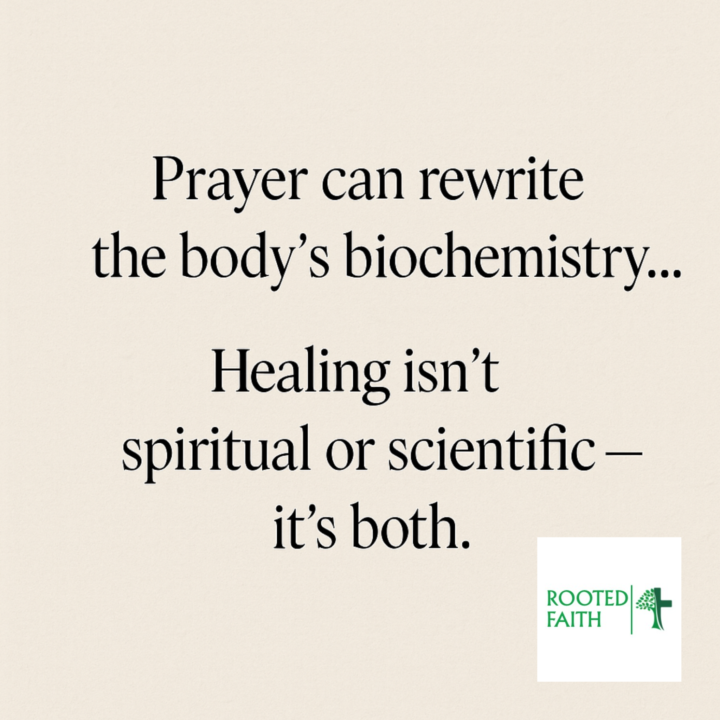
The biochemistry of prayer
✨ Prayer— It’s God-Designed Biochemistry ✨ Here’s what actually happens in your body when you pray: ⸻ 1. Prayer calms the fear centers of your brain. When you pray, activity in your amygdala — the part of your brain responsible for fear and “fight or flight” — drops. Studies show that just 8 weeks of daily prayer or meditation can lower cortisol by up to 25%. Your brain shifts out of survival mode… and into healing mode. This is why you feel yourself exhale in God’s presence. Your body finally believes, “I’m safe.” ⸻ 2. Prayer strengthens your heart’s resilience. During prayer, your heart rate syncs with your breathing, increasing HRV (heart rate variability) — one of the best markers of stress resilience and longevity. Your body literally learns flexibility. Your heart and breath come into rhythm. Your brain receives the message: “You’re carried. You’re protected.” That isn’t mysticism — it’s physiology created by God. ⸻ 3. Prayer activates your parasympathetic nervous system. Harvard researchers call this “the relaxation response.” The Bible calls it peace that surpasses understanding. When you pray: • inflammation decreases • blood pressure stabilizes • healing pathways activate Ancient believers called it “humility.” Modern science calls it “anti-stress neural circuitry.” ⸻ 4. Prayer rewires your mind. Prayer isn’t just calming — it reshapes your interpretation of stress. Challenges stop feeling like threats and begin to feel like assignments. People who pray consistently are significantly more resilient after grief, trauma, or loss. Because prayer is cognitive reframing with God at the center. Your prayers become your new internal dialogue. ⸻ 5. Collective prayer changes your chemistry. When we pray together, oxytocin — the “connection hormone” — rises. Loneliness shifts into belonging. Dozens of voices become one family. This is one reason people with a deep faith live, on average, 5–7 years longer. Not because life is easier… but because community heals deeper than any medication ever could.

1 like • Jan 4
I can feel the calmness when I pray, it helps with going to sleep.
Nov '25 •
Saffron vs SSRI’s (Mood, Anxiety, Stress, etc)
Saffron: The Golden Spice for Mood, Calm & Clarity Natural support for anxiety • depression • stress resilience • sleep • hormones • cognition If you’ve been looking for a safe, natural, and research-backed way to support mental and emotional wellbeing, saffron might be one of the most underrated tools in your toolkit. For thousands of years, this vibrant golden spice has been used in traditional medicine — and today, modern clinical trials are finally validating what ancient cultures already knew. Here’s why saffron deserves a place in your wellness routine: 🌼 1. Powerfully Supports Mood (Clinically Shown to Help Depression) Multiple studies show saffron is as effective as certain antidepressant medications (like fluoxetine) for mild to moderate depression — without the common side effects. 🔸 Helps regulate serotonin and dopamine 🔸 Reduces feelings of hopelessness 🔸 Supports motivation and emotional balance 😌 2. Helps Reduce Anxiety & Stress Response Saffron contains active compounds (crocin + safranal) that calm the nervous system and support GABA — the neurotransmitter responsible for relaxation. Benefits include: ✔️ Reduced anxious tension ✔️ Better stress resilience ✔️ Lower cortisol spikes ✔️ More emotional stability throughout the day 🌙 3. Improves Sleep Quality Because saffron supports both serotonin and GABA pathways, many people notice: - Faster time to fall asleep - Deeper, more restorative sleep - Reduced nighttime worry - Less early-morning cortisol awakening 🧠 4. Cognitive & Brain Health Support Saffron helps protect the brain from oxidative stress and inflammation. Research shows it may improve: - Focus - Mental clarity - Memory - Cognitive performance It’s one of the few botanicals studied both for mood AND cognitive function. 💛 5. Hormone-Friendly & Great for PMS & Menopause Women often see additional benefits: - Reduced PMS symptoms - Improved mood stability - Less irritability - Better sleep - Support for perimenopause + menopause mood changes
0 likes • Nov '25
Leanna I am interested in knowing if this is a replacement option for Lexapro and Doxipin.
0 likes • Nov '25
@Leanna Cappucci ok, thank you.
1-2 of 2

Active 2d ago
Joined Nov 10, 2025