Activity
Mon
Wed
Fri
Sun
Aug
Sep
Oct
Nov
Dec
Jan
Feb
Mar
Apr
May
Jun
What is this?
Less
More
Memberships
Invest & Retire Community
3.6k members • Free
804 contributions to Invest & Retire Community

23h •
5.2 % Alert, How Rising Bond Yields Can Shift the Stock Market
Recently, the 30-year U.S. Treasury bond yield hit a critical line at 5.2%. While a 5.2% yield might sound like a simple stat, history shows it is a major warning sign that every investor needs to understand. Why Does 5.2% Matter to Stock Investors? When government bond yields rise this high, it acts like a giant magnet pulling cash out of the stock market. Think of it through the eyes of big institutional investors: - The Guaranteed Return: Why risk money on volatile stocks when the U.S. government guarantees a risk-free 5.2% return on your cash? - The Ghost of 2007: The last time long-term yields held above the 5.2% mark was in 2007. Just months later, the Great Recession hit, and the S&P 500 crashed. - History Repeats: This isn't just about 2008. Sudden jumps in interest rates and yields were the exact pins that popped the 1987 "Black Monday" bubble, the 2000 Dot-Com crash, and the stagflation crash of 1974. When rates climb, borrowing becomes expensive for businesses, future corporate profits drop, and stock prices usually slide.

1 like • 4h
@Liv L thanks Liv I will check them out. I just want to set aside 5% of total porfolio. Currently I only have about 1% in TD bond fund and HBND (leverage covered call bond etc).
1 like • 4h
@Shin Ono US Treasury 20yrs+ is paying over 5% I read...I will research more. Thanks Shin Ono :)


0 likes • 19h
Happy US day to all of you in US !
1 like • 1d
@Rong Zhou that would be nice.
0 likes • 1d
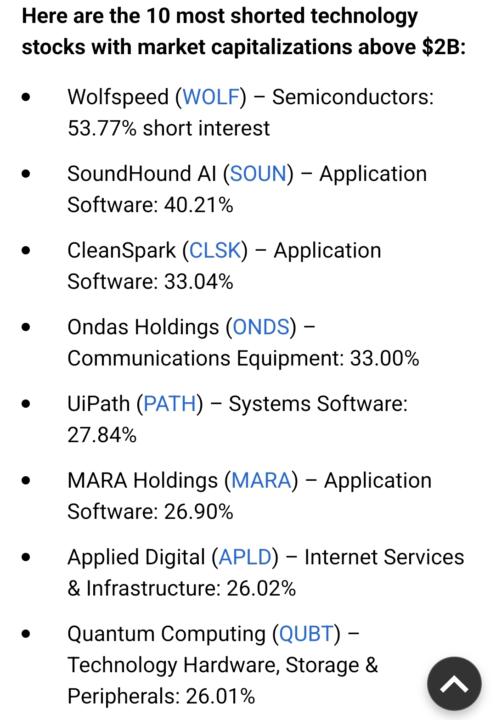
@Lindsay Talbot Trump say buy Micron, Burry say sell Micron....so who do we believe lol ?

6d •
Google, Microsoft, Meta, and Amazon capex spending to hit $725 billion in 2026, up 77% from last year — analyst says bear thesis is 'garbage'
https://www.tomshardware.com/tech-industry/big-tech/big-techs-ai-spending-plans-reach-725-billion?utm_source=superhuman&utm_medium=newsletter&utm_campaign=openai-launched-strongest-new-models&_bhlid=447fe0c2f31a90a6b3ad6713d6ffa83d73475a5c
1 like • 2d
Key to watch is how fast each company turned their Capex with the fastest run of revenue growth and increased operating margin. I am betting Amazon and Meta for making ROI first out of the Mag 7.
0 likes • 2d
@John Meaney the flow chart seem to have a personal bias. Creator personal list of companies he is watching. Other big players ie SanDisk, Bloom energy, Coreweave, Anthropic etc
9d •
Everyone has a retirement number. Almost no one can explain where it came from.
Sahil Bloom shared something this week that hit me. Researchers at Yale found that people consistently overestimate how well they understand everyday things — a zipper, a toilet flush, a bicycle. Confidence scores were sevens. Write it out step by step? They collapsed to twos. He calls it the Illusion of Explanatory Depth. I think it's one of the most underrated traps in retirement planning. Most of us picked a number — $1M, $2M, $5K/month in passive income — through a kind of cultural osmosis. We heard it somewhere, it sounded right, and we filed it away as the goal. But when did we last actually defend that number? Here's the test I ran on myself: → Write down your retirement target → Then write what that number actually buys you — month by month, in specific dollars → Then ask: does this match the life I actually want to live? The first time I did this, I found my number was built on assumptions I'd never questioned. Generic lifestyle costs. A vague sense of "enough." Nothing tied to my real expenses or the income streams I'm actually building. @Eric Seto talks about this in the accelerator — the difference between having a number and having a plan. They're not the same thing. A retirement number is a wish. A plan is a thesis you can defend. What's your current target — and can you name one specific thing that number pays for in your ideal month? Drop it below 👇
2 likes • 3d
5yrs ago I wrote down this magic number of $4M in Canada then I can retire fully.
2 likes • 3d
@Liv L me too I love investing as a hobby and love love travelling. I want to make sure investing if successful and lucky any money earned is cherry on top.
1-10 of 804
@kim-huynh-9986
Semi-retired pharmacist. Passionate in learning and earning passive investment income.
Active 1h ago
Joined Feb 17, 2023
Canada GTA
Powered by