Activity
Mon
Wed
Fri
Sun
Aug
Sep
Oct
Nov
Dec
Jan
Feb
Mar
Apr
May
Jun
What is this?
Less
More
Memberships
Fit Achievers
263 members • Free
Invest & Retire Community
3.6k members • Free
446 contributions to Invest & Retire Community

2d •
💡 Overtrading
Many believe that frequent trades are a sign of activity and confidence. But in reality, overtrading often becomes the main reason for account drawdowns — even among experienced traders. 📌 What is overtrading? It’s making too many trades without a clear trading logic. Most often, it happens because of the desire to “recover a loss” or the fear of missing out on a move. ⚠️ Why is it dangerous? 🟠Increases trading costs (spreads, commissions). 🟠Leads to emotional burnout. 🟠Reduces the quality of analysis — decisions are made emotionally. 🟠Profitable trades end up being canceled out by unnecessary losing ones. ✅ How to avoid it? 🟢Clear trading plan — don’t enter the market without a specific signal. 🟢Trade limit — for example, no more than 2–3 per day. 🟢Keep a trading journal — it reveals when emotions take control. 🟢Focus on quality, not quantity — one strong trade is better than ten random ones.

0 likes • 5h
@Rong Zhou what are your entry and exit rules?
2d •
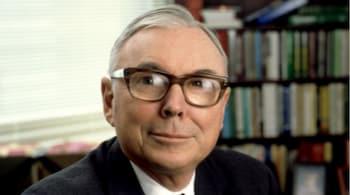
Quote of the Day by Charlie Munger:
"The big money is not in the buying and selling, but..." - Meaning, investing lessons and why patience creates wealth." Successful investing is often associated with buying the right stocks at the right time. But legendary investor Charlie Munger believed that true wealth is built through patience rather than constant action. His famous quote, "The big money is not in the buying and selling, but in the waiting," continues to guide investors, entrepreneurs, and professionals who understand that lasting success comes from discipline, not haste. Charlie Munger's quote: "The big money is in the waiting." ● Emphasizes patience for long-term wealth creation. ● Munger was Warren Buffett's partner at Berkshire Hathaway.
1 like • 1d
@Rong Zhou that's why i do cash secured puts options on the stocks that i don't mind having.
3d •
#Market News
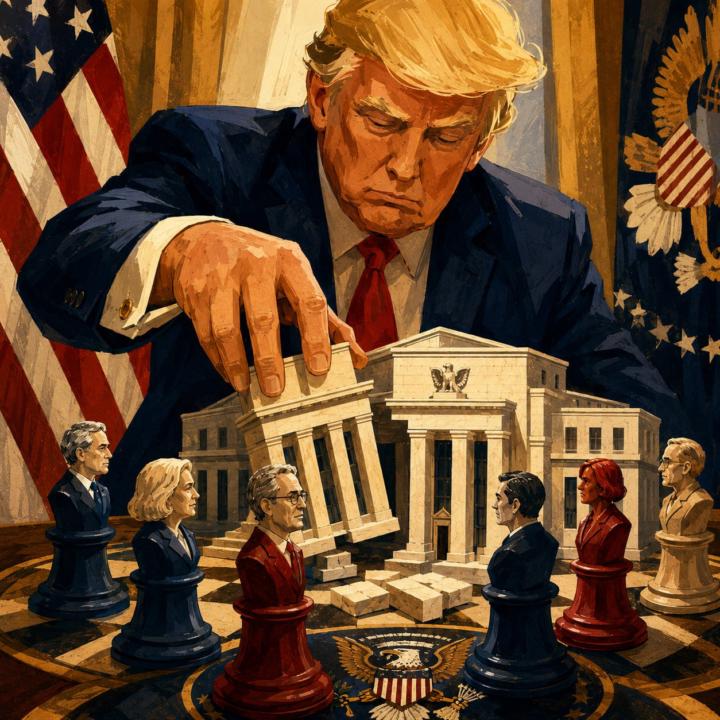
🔩 Donald Trump and his allies are intensifying efforts to reshape the Federal Reserve, exploring ways to replace board members after the Supreme Court blocked the removal of Lisa Cook. 🌉 Gold rose for a 3rd straight day, climbing as much as 1.8% to around $4,195/oz after weak US jobs data reduced expectations for a 2026 Fed rate hike. 💠 Tesla delivered 480,126 vehicles in Q2, up 25% YoY and well above Wall Street expectations of under 400,000. ⌨️ SAP is restricting hiring to key AI roles and cutting travel and supplier spending to fund a significant expansion of its AI business. #MarketNews 📆 CALENDAR FOR TODAY - 03.07.2026 🇪🇺 ECB President Lagarde Speaks – 11:00 GMT+3;
3d •
🔥US Non-Farm Payrolls (NFP)
🇺🇸 NFP shows how many jobs the US economy (outside farming & gov) created last month. It’s been published since 1939 and comes out every first Friday. Over the decades, it’s become the single most-watched macro report. 🛫 Why so big? Because jobs = growth = inflation = Fed policy. Strong hiring pushes the Fed toward rate hikes, weak hiring points to cuts. And since the Fed drives global liquidity, the ripple hits every market. ⚡️ What moves: 🟢 The US Dollar reacts in seconds. 🟢 EURUSD, USDJPY, GBPUSD go wild. 🟢 Gold and oil often jump when the dollar dives. 🟢 Stocks can even cheer bad data if it means “cheaper money.” 🐤 Fun fact: NFP is so fast-moving that algos trade it before humans can blink — which is why many traders wait for the first wave of chaos to settle.
2
0

3d •
⚡️US NFP RELEASE⚡️
🇺🇸 Average Hourly Earnings m/m: Actual — 0.3% Expected — 0.3% Previous — 0.3% 🇺🇸 NFP m/m: Actual — 57K Expected — 114K Previous — 172K 🇺🇸 Unemployment Rate: Actual — 4.2% Expected — 4.3% Previous — 4.3%
2
0
1-10 of 446
@sharon-yuen-2415
Hi, I'm a distracted trader that follows any new shiny objects whenever I don't get an results. Hopefully, this would be my last shiny object. :)
Online now
Joined Sep 6, 2025
Canada
Powered by