Activity
Mon
Wed
Fri
Sun
Jun
Jul
Aug
Sep
Oct
Nov
Dec
Jan
Feb
Mar
Apr
May
What is this?
Less
More
Memberships
The Well (of Bliss)
45 members • Free
19 contributions to The Well (of Bliss)
4d •
🌿 What is Sādhana… and why does it matter? 🌿
📜Sanskrit Translation & Etymology: Sādhana (साधना) comes from the root “sādh” - to accomplish, to move toward, to bring into reality. Sādhana is not just a practice…It is the path of intentional effort toward a higher state of being. Not something you do once. But something you return to, daily. ✨ What Sādhana Gives You: Over time, Sādhana becomes: 🌬 A way to regulate your nervous system 🧠 A tool to steady the mind 💛 A gateway to emotional balance 🌿 A connection back to your true self It’s not about intensity…It’s about consistency. Small, intentional acts - repeated daily - begin to reshape how you feel, think, and live. ⚠️ Common Misconceptions & Pitfalls: Sādhana is often misunderstood as: • Something that has to be long or complex • Something you must do perfectly • Something you only do when you “feel like it” But the truth is… ❌ It’s not about perfection ❌ It’s not about performance ❌ It’s not about waiting for motivation It’s about showing up anyway. Even when it’s messy. Even when it’s brief. Even when you don’t feel like it. That’s where the transformation happens. 🌱 Where the 21-Day Wellness Challenge Comes In Our 21-Day Wellness Challenge is designed to give you a foundation for Sādhana. A space to: • Explore different practices • Build rhythm and consistency • Experience the benefits for yourself But the real power isn’t in the 21 days…It’s in what happens after. Sādhana is what you carry forward. It's how you stay in contact with yourself amidst the noise of life. 💭 Find Your Reason Why do you practice? For some, it’s clear: More energy. Less stress. Better health. For others, it’s less defined…A quiet pull. A knowing. Wherever you are - sit with it. Let the meaning reveal itself. Because your reason is what will carry you when motivation fades. 🪞 Shared Reflection What do your daily practices bring you? What is your purpose for remaining in contact with them? Take a moment… Repeat this to yourself: 🧠 3 times mentally 🗣 3 times aloud

1 like • 2d
So the body and mind needs reparation , this how it learns, but when the body and mind has learned, breaking reparation can be what is needed to break a stagnation a thought pattern or belief like a redirection in life. through breathing and movement we can transform blockages that are holding us back like Adam calls Bliss. I had a loving conversation about biases / judgements, redirections, non-attachment and beautiful loving relation yesterday. Relationship which exists only in the now without the Push and Pull but exists with the Push and Pull meaning stable not resisting but accepting.
12d •
🌬️ Day 17 - The Power of the Pause (Kumbhaka) ✨
What if one of the most powerful tools for transformation…is found in the space where the breath stops? Not forced. Not strained. But consciously held. 🫁 Kumbhaka - Breath Holds in Practice In yogic science, breath retention (Kumbhaka) is where the practice deepens. It is here that we begin to influence not just the breath… but the nervous system, chemistry, and energy body. 🔬 What’s Happening in the Body? When you hold the breath: • Carbon dioxide (CO₂) rises This increases your tolerance to CO₂, which is a key driver of calm, efficient breathing and nervous system regulation. Over time, this expands your window of tolerance for stress. • Oxygen efficiency improves Your body becomes better at utilizing available oxygen - supporting endurance, clarity, and overall vitality. • Hormetic stress response is activated A brief, controlled stressor (the breath hold) signals the body to adapt and grow stronger. This is the sweet spot - not too much, not too little. • Stem cell mobilisation increases Research suggests that intermittent hypoxia (lower oxygen states during breath holds) can stimulate the release of stem cells from the bone marrow into circulation. These cells support repair, regeneration, and recovery within the body. • Nitric oxide & circulation Breath practices can enhance nitric oxide availability - supporting blood flow, vascular health, and oxygen delivery. 🔥 Energetically Kumbhaka builds and concentrates Prana. It stills the fluctuations of the mind. It creates the conditions for deep presence and inner awareness. This is where the doorway to flow and Bliss begins to open. ⚖️ The Role of Ahimsa (Non-Harm) With all of these powerful benefits… comes responsibility. This is not a practice of force. In Bahya Pranayama (breath retention after exhale), it can be tempting to push, to prove, to extend beyond your edge. But the path of yoga reminds us of Ahimsa - non-violence. 👉 No strain 👉 No panic 👉 No forcing past your capacity Instead:
1 like • 11d
This also works in exercise as the body is put under EXTREME stress naturally repair through release into the blood streem. When you hold you depriving your body of oxygen so stimulating stress within the body. why is it safe you can't hold your breath for ever huh.
19d •
🪷Sangha Breath Sesh
Thank you for you patience fam. 😇Our Nana passed on this passed Sunday, so we've been in prep mode for the funeral. I've taken the reigns with alot of the organizing, so have a little less capacity this week - hence no Sangha Breath Sesh this morning. We'll be back next week and our check-in this Sunday is still on 🫶 Stay Blissed, Adam 🌬🍃✨️🤍
1 like • 19d
Sorry to hear of your loss.
28d •
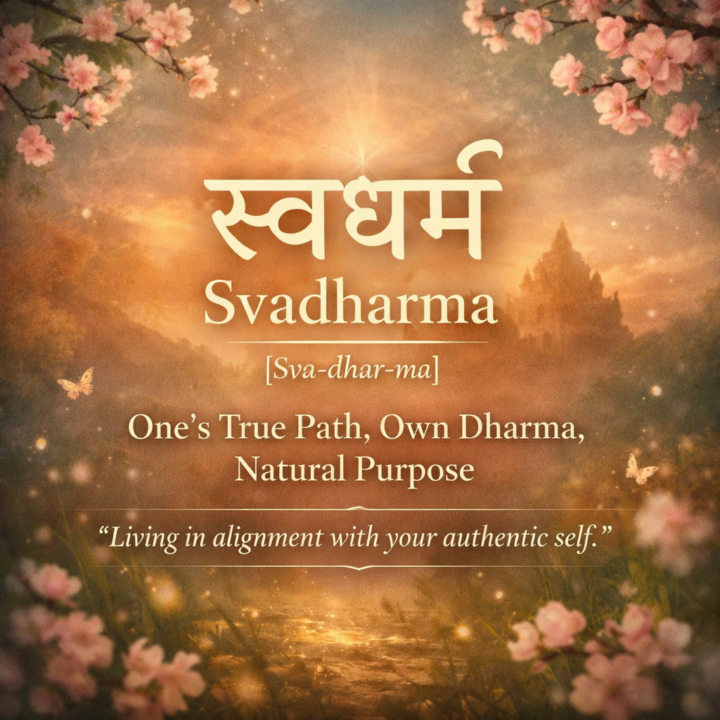
Most people aren’t lost…
They’re just disconnected from their Svadharma - their true path. That quiet inner knowing. That subtle pull. That voice that doesn’t shout… but always knows. ✨ This is intuition. In the , we’re reminded: Better to walk your own path imperfectly, than to perfectly follow someone else’s. Because your path isn’t meant to be copied. It’s meant to be remembered. But here’s the truth… We’ve been conditioned out of our intuition. Noise. Expectations. Comparison. Fear. All pulling us further away from what we already know deep down. This is why we practice. Breathwork. Movement. Awareness. Not to become something new… But to return. To strip away the noise and reconnect to that inner compass. Every conscious breath… Brings you closer to your Svadharma. Every moment of presence… Sharpens your ability to listen. Every practice… Is a step back home. You don’t need more answers. You need more connection. Because your intuition isn’t missing… It’s waiting. Waiting for you to slow down enough to hear it. This week, don’t try to force your path. Instead, ask yourself: Where is my intuition already guiding me… that I’ve been ignoring? And then… Trust it. Share your reflections from today's practice - what did you notice, feel or perceive? Were there challenges or wins? There are no right answers expected, just honest reflections 🫶 Let's grow, contribute, contribute and grow together 🌱🪷 🌀
2 likes • 28d
Question for your You all. Who are You?
1 like • 27d
we are our thoughts. Living in the moment. Being able to observe our thoughts with out judgement. when you go into past or future you are not present. With our thoughts we shape the world. What is not in our control?
Apr 10 •
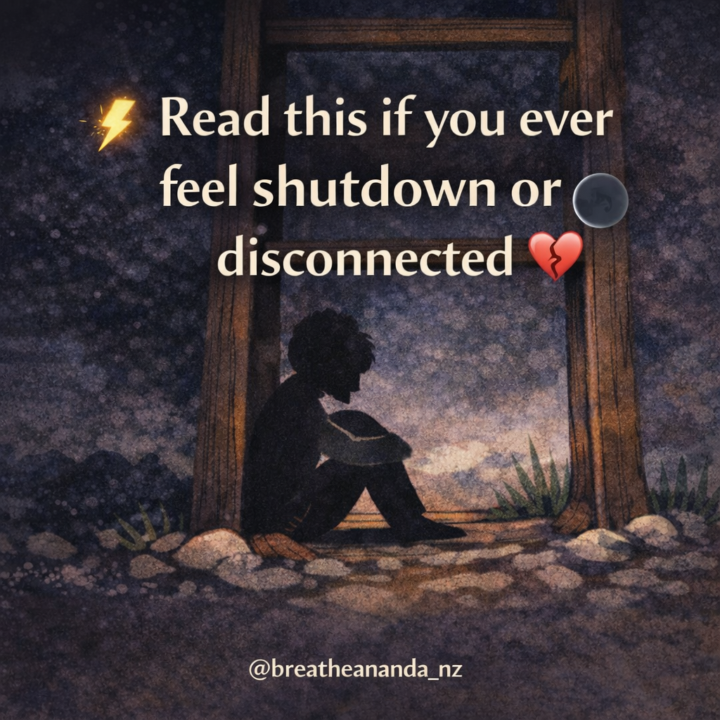
Read this if you ever feel shutdown or disconnected 🌑
You know the feeling. You wake up, but you’re already tired. Messages go unanswered. Opportunities feel heavy instead of exciting. You scroll… distract… withdraw… It’s not laziness. It’s not a lack of discipline. It’s your nervous system in shutdown. That place on the Autonomic Ladder where the body says: “Too much… I’m out.” Energy collapses. Motivation disappears. Even the things you know are good for you feel out of reach. And if this becomes a pattern… it quietly shapes your life. Missed chances. Disconnection from people you love. A version of you that feels smaller than what you know is possible. But here’s the truth most people never learn: 👉 You don’t get out of shutdown by forcing positivity. 👉 You don’t think your way out. You move your physiology. You rise. In our 21 Day Wellness Challenge, we don’t avoid the sympathetic nervous system… We use it 🔥 Through deliberate, controlled hyperventilation, vitalizing Pranayama and activating breathwork, we introduce hormetic stress - small, intentional challenges that signal to the body: “You’re safe to feel energy again.” We begin to: ⚡ Wake the system up from freeze ⚡ Expand our window of tolerance ⚡ Rebuild capacity for life’s intensity ⚡ Access the motivation, vitality & inspiration that was always there This is where transformation happens. Not by avoiding discomfort… But by training your nervous system to move through it. Because the version of you that feels alive, driven, connected… Isn’t missing. It’s just waiting on the next rung of the ladder. 💭 Reflection: When does shutdown show up in your life? What does it look and feel like for you? 👇 Drop it in the comments or share privately. And if you’re ready to stop shrinking… To build the tools… To show up fully for your life, your people, and yourself… Make the commitment by repeating this mantra in the comments or to yourself: "I act from courage in the face of shutdown, by committing to reclaim my power in this moment"👇 Let’s rise together 🔥
2 likes • 29d
Listen to your body and being able to sit with other peoples energy but being able to decide which energy your body is needing. not Pushing or Pulling.
1-10 of 19