Activity
Mon
Wed
Fri
Sun
Aug
Sep
Oct
Nov
Dec
Jan
Feb
Mar
Apr
May
Jun
Jul
What is this?
Less
More
Memberships
AI Automation Society
425.5k members • Free
Stew Smith Tactical Fitness
190 members • Free
9 contributions to Stew Smith Tactical Fitness
Apr 24 •
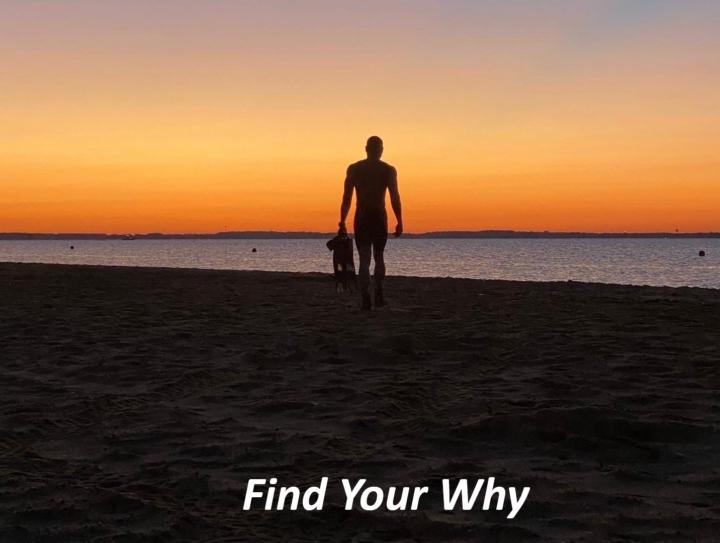
Uncover the Power of Identifying Your 'Why' Before Training - How Do You Find Your Why?
Finding your "why" for long-term, high-intensity goals like special operations training involves connecting with a deeply personal, service-oriented purpose beyond just earning a title. While titles are nice, they are not enough to sustain you through the long days and nights of challenges you will face. You may have a passion and desire you cannot yet verbalize. That is fine to be drawn to something for unknown reasons, but you need to dig deep to figure it out. Here are several ways to consider when you are trying to bring out your why: Key Strategies to Find Your "Why" (and Develop It) (See more - click here for full article)
0 likes • Apr 27
Everything starts with WHY... GREAT article!!!
Jan 30 •
Members’ Favorite Workouts: Beyond the Ordinary Routine
A recent conversation led me to ask over 100 military members and veterans alike what their favorite workouts are. There were no parameters to this question, but the most common answers were the following types of workouts: 1. PT Pyramid – The Classic 1-10-1 (any exercise can be added) The PT Pyramid is a dynamic calisthenics circuit “loved” by military members for its blend of challenge, camaraderie, and adaptability. Personally, this is my number 1 favorite because it creates the perfect workout: a warmup, a max-out, and a cooldown. Start with one repetition of an exercise (like push-ups or pull-ups), then add one repetition each round, climbing the pyramid, until reaching a peak, then descending back to one. For example, a pyramid might go 1, 2, 3, up to 10, then 9, 8, and back down to 1. Typical pyramids include pullups, pushups, sit-ups, and dips, but you can also add squats, lunges, and even running as an “active rest”. This format is perfect for groups: everyone works at their own pace but remains together, encouraging teamwork and persistence. It’s efficient, versatile, and requires only bodyweight movements, yet is not limited to calisthenics, making it ideal when time or equipment is limited. See the ways you can use the Classic PT Pyramid. 2. Hypoxic Swim Workout – Skip Breathing Freestyle Sets Many of the SEALs, Recons, and Divers I spoke with still enjoy swimming, not just for cardio conditioning but also for its non-impact benefits. For aquatic conditioning, the hypoxic swim workout is a military favorite. The principle is simple: swim laps while limiting breaths per stroke, such as breathing every 4,5,6,7,or 8 strokes (or more). This workout just makes swimming harder and gets you in and out in as little as 30 minutes. It also helps with breath control, and mental grit under taxing conditions. You can also add a pyramid to the skip breathing sets – See Hypoxic Swim Pyramid.
0 likes • Jan 30
#1 is my favorite... you can't go wrong with a PT Pyramid... I used to hate it... now I LOVE it!
1 like • Jan 31
@Stew Smith goes without saying 😉
Dec '25 •
Here is What I am Doing January 1-21: The Pursuit of Recovery!
December 30, 2025 • Stew smith De-Stress, Sleep Better, Eat Less, Drink More Water, Low Intensity Cardio & Mobility Days Finding Time to Relax This is my focus for the New Year! After several weeks (from Thanksgiving to New Year), I am burned out. I know I'm not the only one who is tired from late nights, too much food, end-of-year work and school-year stress, social events, family gatherings, busy travel, (maybe illness?), and just a hectic several weeks. The loss of our family dog did not help things either. Here is why I am recommending this: the key to both longevity and optimal performance (young or old) is mastery of recovery. So, here is my plan - actively pursue recovery for a few weeks: De-Stress: Breathe, walk, stretch, get off the phone and computer, and relax. This is needed as I can feel it affecting other areas of my life (workouts, mood, sleep, etc.). Before chasing a new fitness or work goal, I need to be fully recovered first. So, I am calling a time-out and doing a few things, like organizing my office, decluttering my work and living areas, and being intentional with my breathing, napping, and resting. Here is what happens when you do not learn how to de-stress: Stress and the Body Infographic from Heart Math Sleep Better: This is by far the most critical piece of the puzzle as good sleep means you recover from stress (all stress - physical, mental, emotional, mood, etc). No fitness goal will work without good sleep, so make this the cornerstone of new habits you create - going to bed earlier (set alarm for 1 hour before bedtime), no bedtime phone scrolling (read a book/magazine instead), keep bedroom cool/dark/quiet, practice bedtime breathing, and gratitude. Try earplugs, an eye mask, and a fan to set the sleep mood if other people in the house are still active. Then, upon awaking, get morning sun on your face as soon as possible, as it will help set your circadian rhythms to sleep earlier that evening.
1 like • Dec '25
Amazingly great and timely advice, my friend. Thank you for this.
0 likes • Dec '25
Sweet!
Dec '25 •
From Lifespan to ‘Health-span’: Use the New Year to Focus on Both Health and Fitness
Fitness includes several components such as cardiovascular endurance, strength training, and mobility/flexibility. These are non-negotiables for continuing to live throughout your later years with your independence and ability to move and socialize still operating normally. Instead of just thinking about living longer, let’s use the start of a new year to focus on getting healthier, so we live better. More than any other time each year, the New Year is a popular time to focus on a “start fresh.” Temporal landmarks like New Year's Day, Mondays, birthdays, or the change of seasons are standard starting lines for many of us when we have a goal to work towards and bad habits to break. A New Focus on Fitness – Science Says Fitness Matters (Even More than Weight) A recent study published in the British Journal of Medicine, Cardiorespiratory Fitness, BMI, and Mortality: A Systematic Review and Meta-Analysis, shows that, regardless of body weight (obese, overweight, or normal), fitness matters more for all-cause mortality. They measured weight, BMI, and fitness of six groups: normal weight – fit, normal weight – unfit, overweight-fit and overweight-unfit, and obese-fit and obese-unfit. Their findings: The analyses revealed that individuals classified as fit, regardless of their BMI, did not have a statistically significantly higher risk of cardiovascular disease or all-cause mortality compared to normal weight-fit people. At the same time, all unfit groups across different BMI categories exhibited a two- to threefold higher risk of cardiovascular disease and all-cause mortality compared to their regular weight-fit counterparts. About Body Mass Index (BMI) – Now, you may be saying, but BMI is flawed! Sure. BMI is not the best indicator for distinguishing normal weight, overweight, and obesity because it is simply a height-to-weight ratio that does not account for differences in body fat/muscle composition, age, sex, or other factors. Before you discredit this entire study because of the BMI issue, remember that it measured fitness levels among people of different sizes. Some had more muscle and were considered fit in the overweight/obese group, while others were deemed unfit in the normal weight group. Still, BMI helps place people of differing sizes (height and weight groups) and focuses on measuring each group's fitness. In the end, fitness matters more than BMI, so the goal is to exercise, get in shape, build muscle, and lose fat.
1 like • Dec '25
Agree that fitness matters more than weight, but if you can control your weight and your fitness, life is even more amazing. 😍
1-9 of 9
Active 79d ago
Joined Dec 1, 2025