
Write something
Pinned

🔥
8d •
WELCOME - THE REAL WELCOME POST FOR HERE 🤣
You made it here because you can feel your animal long before you can explain them. That instinct is the doorway into this entire discipline. In this community, we don’t treat behavior as a mystery or a moral failing. We treat it as physiology speaking, through the gut, the immune system, the nervous system, the stress architecture, the coat, the sleep patterns, the micro‑behaviors most people overlook. If you’ve ever thought: - “Something is off, but I can’t name it.” - “My vet says everything is normal, but I know my animal.” - “Why does my pet do that?” you’re in the right place. Here, you’ll learn to decode the signals your animal has been broadcasting all along. You’ll learn why behavior changes before labs do. You’ll learn how the body tells the story long before symptoms show up. This is a community built on clarity, compassion, and physiology, not fear, shame, or guesswork. You belong here if you want to understand your animal in a way that finally makes sense. You belong here if you want to see what others miss. You belong here if you’re ready to learn the language your animal has been speaking since day one. Welcome to the future of pet medicine and understanding. Let’s begin.

Pinned
🔥
23d •
SIMCHA'S LEGACY
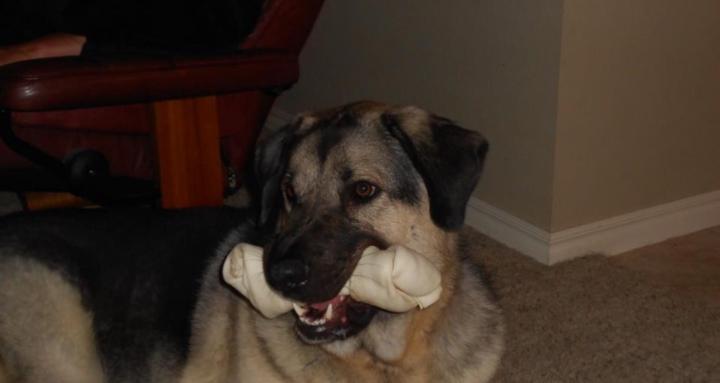
Some of you may ask why this community carries Simcha’s name. The truth is, his legacy is woven into every part of this work. Simcha was a gentle giant, 150 pounds of calm, steady presence. He was my son’s service dog, and after my son died, he became totally my dog. He moved through the world with a softness that didn’t match his size: gentle with humans, dogs, cats, and children, but fiercely protective of the two people he considered his purpose. My son and I. He taught me more about animal physiology, intuition, and the quiet language of a dog's body than any textbook ever could. But there were textbooks. Recently, I lost him to Degenerative Myelopathy, a progressive neurological disease often called “doggy ALS” because it mirrors human ALS. There is no cure, only a slow letting‑go of the body while the spirit stays bright. Simcha stayed bright and loyal until the end. This community exists because of him, because of what he showed me about connection, biology, resilience, unconditional love and loyalty, and the way animals speak long before the symptoms begin. It exists to help other pet owners read the signals before the symptoms begin. His legacy is the heartbeat of this work. This work is looking at animals through the eyes of Functional Medicine.

Pinned
🔥
10h •
Muzzle Map Monday: What Their Face Is Whispering
Most people think behavior starts with behavior. It doesn’t. It starts with micro‑shifts in the tissues of the face, shifts driven by the nervous system, the fascia, the respiratory cycle, the gut, the minerals, the mitochondria, and the animal’s internal threat‑safety calculus. The muzzle is where all of that leaks out. Today we decode the hidden layer. 1. The Fascia Layer: Why the Muzzle Tightens Before the Body Does The muzzle is wrapped in one of the most expressive fascial networks in the mammalian body. When fascia senses: - inflammation - dehydration - mineral imbalance - pain - emotional threat - sensory overload - it tightens before muscles do. This is why you’ll see: - a tiny pull at one corner of the mouth - a slight flattening of the nose bridge - whiskers that shift 2–3 mm forward - a micro‑twitch under the eye These are not “expressions.” They are fascial micro‑braces, the body preparing for impact. 2. The Respiratory Signature Hidden in the Nose The nose tells you how the respiratory system is coping with the world. Look for: - Nostril flare without sound = rising CO2 = sympathetic activation - Nostril collapse on inhale = fatigue, airway resistance, or stress‑bracing - Rapid micro‑sniffing = threat assessment, limbic activation - Barely perceptible slow inhale = freeze, dorsal vagal tone, shutdown Your pet’s nose is a live feed of their internal gas exchange and threat detection. 3. The Mouth as a Metabolic Barometer The mouth is where metabolic load becomes visible. - Tight commissures (corners) = blood sugar instability, cortisol spikes, or pain - Excessive drool = nausea, gut dysregulation, or anticipatory stress - Dry mouth = dehydration, mineral depletion, or chronic sympathetic tone - Tongue tip tension = early anxiety signal, often missed The mouth is not emotional. It’s biochemical. 4. Whiskers: The Brainstem’s External Hard Drive Whiskers are plugged into the trigeminal nerve, which feeds directly into:

🔥
2d •
HAPPY MOTHER'S DAY
Happy Mother’s Day to the women who: - kept tiny humans alive on 4 hours of sleep - ran entire households with cortisol levels that deserved a trophy - somehow always knew when you were lying - and passed down mitochondria with better work ethic than most CEOs Today’s assignment: Post a picture of your mom, your kids, or any other women that was "mom." Today, let’s fill this thread with the faces and stories that shaped us.

1-30 of 46
skool.com/simcha-hub-of-pet-physiology-5304
Understand your pet through physiology. Learn the gut - immune - neuro patterns that shape behavior, mood, and resilience long before symptoms appear.
Leaderboard (30-day)
1

🔥
+61
2

+40
3

+16
4

🔥
+13
5

+3
Powered by