Activity
Mon
Wed
Fri
Sun
Apr
May
Jun
Jul
Aug
Sep
Oct
Nov
Dec
Jan
Feb
Mar
What is this?
Less
More
Memberships
Harmony
22.9k members • $15/month
Rooted Alchemy
239 members • $40/month
16 contributions to Rooted Alchemy

2d •
Feels home
I’ve been outside quite a bit these last weeks, and today, instead of going into the recording session and trying to be “up to date”, I chose to practice on my own. I did the Yin Yang Qi Gong — one of my favourites for the balance of energy it gives me. The usual loosening drill, then Yin Yang, and closing with the dragon and the post posture, just to feel all those movements activated in my inner body. It resonated like a return home. Practicing by myself gave me a sense of gracefulness for everything we learn here — how it keeps living in us, ready to be applied the moment we slow down enough to feel it. We should always give ourselves the chance to practice on our own. It becomes a reference point on our journey — something we can look back on and feel genuinely proud of.
1 like • 5h
@Maya Rodriguez We have so many tools here. Even in a self‑practice, I can still hear Sunny describing the intention and what to pay attention to. It’s amazing how the guidance stays alive in us!!
6d •
Qi & Flow 8 Week Training Cycle
🌿 Welcome Hey everyone, this is the community post for the 8-week Tai Chi training cycle. Check in here to see what week we’re on and what is up next. Ask any questions and comment on how things are going. I will be filling this space with information about the Beijing 24 and supporting materials over time. 🌊 We’ll keep this thread active and alive throughout the entire eight weeks, so take your time getting acquainted with the information and feel free to participate as much or as little as you would like. Following the flow and methods of the Tai Ji Tree, our 8 week training cycle introduces the universal concepts of tai chi Chuan and classical training methods drawn from across the Tai Chi landscape. Using the intentionally designed sequence of the Beijing 24 form as our starting point, students will learn to build their tai chi from the ground up, creating a centered and rooted practice that will give them the tools needed for long-term growth and study. . 🔴 Weekly Schedule 一 (Yi) — Week 1 — March 10–16 二 (Er) — Week 2 — March 17–23 三 (San) — Week 3 — March 24–30 四 (Si) — Week 4 — March 31–April 6 五 (Wu) — Week 5 — April 7–13 六 (Liu) — Week 6 — April 14–20 七 (Qi) — Week 7 — April 21–27 八 (Ba) — Week 8 — April 28–May 4 All sessions are recorded and archived and can be reviewed at anytime. So no matter when you start you can see where we are at in the training cycle and use the previous recordings to catch up or just jump right in! The cycle will begin anew with Week 0 May 5th-11th as well as the opening of a special 8 week class for sections 3 & 4 and the closing section to finish the form! 🧭 Class Structure (Each Week) 🗓️ Tuesday — Foundations 🏔️ Yin–Yang Qigong Tai Chi Stances Tai Chi Walking 🗓️ Thursday — Internal Work 🔵 Silk Reeling Ocean Stepping 🗓️ Sunday — Form Practice 🔴 Beijing 24 🌊 Community & Check-Ins Use this thread to: 🌱 Ask questions 🌿 Share how your practice is going 🌳 Check in with the current week 🍃 Connect with others in the training cycle
6 likes • 5d
Wow!!! Fantastic.
Oct '25 •
似停非停 "Appears to stop, but does not stop"
This is another of my favorite sayings from the arts. It is meant to evoke an internal awareness as well as an external expression. From the outside at times it might seem like the tai ji or qi gong practitioner has come to a complete rest, and there are times when you should, and it is in those moments you continue to observe and listen for the subtler rhythms of the body and motion taking whatever time is needed to occupy your space. This is the permission to find your own rhythm with a movement once you feel the body, mind, and breath harmonize. This is the space between the breaths where there is no need to rush into the next moment. It is the ending and beginning of movements. It is your practice from one day to the next:)
6 likes • Oct '25
Very well said. In this space of stillness, that's where tai chi and meditation become one. Thank you for this wonderful pointing.
4 likes • Jan 30
Really interesting post. I had never heard about the distinction between Qi and qi. It reminds me of the presence that lives in the gap between words, or the space between objects that connects to our inner space through the breath. The circular movement of breathing feels aligned with your reflection — “Appears to stop, but does not stop.” Lots of things to think about here — really rich material.

Jan 1 •
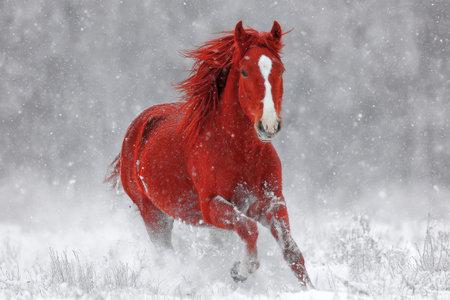
2026, The Year of the Red Horse
I grew up in South Korea and like many East Asian cultures, we follow the Chinese zodiac (12 animals that rotate each year) In 2026, it’s the Year of the Horse… and not just any horse, but a RED ONE🐴 My sign is also the horse, and I know us pretty well. Horses in the zodiac are usually associated with movement, energy, and freedom. They don’t like being stuck. They’re drawn to forward motion, exploration, and self-expression. On the top of that, the color red adds another layer. In Chinese culture, red is everywhere. It’s connected to good luck, life energy, and protection. You see it a lot during Lunar New Year, weddings, and other celebrations. So a "Red Horse" year feels like a mix of movement, momentum, and vitality, encouraging us to keep going, but with heart and intention not just rushing forward. I think this connects really well with our Tai Chi and Qigong practice that we’ve been cultivating here in the community. The other day, when we were shooting content with @Kirby Mannon and @Maya Rodriguez , Sonny said something that really stayed with me: “We have to think about intention rather than expectation.” It lingered with me for days because it made me realize how often (sometimes for years) I’ve been rushing myself and expecting results instead of enjoying the journey itself. So this is my personal intention with this community this year: I want to help create an experience that brings you back to why you started this journey. Because we’re learning how to study these arts, and also study ourselves. Would love to hear yours as well. - “What’s your intention this year?” Thank you as always for your contributions, and HELLO to 2026!! 🧧
7 likes • Jan 1
Yes when the intention is stronger than the how.
Dec '25 •
Happy New Year
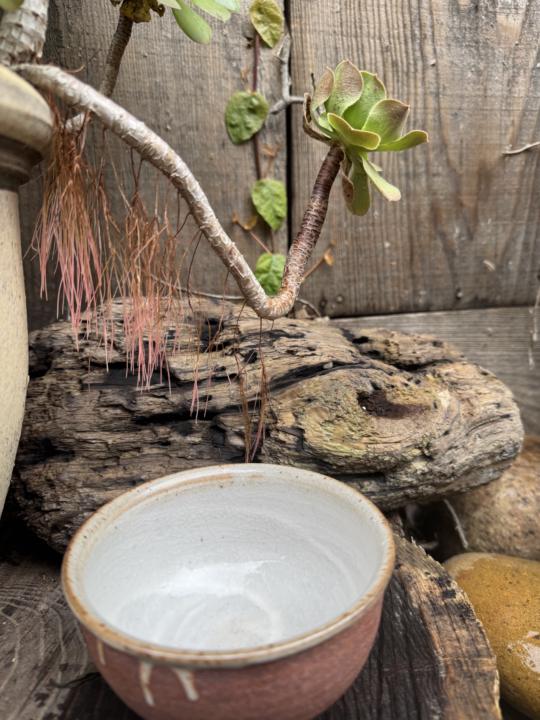
Cheers! Gan Bei! Empty your cup! The empty cup analogy is one that I thoroughly enjoy and is universal to so many practices and experiences. I can remember my teacher in Beijing explaining his personal relationship to this concept and how it gave him the motivation and focus he needed to be the type of person, martial artist, teacher and friend he wanted to be for those around him. The empty cup tells us that if we go into a situation with our mind and thoughts full of expectations we will often miss the the part that we should really be present for and looking to take away with us. I have always felt there is an intention present we when contemplate analogies and metaphors such as this, one that can be felt in context with our own personal experience. Coming into our practice with the intention of becoming a student rather than a master, studying rather than memorizing and simply looking to be more present with our practice helps us look to our own cup. Both how we are crafting it and with what we want to fill it. In a practice such as tai ji and qi gong we are bound to have expectations, yet we can use these expectations to help shape our intention and practice as we learn more about the method and the study. The famous tai ji teacher Cheng Man Ching was once asked how long it would take to learn the long form. He replied, “two years”. The student then asked him how long it would take if he trained really hard. Without much hesitation Professor Cheng said, “three years”. He of course knew that if the student thought that training harder would somehow “hack” the method, his cup was definitely not empty, and probably had a few cracks in it. My teacher in Beijing had a great way of looking at it. He said of course you have to empty your cup, but then what:). In the beginning you don’t actually have a cup, it is more like a teaspoon you empty to fill a cup. Then when the cup is full use your cup to fill a pitcher. When the pitcher is full you use the pitcher to fill your reservoir digging deeper until you find an endless spring so that when those around you need a drink, you will have the strength and energy you need to be there for them.
12 likes • Dec '25
Hi Kerby, Wow — what a beautiful message to close the year. Thank you for all the powerful analogies you share with us, each one offering a pointer, a direction, an invitation to explore our own being. Your “empty cup” reminder lands deeply. Once again, you guide us back to grounding, stillness, and the simple act of listening to what is. I’m grateful for your presence, your teachings, and the space you create for us to grow. Warmly, Bernard
1-10 of 16
Active 5h ago
Joined Oct 14, 2025
Powered by