Activity
Mon
Wed
Fri
Sun
Mar
Apr
May
Jun
Jul
Aug
Sep
Oct
Nov
Dec
Jan
Feb
What is this?
Less
More

Memberships

Wilderness Mastery School

19 members • Free

Wilderness Basecamp

155 members • Free

45 contributions to Wilderness Mastery School
Wilderness First Aid Module Zero - Scenario
Outline: Two hikers, six miles from the trailhead, with rain starting and the temperature dropping, beyond cell phone service. One of the hikers has fallen and has an apparent femur fracture. Response: The now, first aid provider, (you) approaches the now, patient, to access his condition after the fall. The patient is in sever pain complaining about pain in the upper right leg. You check the patient for bleeding and determine that he does not have sever hemorrhaging. He is hesitant to move the leg and did not want to flex the right foot. He has straightened out the left leg and is willing to move the left foot. He is not complaining about any pain in his back. His breathing is good and no apparent circulation issues. He did not hit his head but the rain and dropping temperature is cause for hypothermia concern. You get him to sit on a waterproof sit pad and cover him with his poncho to get him out of the snow and out of the rain. You check cell service and determine that you do not have cell coverage and can not call 911. Your pack has a SAM splint and ace bandage, so you use your splinting training to stabilize the leg to minimize movement. Reassess to check pulse, respiration, and minor injury. You locate a suitable place to set up his T 6-zero lean-to shelter and gather firewood for a fire. As each of you are close to 200# and both on the cusp of 70 Y.O., it is apparent that you are not going to be able to transport him, the patient, by yourself. Your partner, the patient is scared, so you are talking to him as you are working on the fire preparation and firewood procurement. Understandably, he is concerned about how the two of you are going to get out, so you are talking out a plan together. Being six miles from the trailhead, that is a hike of two-plus hours to the car, and you are not sure how far it is to cell service. You save a waypoint on your smartphone and take a screenshot of the map with the waypoint. You have come to consensus that you should hike out when the fire is stabilized and firewood gathered. You don’t carry the GSMR radios when you hike and cell phones will not allow communication as you hike out. You leave him in the shelter with fire.
Wilderness First Aid Module Zero - Scenario
1 like • 2d
My hiking partner is literally house bound recovering from a broken hip. In his driveway but no less severe. I do not believe that he and I have ever out-hiked the cell towers, we have very good coverage and we hike mostly local conservation areas. Our longest hike has been six miles but we have been three miles from a trail head. All that being said, this scenario was very real for me.
Week #4 Challenge: Heat Management AAR Take 2 - Remote Location
2/4/26 Rochester Backyard Start 2:00 PM, Ken Berry 33 Degrees F. at 3:00 PM peak temperature. Average wind speed 6 MPH, Dry 24 Degrees F, Wind 5 MPH gusting to 12 MPH, Wind Chill a factor at 5:35 PM, Dry Shelter Type: SRO Orange & Silver Emergency Shelter with rapid ridgeline Fire Lay: Elevated Platform with Tepee lay, ferro rod on grass and flower top tinder bundle. White Pine kindling from the site. I used white pine and birch, unsplit, as fuel. Approximately 3 feet in front of the shelter. I tried to use the Star Fire Method. The shelter material was reflective, I did not build a fire pit reflector. The ground insulation was white pine branches harvested from the adjacent area about 500’ away, Tyvek sheet, garbage bag, puffer, and coat. Scenario start: 2:00 PM Hike until 2:30 PM Shelter complete: 3:00 PM Fire Ignition: 3:30 PM Collect pine boughs: 4:00 Occupy Shelter: 4:30 PM Done: 5:00 PM Ended due to uncomfortable laying on the ground and cold from the ground. The shelter worked very well but the pine boughs on the floor were way too thin. I harvested what I could from trees 500-feet away. The fire worked great and although a little too close to the shelter warmed the space very effectively. To work overnight it would have required much more ground padding / insulation and I would have needed much more firewood. Someone suggested using a star fire lay instead of processing firewood and splitting it down. This method was not successful. Splitting the wood exposes the dry interior wood and burns much better. As I was packing up to leave, I noted my right foot getting cold. When I got home my right foot was soaking wet, source unknown. I have never had an issue with the winter hiking boots. To overnight, this would have been a significant issue. Follow-up: No issue found with the boot. Perhaps melted snow from my pants and walking around. I have heard several times to build your bed and place the shelter over the bed. Packing the snow better and raising the shelter would have made it much less claustrophobic. The fire being so close added to the tightness and caused sparks to melt holes in my shelter.
1
0
Week #4 Challenge: Heat Management AAR Take 2 - Remote Location
Week #4 Challenge: Heat Management AAR
2/2/26 Rochester Backyard Start 3:00 PM Ken Berry, called at 6:00 PM 35 Degrees F. at 3:30 PM peak temperature. Average wind speed 3.5 MPH Dry 27 Degrees F, Wind 5 MPH gusting to 12 MPH, Wind Chill to 24 degrees F. at 4:35 PM, Dry Shelter Type: SRO Orange & Silver Emergency Shelter with rapid ridgeline Fire Lay: Elevated Platform with Tepee lay, ferro rod on grass tinder bundle. Hemlock kindling from the site. Split dried birch as fuel. Approximately 4 feet in front of the shelter. The shelter material was reflective, I did not build a fire pit reflector. The ground insulation was hemlock branches harvested from the adjacent tree, Tyvek sheet, garbage bag, and coat. Scenario start: 3:00 PM Shelter complete: 4:00 PM Fire Ignition: 4:30 PM Occupy Shelter: 5:45 PM Done: 6:00 PM Ended due to uncomfortable laying on the ground I let myself get sweaty processing the firewood. I should have removed the coat much earlier. The shelter worked very well but the hemlock boughs on the floor were way too thin. I harvested what I could from two adjacent trees. The fire worked great and although a little far from the shelter warmed the space. To work overnight it would have required much more ground padding / insulation and I would have needed much more firewood. Much more. The fire dried me out after I took the coat off. I’m sure that the ground would have been the limiting factor. Much more insulation. I intend to repeat this exercise in a remote location with only the materials in that selected pack.
Week #4 Challenge: Heat Management AAR
1 like • 7d
I went out again Wednesday and the AAR will be equally interesting and filled with lessons.
Today’s Tools
After today’s exercise, everything had to come inside for preventative maintenance. Not included in the photos are a pair of loppers. I have to rethink those because I don’t hike with loppers. I also don’t hike with the fixed blade Fiskars saw. The hatchet will be added to some kits. I have talked in other topic areas about how much I have learned about fire and shelters. I have not talked about tool use and maintenance. Since the beginning of the year I have seriously increased my knife utilization and the need for knife maintenance. In reviewing my after-action-report from the Wilderness Skills Course, GB2, I wrote that much more knife utilization and practice should precede course work. My hands and knife skills are seriously better today than a month ago. Reps and practice. Yes, I am also thrilled with the two Migizi knives. The Bushcraft / Survival Knife is currently riding in a leather dangler from LT Wright because I need to get it below the winter coat. I am working on a dangler design to use the Kydex sheath provided.
Today’s Tools
Fire Module 5 - Adverse Conditions
After setting up my Emergency Shelter I set up and kindled a fire using the horizontal raised elevation. I used wind proof matches, and yes I had to use the second staged match. Pure and simple smothered the first match. After the tinder bundle of birch bark and flower tops got going, the batoned birch dry hardwood took well. The tinder was natural, kindling manufactured from dry storage cord wood, and the fuel was the same. Everything in the two stick fire was batoned or chipped with a Fiskers hatchet.
Fire Module 5 - Adverse Conditions
0 likes • 11d
@Arthur Buesch 1:30 am! Now that was one dedicated test!
1-10 of 45
Kenneth Berry
4
5points to level up
@kenneth-berry-3244
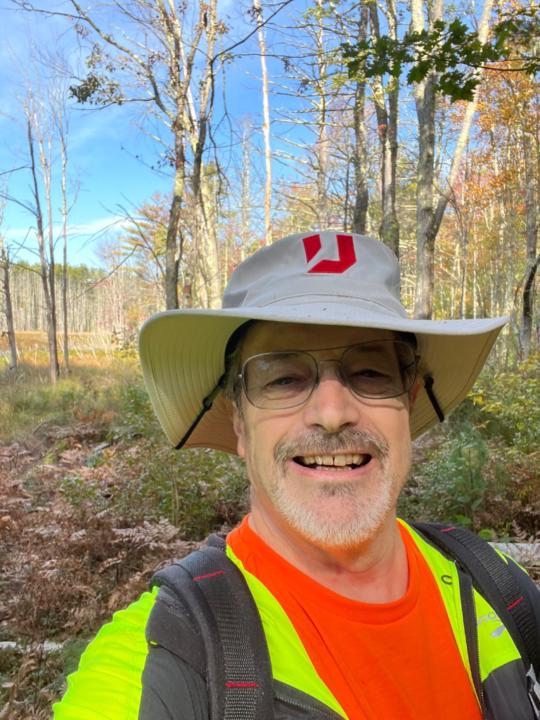
Land surveyor and civil engineer preparing for retirement. 12/31/25 Update: Now a part-time employee.

Active 2h ago
Joined Oct 19, 2025
Rochester, NH