Activity
Mon
Wed
Fri
Sun
Aug
Sep
Oct
Nov
Dec
Jan
Feb
Mar
Apr
May
Jun
Jul
What is this?
Less
More
Owned by Wesley
Executive skill = show up, plan, execute. Agency for every life situation. Not one & done, but a journey to a life of leadership and purpose.
Memberships
useful AI
23k members • Free
Ashish Builds Academy – Lite
49.2k members • Free
Hackathon
2.7k members • Free
The AI MBA
2k members • Free
Zero To Founder by Tom Bilyeu
2.6k members • $119/m
Inspired Life, Empowered Being
130 members • Free
Personal Growth Skool
136 members • Free
DeFi University
297 members • Free
How To AI
27 members • Free
84 contributions to Inspired Life, Empowered Being

🔥
2d •
Perfectionism-Fear Masquerading as Growth
Often times, people who engage in perfectionistic type thinking and behaviors indicate that they have high standards, are aiming for excellence, and indicate that they are committed to growth. These seem like great things and they can be, but the undercurrent of what drives these statements matters. Clinically speaking, perfectionism is often less about excellence and more about fear. Fear related to failure, criticism, disappointing others, of not being enough... Perfectionism is often an attempt to manage uncertainty and protect ourselves from painful emotions. The problem is that the strategies we use to avoid those feelings can end up creating more stress, anxiety, and disconnection. Below are some common perfectionistic behaviors: 𝐎𝐯𝐞𝐫𝐜𝐨𝐦𝐩𝐞𝐧𝐬𝐚𝐭𝐢𝐧𝐠 Perfectionists often work harder than necessary to prevent mistakes or criticism. The underlying belief is often: "If I work hard enough, I can eliminate the possibility of failure." Unfortunately, no amount of effort can guarantee that. 𝐃𝐢𝐟𝐟𝐢𝐜𝐮𝐥𝐭𝐲 𝐃𝐞𝐥𝐞𝐠𝐚𝐭𝐢𝐧𝐠 Many perfectionists struggle to hand tasks over to others in fear that things won't be done "correctly". This can create burnout, resentment, and the feeling that everything depends on them. The hidden cost: carrying responsibilities that were never meant to be carried alone. 𝐒𝐞𝐞𝐤𝐢𝐧𝐠 𝐑𝐞𝐚𝐬𝐬𝐮𝐫𝐚𝐧𝐜𝐞 "Do you think that was okay?" "Are you sure you're not upset with me?" "Can you check this one more time?" Seeking reassurance can temporarily reduce anxiety, but it often strengthens the belief that confidence must come from outside ourselves. (safety behavior that reduces anxiety in the short term but creates problems in the long term) 𝐄𝐱𝐜𝐞𝐬𝐬𝐢𝐯𝐞 𝐎𝐫𝐠𝐚𝐧𝐢𝐳𝐢𝐧𝐠, 𝐏𝐥𝐚𝐧𝐧𝐢𝐧𝐠, 𝐚𝐧𝐝 𝐒𝐜𝐡𝐞𝐝𝐮𝐥𝐢𝐧𝐠 Planning is super helpful, but perfectionism can turn planning into a way of avoiding uncertainty. Hours are spent creating the perfect schedule, researching every option, or organizing every detail before taking action. This type of planning can become a substitute for living. It can give the impression that progress is being made but no actual action is being taken.
Poll
7 members have voted

2 likes • 23h
There's a commonly told story (probably apocryphal) about a pottery class where half the class is told to make only their very best and half told to make as many pieces as possible. At the end of the class, when the student work was judged, those who focused on being prolific delivered both more pieces worth being judged and more of high quality. They also had the most failures and dull works. The point of the story might be, grind harder, but it may point to perfectionism as how you're standing in your way.
🔥
12d •
What Makes a Good Life?
What do you think makes a good life? What have been the best parts of your life? What about the small day to day moments?
6 likes • 12d
The parts of life I've enjoyed the most have a common thread: working with highly competent people in a friendly and collaborative way to achieve results we found meaningful that none of us could have achieved alone. Not exactly the kind of relationships the video points to, but I think it brings together the values of human flourishing like Seligman's PERMA model (Positive emotions, Engagement, Relationships, Meaning, and Accomplishment).
0 likes • 23h
@Georgiana D, yes, it does!
🔥
20d •
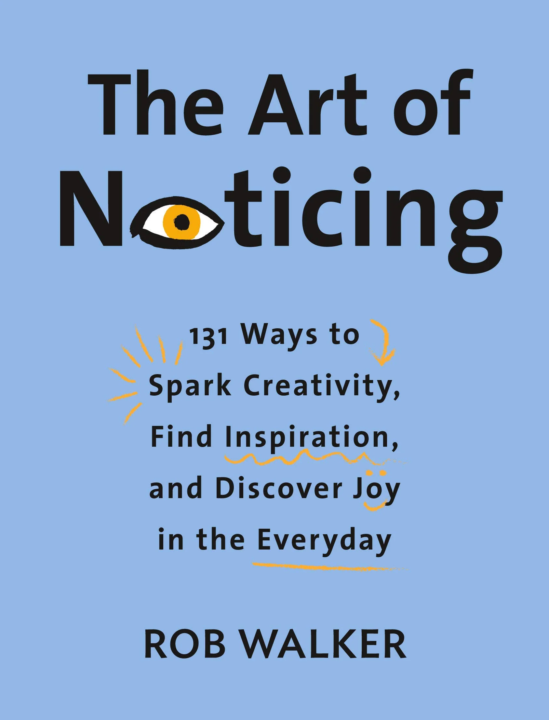
The Art of Noticing (Day 1: Conduct a Scavenger Hunt)
𝐃𝐀𝐘 1 𝐂𝐇𝐀𝐋𝐋𝐄𝐍𝐆𝐄: 𝐂𝐎𝐍𝐃𝐔𝐂𝐓 𝐀 𝐒𝐂𝐀𝐕𝐄𝐍𝐆𝐄𝐑 𝐇𝐔𝐍𝐓 Most of us move through our days on autopilot, noticing only what's familiar or immediately relevant. This scavenger hunt is designed to interrupt that pattern. By intentionally searching for specific objects, colors, shapes, textures, or experiences, you'll train your attention to pick up details that would normally go unnoticed. So...pick a goal and tell us what you've found! Super plus if you can take a picture! Some examples: - Something yellow - A heart shape - A reflection - Something older than you - Something handmade - A plant growing in an unexpected place - Observation-Focused - Evidence that a human was here - Evidence that an animal was here - Something that has changed over time - A pattern that repeats - Something you have passed by many times but never really noticed - Creative - Something that looks like a face - Something that reminds you of your childhood - Something that symbolizes hope - Something that represents resilience - Something beautiful that most people would overlook - An object that could inspire a story - Something that seems out of place - A "hidden treasure" in an ordinary setting - People & Community - An act of kindness - Evidence of creativity - Something that tells a story about your community - A sign of hard work - Something that makes you smile What were you on the lookout for today and what did you notice? Thanks to @Steve Webb and his group 30daychallengers for introducing me to the book The Art of Noticing. His community offers one live 30-day challenge every month. It provides a space where we can turn good intentions into action and each day there is a daily prompt/action related to the month's challenge. This month's challenge is 30 days of sunlight, movement, and remembering what the real world feels like. There's access to previous challenges as well and the community is great about support!
5 likes • 20d
This would be a great thing to do as a couple or family! Thanks, @Georgiana D
🔥
25d •
Our brain is not a muscle (nerding out alert)
Our brains/bodies are SOOOOOO frickin' cool!!! I woke up at my usual time this morning (4a.m.), got ready for the gym and read and journaled until about 6a.m.. This is the usual routine. Although fully caffeinated, at 6a.m. a wave of tiredness hit me and I decided to not go to the gym and take a nap before work instead and slept until 8. (this is unusual--I usually force myself to go even if I'm tired)...(side thought: In college I used to have redbull and it would be funny because within an hour of having it, I'd still be able to go to bed...good times). Anyways, this whole situation got me wondering about the why and I think that the mental load of the activities (and the CONTENT and EMOTIONAL LOAD/MANAGEMENT of what I was thinking/writing about) this morning kind of depleted me just a bit. And this made me think of the lower amount of energy investment I've been putting into things as of late. (I was writing about truth which took me down a cool path but at the end (and it's not really the end), I started digging into things more and that ended up being it's own journey that I know will be going on for a long time. But, I knocked myself out in the process. ha. So, I woke up and started looking up things about the brain because I'm often energized by learning new things and engaging in conversations (my whole job is dependent on me being alert/engaged) but this time it wiped me so I wanted to know the science behind what was happening....nerding it out ). The video talks about HOW to address/ manage energy! :) So here are some fun facts for you (that you may have already known, but they're interesting anyway). It's okay if you don't read it all....I'll be using this moving forward so I and my clients will be benefitting! :) BUT, it might be worth reading to gain an even deeper understanding of what's happening if you feel depleted! :) (Thanks to notebooklm for condensing a bunch of different articles and spitting out some cool facts about the 𝐧𝐞𝐮𝐫𝐨𝐛𝐢𝐨𝐥𝐨𝐠𝐲 𝐨𝐟 𝐰𝐢𝐥𝐥𝐩𝐨𝐰𝐞𝐫 𝐚𝐧𝐝 𝐧𝐞𝐮𝐫𝐚𝐥 𝐫𝐞𝐠𝐮𝐥𝐚𝐭𝐢𝐨𝐧)
Poll
6 members have voted
1 like • 24d
Thank you @Georgiana D for a terrific geek-out! FWIW, I've recently been using heart rate variability (HRV) as a proxy for depletion with low numbers signalling more depletion. This has been fascinating, because I can see how some activities have increased HRV (sometimes as much as 6 months later), and other activities decrease HRV (as quickly as the next day!). Comparing emotionally difficult episodes with HRV also has shown some surprising correlations.
🔥
Jun 2 •
Go get your butt kicked-why your critics are not the ones who count...
A central theme in Brown's work is inspired by a Theodore Roosevelt quote "The Man in the Arena". Legitimately one of my favorite quotes and one that I return to often...mainly because I need the reminder. I need the reminder more often than I'd like to admit... The core idea is that the critic does not count; credit belongs to the person who is actually in the arena, doing the damn thing and getting their ass kicked in the process. Courage is defined by showing up and being seen when the outcome is uncertain rather than by achieving a perfect result. 𝐓𝐡𝐞 𝐑𝐞𝐚𝐥𝐢𝐭𝐲 𝐨𝐟 𝐭𝐡𝐞 𝐀𝐫𝐞𝐧𝐚 (Guarantee of Failure-oh the joy of failure) -If you choose to be brave and show up in your life or work, you are guaranteed to "𝐠𝐞𝐭 𝐲𝐨𝐮𝐫 𝐚𝐬𝐬 𝐤𝐢𝐜𝐤𝐞𝐝" at some point. So....let's fumble forward enthusiastically, yeah? ***failure is an inevitable consequence of courage, the critic’s observation of that failure is technically accurate but morally irrelevant to the person striving*** 𝐓𝐡𝐞 FOUR 𝐏𝐞𝐫𝐦𝐚𝐧𝐞𝐧𝐭 𝐂𝐫𝐢𝐭𝐢𝐜𝐬 There are 4 seats in the "arena" that are always occupied: 𝐬𝐡𝐚𝐦𝐞: The "gremlin" that tells you "you're not enough" or "Who do you think you are" 𝐬𝐜𝐚𝐫𝐜𝐢𝐭𝐲: "The voice asking what you are contributing that is original or if your work even matters 𝐜𝐨𝐦𝐩𝐚𝐫𝐢𝐬𝐨𝐧: The nightmare of looking at others' work to judge your own value (rather than to inspire) (thief) 𝐩𝐞𝐫𝐬𝐨𝐧𝐚𝐥 𝐜𝐫𝐢𝐭𝐢𝐜: specific seat reserved for a parent, a teacher, or a "shitty ex-coworker", spouse, 'frenemy', basically someone we value in some way. 𝐌𝐚𝐧𝐚𝐠𝐢𝐧𝐠 𝐅𝐞𝐞𝐝𝐛𝐚𝐜𝐤 If a critic is not also in the arena/has not been in the arena "getting their ass kicked," their feedback should be eyed carefully. If a critic is sitting in the "cheap seats" (they're not putting their reputation or heart on the line; they're staying safe and small; they're afraid that you won't serve the same role for them), be cautious. The critic is the person who points out how the "strong man stumbles" but they are not the ones who actually risk failure or there's a dependency on you staying in the exact role you have been in because they may have been benefitting and you taking action may require them to change too.....
Poll
10 members have voted
2 likes • Jun 3
"𝐒𝐞𝐥𝐟-𝐂𝐫𝐢𝐭𝐢𝐜𝐚𝐥 𝐓𝐚𝐩𝐞𝐬 : Brown notes that 99 percent of the time, the critic pointing and laughing is us." Actually, I think it's worse than that. When I've worked with people who were very sensitive to being criticized or frozen because of criticism they've received, I've asked, "Who told you that?" With only one exception, the criticism was imagined, not real. Not only do we mostly criticize ourselves, we imagine what people _might_ say and then arrange our worlds to live against that fantasy. In reality, most people don't care nearly enough to criticize.
1-10 of 84

@wesley-penner-9119
A curious fellow, constantly being curious. Exec skills start with productivity and flow to personal offers.
Active 12h ago
Joined Oct 7, 2025