Activity
Mon
Wed
Fri
Sun
Nov
Dec
Jan
Feb
Mar
Apr
May
Jun
Jul
Aug
Sep
What is this?
Less
More
The Blenders Guild
629
Free
Maverick Aromatherapy
101
Free
Aromatic Wisdom Institute
370
5.0
Free
Natural Living Lab
8k
Free
Scent Club
72
Free
AI Grimm Society
123
Free
Essential Oil Explorers
243
Free
39 contributions to Maverick Aromatherapy

Jul 20 •
Morning reminder, First Aid Kit for the Home.
Join Clinical therapists as we reveal our First Aid Kit. Tell us what natural remedies you have in your kit. You'll get loads of information. There's a 3 page handout of my kit at the end of class. Cost: Free to current Diploma students, otherwise £20/$26. Contact me direct for details and zoom link. @Lisa Dixon @Gail Morgan @Ewa Skabek @Kathryn Lynnette Bales @Vicci C @Sharon Banfield @Sharon Davis @Jill Newman


2 likes • Jul 20
as much as i would love to attend, but sadly, money is tight this week, $450 for sister's medical, I've got like 20 AUD to spare, which is just around £10
Jun 10 •
Dowsing for EO's
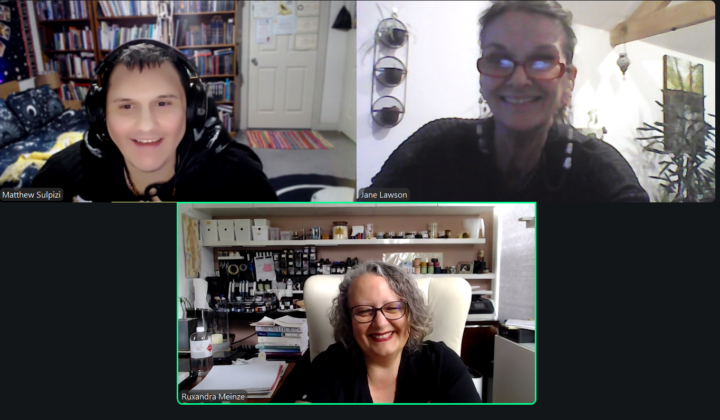
Day 3, strictly speaking it was last night, of Aromatherapy Awareness week...... and here we have East meets West @Matthew Sulpizi representing Australia and @Ruxandra Meinze representing the US, with yours truly in the middle. Q. What were they learning? A. How to dowse for Essential Oils. Q. What happens when 3 Aromatherapists get together? A. A two hour class turns into 3! 😂 Those who know me, know I have been dowsing for EO's for over 30 years now, and I have learnt more about EO's and their nuances and personalities than any book has taught me. Dowsing for EO's absolutely nails what clients need. Next class is Wednesday 24th June, 7pm GMT. Full details at this link: https://www.skool.com/maverick-aromatherapy-3200/learn-to-dowse-for-essential-oils
2 likes • Jun 10
When 3 Aromatherapists who are 'Eccentric,' opinated and have a passion for Natural health gather, well, forget about scheduled times as we always go over the time limit with our discussions which go off topic, lol 😆
2 likes • Jul 7
My New Wood Pendulum arrived three days ago, and I absolutely adore him. I noticed a big difference when using a wooden pendulum compared to my clear quartz and black obsidian pendulum. The Wood Pendulum seems to work a lot more smoothly and quickly when dowsing for essential oils.

Jun 26 •
Link to oil recipes from the bible
I thought this was interesting: https://bible.modernlifestylejournal.com/?rtkcid=6a3e3f46d8feb36ce9074093&rtkcmpid=6a2ed1d5dcf1cfd7c9a03fdf&rtkupdclickid=6a3e3f46d8feb36ce9074093&fbclid=IwVERDUASrHvtleHRuA2FlbQEwAGFkaWQAAC_KnarLKXNydGMGYXBwX2lkCjY2Mjg1NjgzNzkAAR5lxrMtyUwLb6XVrisRoFsXfs75vU_YDmX96VyxFaix7wNZwSc4RhJGOC-J_g_aem_7VF1f0j1B-TxbNKAAzVauA Put in browser. Or it will work right from this location.
2 likes • Jun 27
@Jane Lawson Agreed. Traditionally, it would have been made in a clay pot. The olive oil was added to the pot along with the powdered resins first. Put on gentle heat, the oil and resin were warmed for hours with someone stirring and reciting hymns and various other prayers until the resins mostly dissolved. They then would have strained any leftover resin pulp from the oil through cloth. The resin fragrant oil would then be placed back on gentle heat, and harder woods would have been added, such as cinnamon bark, cassia, etc. They would heat-infuse this for a while until the woods started to break down further, anywhere between 2-3 hours. Once done, they then allowed the oil to cool down and placed any remaining and more delicate plant matter, the oil still warm but not hot. This would then be covered and stored away for several days or even weeks, with daily stirring and prayers being recited until the oil was ready (usually 2 to 4 weeks). The pot was then opened, strained, and the oil was properly stored, with final prayers over it, and is now ready for use.
1 like • Jun 27
@Kathryn Lynnette Bales Thats's correct. If you want to read more about the topic, I personally haven't read them. It's not a subject I am interested in, but Rebecca Park Totilo from Aromahut Institute wrote the following books available on Amazon: - Anoint with Oil $14.99 USD - Heal with Oil: How to Use the Essential Oils of Ancient Scripture $$29.95 USD - Healing in the Bible with Essential Oils: Essential Oils with Bible Verses About Healing $59.95 USD - Healing Oils of Ancient Scripture $5.95 USD
Jun 24 •
Some tips for us Brits in staying cool!
1. If you can, get yourself out into some woods. The temp will be lower anywhere between 5-7 degrees C. 2. If you can’t get into some woods, get a bowl of cold water and add a single drop of either Eucalyptus, Peppermint or Spearmint to it. Eucalyptus in particular will draw the heat in your body downwards. Contraindications: Eucalyptus: Pregnancy during first trimester., cancer, high blood pressure, epilepsy, taking homeopathic remedies. Not to be used on children under the age of 6 years. Peppermint: Pregnancy, epilepsy, possible skin irritant, heart disease, taking homeopathy remedies, fever, Petit Mal, Neurasthenia. Avoid Peppermint in cardiac fibrillation and fever. Being hot is not the same as running a fever. Spearmint: Might neutralise homeopathic remedies if used within 20 minutes of taking a homeopathic remedy. Other than this caution, Spearmint is pretty much a safe oil. 3. I never wear sunglasses. Why? Because your eyes play a part in sending signals to your brain to produce melanin, including your hair, eyelashes and the fine hair on your body. If you cover your eyes, your brain doesn’t respond and reduces the melanin you need to stop you burning. Second, it will make your brain (pineal gland) produce melatonin, the sleepy hormone, as it thinks it’s nighttime. So it’s not just the heat that can make you tired, you are also whacking out your endocrine system and it thinks it’s time for bed! 4. Oh, and cucumber hydrosol! Spray it on your face, back of your neck and into your armpits and behind your knees. Wonderfully refreshing and cooling! 5. One last thing more for the ladies. Put on a lose dress and get your knickers off! Go commando! You’ll be surprised how much cooler you are. 😂

2 likes • Jun 26
Personally, I like fill a misting bottle with 1/3 aloe vera gel and the rest with Peppermint Hydrolat. Shake very well and have this stored in the fridge. Spray skin to feel cool.
2 likes • Jun 26
My favourite style foot basin
Jun 19 •
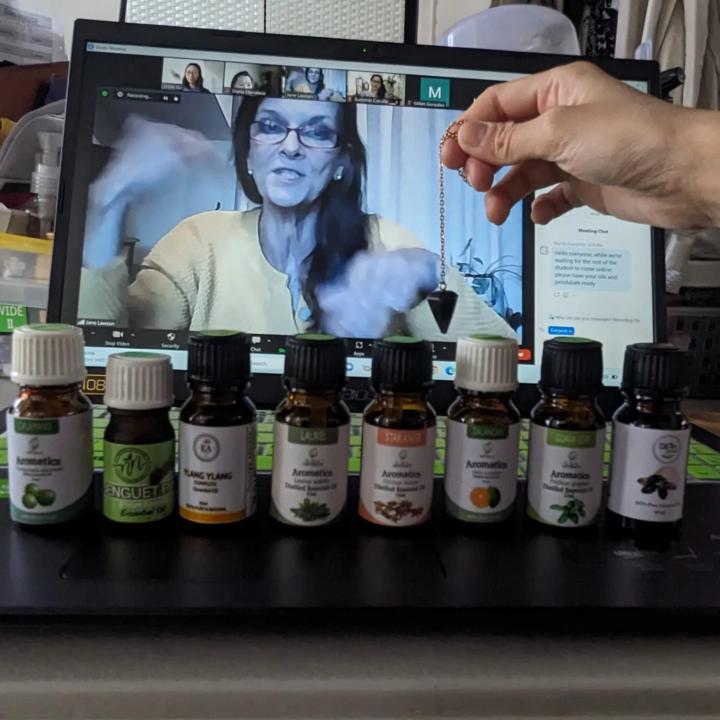
Learn to Dowse for Essential Oils
Next online class next Wednesday 24th on zoom at 7pm BST. Full details at this link: https://www.skool.com/maverick-aromatherapy-3200/learn-to-dowse-for-essential-oils
3 likes • Jun 19
I agree with Ruxandra, highly recommend this class. I am curious @Jane Lawson how many have signed up for this? Also, is this the same class that I took or is it in addition to the class I took (I def would love to attend and hopefully hear and see other peoples experiences dowsing for e.o's).
2 likes • Jun 19
@Jane Lawson If no one signs up, which really that is a travesty, wanna make it as a follow-up /chat.
1-10 of 39

@matthew-sulpizi-6862
Currently enrolled at Aromahead Institute, undertaking the AIA/NAHA & IFPA Level II Aromatherapy Certification.
Nature Witch and Traditional Herbalist
Active 7d ago
Joined May 22, 2026
ENFP
Melbourne, Australia