Activity
Mon
Wed
Fri
Sun
Mar
Apr
May
Jun
Jul
Aug
Sep
Oct
Nov
Dec
Jan
Feb
What is this?
Less
More
Memberships
Rooted Alchemy
200 members • $40/month
14 contributions to Rooted Alchemy
8h •
Static Poses and Grounding Circles/Breath
I've got a couple of questions; I'll put the other in a different post later. Firstly, as I grow into my practice, I'm about a month into my Rooted membership, but was following the RA videos I found randomly on YouTube a month or two before, I'm really beginning to appreciate the static poses: Wu Jei, Post, Horse, Half Horse, Cauldron, Baskets, and quite recently Tree. In the beginning the glib first thought of my inner cynic was "What now? Is this padding?" Now I really appreciate them, especially when they punctuate a long session. I'm also starting to appreciate the information input aspect, as Sonny so accurately puts it, and sometimes like to hold them. Any tips for incorporating them better still into practice. So Grounding Circles/Breaths. At first I saw these mainly as turning the knob on the door to enter practice, which is still the case. But I'm noticing I do them differently at different stages of practice nd in different practices. At one extreme, I'll sometimes go into as lower Horse as I can manage, still my breath, rise slowly breathing in very deeply with conscious lifting intention, pause breath stretching, almost jabbing up from the ribs and shoulders before breathing out very slowly on a column hugging descent. Other times my grounding circle is much more perfunctory, minimal squat, quick natural breath, quick arm movements very much like, as Sonny again puts it very aptly "clearing the Etch a Sketch" (yes, I'm old enough to recall them being a must-have toy!). Usually my circles are somewhere in between those two extremes, depending on the pace of the session and what "feels" right. Occasionally I start of big and minimise the circles, squat and lift, and breathing so after say ten movements it becomes just a hand gesture and I visualise making a Yin-Yang circle; the intention then is more mindfulness and meditation than physical culture. Am I on the right track? Is there a subtle difference between a grounding circle and a grounding breath? I'm guessing the grounding part should involve the heels? Can I do just circles as a warm-up session? Any other tips?
1
0
3d •
THE SCIENCE OF RELAXATION!
CONGRATULATIONS TO ALL who participated in the New Year 10- day challenge. This event brought so many GOOD RESULTS to all participants. CLAIMS were: ……..relaxed body, mind engaged with the natural rhythm of the body ……..woke up feeling good ……..more focused and aware ……..more centered and grounded ……..energy level up, calmed, revitalized ……,..relaxed and grounded ………more balanced, warm and energetic ………warm, clear-headed ……..energized, ready for the day……… These are just a few…….. This CHALLENGE has PROVEN something……that in order to make your BODY RELAX, you have to WORK FOR IT! And by PRACTICING QIGONG AND TAI CHI CONSISITENTLY ON A DAILY BASIS FOR 10- 20 MINUTES HELP GAIN PROFICIENCY AND MAINTAIN DESIRED RESULTS! All of the participants have reported being RELAXED, CALMED, GROUNDED, FOCUSED AND ENERGIZED WHICH GAVE THEM AN OVER-ALL FEELING OF VITALITY. WHY IS THIS SO? WHY DO WE FEEL GREAT WHEN WE RELAX? WHAT HAPPENS INSIDE OUR BODY TO REFECT THIS? Let us set aside Qigong and Tai Chi for awhile and dig deeper into the.. THE SCIENCE OF RELAXATION. After relaxation, the body shifts from a “ FIGHT TO FLIGHT” state to the PARASYMPATHETIC “ REST AND DIGEST” mode. KEY PHYSIOLOGICAL CHANGES include: 1. HEART AND CIRCULATION- blood pressure and heart rate drop as the cardiovascular system slows down, reducing the risks of heart disease. BLOOD flow increases to major MUSCLES AND ORGANS. 2. MUSCULAR SYSTEM: muscles become LOOSE AND LESS TENSE RELIEVING PAIN AND ACHES. 3. HORMONAL SHIFT: the body REDUCES PRODUCTION OF STRESS HORMONES LIKE CORTISOL AND ADRENALINE, INSTEAD RELEASES NEUROTRANSMITTERS LIKE SEROTONIN AND DOPAMINE THAT IMPROVE MOOD. 4. CELLULAR RESTORATION: during DEEP REST, the body redirects ENERGY toward CELL REPAIRS AND TELOMARES (PROTECTIVE CAP OF DNA) maybe protected from damage, SLOWING CELLULAR AGING. 5.COGNITIVE AND MENTAL STATE: BRAIN ACTIVITY shifts often resulting in INCREASED FOCUS, CLEARER THINKING AND BETTER MEMORY FUNCTION. 6. ENERGY AND IMMUNITY: ENERGY LEVEL IMPROVES AND THE IMMUNE SYSTEM BECOMES MORE EFFECTIVE AT FIGHTING OFF ILLNESS.
2 likes • 2d
This leads to the question as to whether Qi is objectively real or not. In one sense it doesn't matter. Daoist philosophy, or at least its practical is largely predicated on the existence of Qi. Indeed, beyond Qi Gong and Tai Ji a plethora of practical applications for Qi science (in the traditional Chinese sense of science), from acupuncture and acupressure, to TCM and moxibustion, to Feng Shui, of course the Chinese martial arts, and certain other Dao-based practices I'll merely allude to here. I'm quite open to the idea that there might be forces that, because they are metaphysical, either are hard to measure cannot be measured using Scientific Method, nor falsified by Popperian falsifiability (the measure generally used in the West to distinguish science from pseudo-science). Likewise, I'm sure that there are vital (in both senses) aspects to human existence that get crowded out by the noise and hubbub of Modernity and all that entails so that most people most of the time living a Modern life no longer experience them, so can no longer believe in them (there are some near equivalents of Qi in Greaco-Roman, and Medieval European and Islamic thought, although not the meticulous systematisation we see with Daoism). But even if, at the end of the day Qi were no more than a metaphor for the sum total of the benefits of enhanced neuroplasticisy, better hormonal balance, better exercised and lubricated joints, a stronger skeletomuscular system, a more efficient gut, optimised breathing, and a calmer psyche, so what? It works. At least that's been my experience. Thinking of the tale of the blind philosophers trying to describe an elephant by touching its parts: I suspect that Qi is the elephant, and better circulation, enhanced neuroplasticity, optimised breathing, etc are the ears, tail, trunk, etc. So I'm perfectly happy to park the question of the objective existence of Qi as an interesting but not that impactful philosophical question. The point is that subjectively, I feel Qi.
Dec '25 •
🌿 7-Day Challenge Accountability Thread
Hey everyone, whether you’re starting fresh because you just arrived or you’re restarting like me to re-establish your practice, this is our spot. The 7-day challenge always feels more grounding when we move together, so this post will stay pinned for our daily check-ins. Let’s show up, keep it simple, and take it one day at a time. ✅ How to Check In Each Day After you finish your practice, follow these three steps: 1. State which day of the challenge you’re on. Example: Day 1, Day 3, Day 7, etc. 2. How you felt before and after. One short sentence for each. 3. Screenshot or photo: A quick picture of your screen, TV, or you practicing. Feel free to leave encouragement for others. A little support goes a long way. ✨ Sample Check-In 1. Day: 1 2. Before: Feeling tight 3. After: Calm and relaxed 4. (Photo attached)
4 likes • 7d
Right, so Day 6 built well on Day 5, which in turn built well on Day 4. I think over the coming weeks I'm going to repeat those in sequence a few times as the transition from QJ to TC was very skilfully delivered by Sonny, as I said above with a powerful emphasis on the fundamentals. The timings of the Grounding Breaths and Post were very well done, and I could really feel the benefit of them. The outro with shaking and tapping was great, and my body felt very good in the last Post. In the middle of practicing, I was reminded of motorcycle sport (I still ride 50 years after I started, but nowadays just for fun). In Road Racing you are in a racing crouch, in MX and Enduro you generally stand with your body a bit like Horse, or actually a combination of Horse and Post, in fact it was Sonny mentioning "when you're riding a horse" that reminded me of it. A motorcycle defies gravity by the gyroscopic force of the rotating wheels, you steer it by shifting your body weight: all skilled riders know that this is best done from The Centre, in Tai Chi the Yao; this really is the difference between a skilled rider and someone who just messes about on motorcycles. In the slowest competitive sport, Trials, speed is not important as it is scored on points (putting a foot down is a minus point, two feet down two minus points, falling off is three), forward progress is often sub-walking pace, so there is minimal gyroscopic help from the wheels and control of the hands, arms, feet and legs from The Centre (Yao) is literally everything. Even Road Racers who go well over 200 mph on track these days often practice Trials to practice balance, while in Road Racing your butt becomes almost a sensory organ sensing lean angle of the bike relative to body angles (often asymmetric as you tend to spread yourself all over a race bike with weight and limbs positioned relative to lean. Pardon my digression, but that magic phrase "when you're riding a horse" opened up a whole heap of connections between sports not often considered connected! (I have ridden actual flesh and blood horses before, but generally my experiences has been on the steel variety (these days actually lightweight alloy, carbon fibre, and plastic)! Aged 66 I've not ridden competitively for 35 years, and in the course of that I sustained some serious joint and long bone injuries that have come back to haunt me in senior age as osteoarthritis! My practice here is massively helping that! Helping beyond my best expectations, actually.
4 likes • 3d
So yeah, I've completed the 7 Day Challenge, and have been (along with other practice), re-doing Days 3-6, as I think they seem to develop very core, fundamental practices. Still most of my daily practice is Qi Gong, and some basic centre and four directions Tai Chi work. I'd love to jump straight into full sets of forms, but I'm starting to appreciate how poorly Tai Chi is often taught, as it tends to skip, minimise, or even completely ignore the fundamentals. Rooted Alchemy is a refreshing change in that regard. I've found the 43 minute Beginners Guide very useful, and it is easier to repeat regularly once one's done the Challenge than simply repeating days, and it covers much of the same ground. So my plan for the next month or two is: 1) Continue with a largely QG based practice, tapering to more of a balance with TC; 2) To start to incorporate TC walking, I tried it very early on but found it hard to do, but I now realise that beforehand one has to prepare the body, especially weakened legs, with lots of QG, and get the TC fundamentals internalised (still a work in progress); 3) Begin to play with say four full body TC forms, and gradually expand my repertoire (if that's the right word!); All that said and I must emphasise how the health, wellbeing, focus, and peace of mind benefits of my practice so far have massively exceeded my expectations! Any advice on which videos are best to watch in the light of intentions 1-3 above in what order very much appreciated!
Dec '25 •
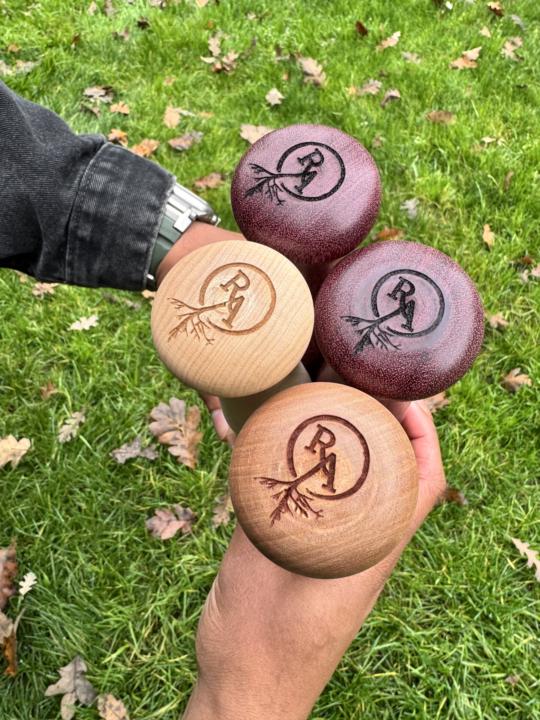
Tai chi sticks are coming!
Rooted Alchemy update 🌿 Our Tai Chi sticks have arrived. Each one is handcrafted, shaped by hand, and carries its own unique character. No two are the same, just like the practice itself. We are excited to offer these to our community first and pair them with a Tai Chi stick course so you can train with intention, structure, and depth. Comment below if you are interested in a Tai Chi stick with the Tai Chi stick course.
1 like • 5d
Can you ship to UK?
6d •
Left and Right
A quick question: following prompts, trying to remember forms and movements, how crucial is left and right? I mean that not only am I left-handed, I'm extremely left-sided: my left eye is slightly myopic, my right very much so; my left shoe wears out much quicker than the right; despite similar injuries forty of years ago, I have quite painful osteoarthritis in my right knee, far less in my left; quite nasty varicose veins on my right leg, only very mild on my right. We "lefties" have come in for some stick historically: Latin for "left" is "sinister", right is "dexter" (even though I'm very "dextrous" with my left hand!); an obsolete English phrase for "left-handed" was "cack-handed", dating from before the invention of toilet paper! At school, my late dad (born 1925) was beaten across the hand with a ruler if he had the temerity to write with his left hand. That left him with a lifelong stutter. So generally in life my instinct is simply to reverse hands: if instructions say do something with my right, I do it with my left. Generally, that works very well (although sometimes it raised eyebrows in traditional settings when I lived in the Middle East!). How applicable is that to practice in Qi Gong and Tai Ji? Are there some moves and forms that HAVE to be right-led, as instructed? Or so long as both sides are practiced does that matter? How does that relate to Yin and Yang? Might practice, through harmonising Yin and Yang, eventually make one more ambidextrous? I don't mean "cure" left-handedness, I'm fine as I am, I just mean create something of a better balance. Any advice welcome!
2 likes • 6d
@Kirby Mannon 🕉️⛩️☯️
1-10 of 14
@mike-diboll-7246
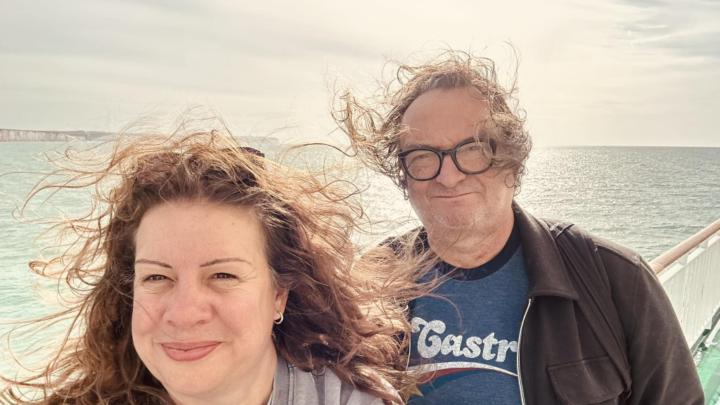
Hi, I'm 66, based in Sussex, England, a retired academic. I'm new-ish to Qi Jong and Tai Chi, and want to consolidate and develop fitness, wellbeing.
Active 48m ago
Joined Jan 26, 2026
Powered by