Activity
Mon
Wed
Fri
Sun
Aug
Sep
Oct
Nov
Dec
Jan
Feb
Mar
Apr
May
Jun
What is this?
Less
More
Memberships
Journey on Nature's Path
472 members • Free
Oasis Builders
139 members • Free
Living Soil Community
1.3k members • Free
The Potted Garden Society
2.9k members • Free
80 contributions to Oasis Builders

🔥
1d •
Healping Chicken stay Cool in the Summer heat
I know a few of us have chickens so here are a couple tips. When the weather climbs into the 90s, water, shade, and airflow come first to cool our chickens. Chickens do not sweat like we do. They cool themselves by panting, holding their wings away from their body, and moving heat through their combs and wattles. Once these basics are in place, a few herbs and moisture-rich plants can add another layer of summer support. Fresh spearmint and lemon balm are commonly offered during hot weather. They are traditionally cooling herbs, and many chickens enjoy pecking at the fresh leaves. Purslane is another excellent summer plant because it naturally holds a lot of water while providing good nutrition. Chickweed, broadleaf plantain, and mallow can also make good additions when foraging or when finding them growing around the garden. One thing we want to remember is that herbs are not a replacement for good flock management. They are simply one more piece of the system. A handful of fresh herbs, a patch of edible weeds, or a few moisture-rich garden plants can help support the flock, although the foundation is still water, shade, and airflow. The goal is not to overcomplicate chicken care. It is to notice what the flock needs, use what is already growing around the home, and add support in a steady way. What herbs or garden plants do your chickens seem to enjoy most during the heat?

1 like • 1d
Our chickens like frozen watermelon when it’s hot. Sorry Phillip.

6d •
UK Startup is Making Electricity From Bacteria in the Soil
I thought this was interesting! British startup Bactery says its battery, powered by bacteria, uses nature’s microbes to generate an unending trickle of power—and by stringing the prototypes together they can generate a stream. Bactery founder and CEO Jakub Dziegielowski says the device complements standard renewable systems like solar, especially because it draws power even when the sun isn’t shining. “In the labs we have six-times more powerful systems,” Jakub told Reuters News in a video about how it works. “The end goal is to get to 4 watts per cubic meter.” The device is designed to be maintenance-free, and have a 30-year lifespan. “You can scale the devices bigger and have them installed fully underground. “Then you take an averaged size garden and all of a sudden you can offset most of your household electricity bills with your garden—all year round.” https://www.goodnewsnetwork.org/uk-startup-is-making-electricity-from-bacteria-in-soil/
1 like • 5d
Wow. That’s cool.
🔥
6d •
Preparedness Becomes Stronger When We Use the Pantry
Recently we looked at the home as a working system. Food, water, first aid, light, tools, and family need all work better when the family as a whole understands how the household actually runs. The next step is to practice with the pantry. A pantry is not just extra food on a shelf. A useful pantry is food the family typically eats and knows how to cook. One simple way to learn your pantry is to make preparing meals from the pantry a game. Look through the cabinets, refrigerator, freezer, and garden if you have one. Then ask, “How many meals could we make before we had to go to the store?” Not fancy meals, but life-giving, wholesome meals. Beans and rice, soup and bread, pasta and sauce, oats, tacos, eggs, tuna salad, fried potatoes, pancakes, or whatever your family already eats. As you do this, observe the shelf life and whether something could be bought in a larger quantity at a better price. For example, I like Ro-Tel. I found that the large can is considerably cheaper, although I used to buy the smaller cans because I did not want waste. Now I buy the large can, use what I need, and put the rest in a clean quart jar in the refrigerator to use in the next week or so. This is a simple example although the goal is not to make this complicated. The goal is to save food cost and set the household up to eat for a period without constantly running to the grocery store. These observations will show what foods you really use and what comes up missing frequently. Do we have enough salt, oil, seasoning, stock, sauce, flour, eggs, or other common items that turn stored food into normal meals? Then start noticing the small grocery runs. Did we go for milk, bread, eggs, coffee, butter, pet food, toilet paper, dish soap, onions, snacks, or something for lunches? Repeated runs are clues. Preparedness does not need to begin with special emergency food supplies. Sometimes it begins by keeping more of the normal things the household reaches for every week. If we use pasta sauce every week, one jar is fragile. Four or six jars give the home more breathing room. If we use rice, oats, coffee, peanut butter, canned tomatoes, beans, broth, or animal feed all the time, those are not random storage items. They are part of the household rhythm.
Poll
13 members have voted
2 likes • 5d
We usually grocery shop once every 4-5 weeks. Fresh fruit and dairy in between. Water too.
12d •
Greenhouses using cattle panels
How many of you use cattle/livestock panels to build your greenhouses? Do you have any pics/examples? Do you have a lot of wind where you are? We've had so many other projects come up this year that we haven't started building ours yet, so I'd still love to look at the way other people have theirs set up.
1 like • 6d
@Jim Flach why no chicken manure? I generally use it after composting it.
8d •
Foraging Tasks Today
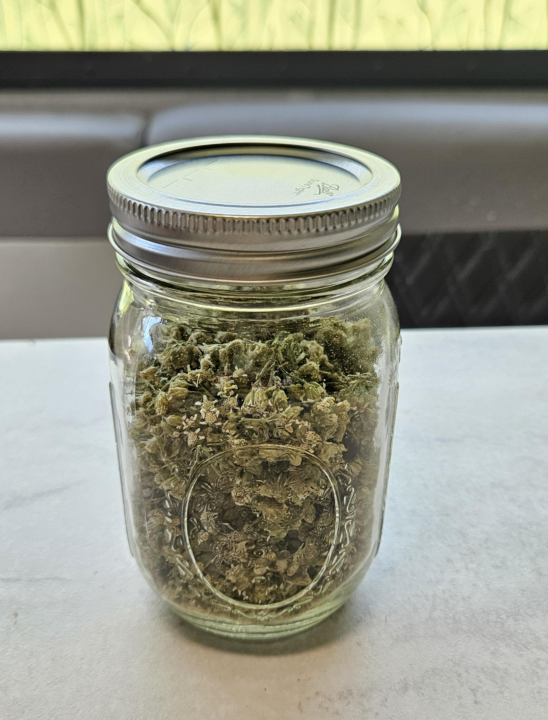
Today I cut up the big stalk of Mullein that I found yesterday. I cut all the individual leaves off of it and laid them down in a single layer inside of my herb dryer. Then I cut off the seed pods and I'm drying those too, so I can collect the seeds to plant next year. Once I was done, I threw the stalk into the compost pile. We'll see if anything comes along and eats it, haha. Then, I checked on my yarrow flowers I had drying from a few days ago. They were finally done. I thought for sure I'd have enough for a couple jars, one for tea and one for infusing. Nope. Just one for tea it is! I'll pick some more to make a salve out of later. So now I've got a canning jar full of dried yarrow and tomorrow I think I'll pick some mint and some raspberry leaves to dry so I can make a good tea blend with it.
2 likes • 6d
Sounds great. I’ll have to try your blend.
1-10 of 80

@larry-baracco-4231
Retired senior citizen. Love gardening & music. Live in Napa, CA zone 9
Active 8h ago
Joined Mar 10, 2026