
Write something

10h •
Seed Libraries
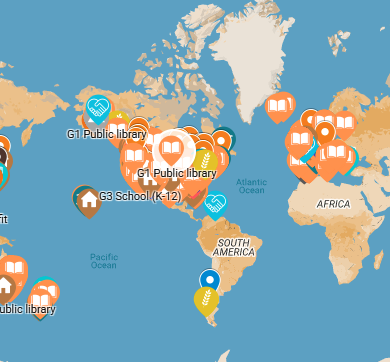
Most people think libraries are only for books... But did you know that hundreds of libraries across America also have FREE seed libraries? Just like checking out a book, you can often take home packets of vegetable, herb, flower, or native plant seeds to grow in your own garden. Many libraries simply ask that, if possible, you save a few seeds from your harvest and return them at the end of the season so someone else can grow them too. It's a wonderful example of neighbors helping neighbors. What kinds of seeds can you find? Depending on the library, you may discover: 🥕 Vegetables 🌻 Flowers 🌱 Culinary and medicinal herbs 🍅 Heirloom varieties 🦋 Native wildflowers for pollinators 🌽 Locally adapted plants that grow well in your region Some libraries even host seed-saving classes, gardening workshops, seed swaps, and demonstrations to help beginners learn how to grow their own food. Why are seed libraries becoming so popular? • They make gardening affordable. • They help preserve heirloom and locally adapted plant varieties. • They encourage self-sufficiency. • They support pollinators and biodiversity. • They bring communities together through a shared love of growing food. One of my favorite parts is that these libraries help preserve seeds that might otherwise disappear over time. As gardeners continue growing and sharing locally adapted varieties, they help maintain valuable genetic diversity for future generations. Want to find one near you? Check with your local public library or search the Seed Library Network's interactive map: Seed Library Network Map
0
0

3d •
Love/hate
What is the thing you love the most about gardening and the thing you dislike intensely. I hate it in mid summer when the grass burns off and everywhere is yellow, and I love planting trees and watching them grow to maturity.
4d •
High Tech Jacket Prototype Pulls Drinking Water From Thin Air
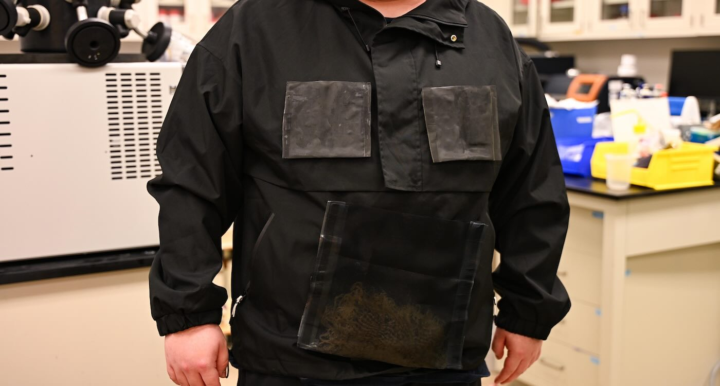
Very interesting news article I came across - A new high tech jacket developed by engineers at the University of Texas can pull drinking water from thin air. With the advance in fabric technology, the jacket can collect up to one-and-a-half pints of drinkable water a day, say scientists. They suggest the ground-breaking technology could benefit anyone who spends a lot of time in areas without easy access to drinking water, like hikers, campers, runners, agricultural workers, and soldiers. “Water harvesting from air is usually imagined as a stationary device such as a box, a panel. We wanted to rethink the form,” said research co-leader Professor Guihua Yu. By focusing on the fibers rather than building another bulky device, the researchers overcame a common problem in the field. He explained that the textile incorporated into the jacket collects moisture and funnels it to detachable harvesting units, which are then “placed in a foldable collector and heated to produce the water”. The jacket produced between 400 and 900 milliliters (0.7 to 1.5 pints) of drinkable water per day, depending on humidity levels, according to a study published in the journal Science Advances. Compared with conventional water-harvesting materials, the textile showed a three- to 10-fold improvement at scale. “The important advance here is that the team did not simply make another material that absorbs water,” said study co-author Professor Keith Johnston. “They designed a pathway for water to move quickly, from vapor in the air to liquid on the fiber surface, and then into the interior of the textile. The researchers are now eyeing applications beyond clothing – including backpacks, tents, emergency shelters and other outdoor gear, allowing items people carry every day to help collect water. They also plan to look at applying the technology to remote field operations, disaster response, and water access in arid or infrastructure-limited regions.

5d •
Should We Be Using Brix Readings? 🌿
I’ve been thinking about whether Brix testing has a place in an agroforestry production system. A refractometer measures the dissolved solids in plant sap—primarily sugars, but also minerals, amino acids, and other compounds. While it doesn’t directly measure nutrition, many growers use it as a quick indicator of overall plant health and photosynthetic performance. Brix testing has been used for decades in vineyards and citrus production as one of the tools to help determine fruit quality, harvest timing, and overall crop performance. It’s not the only measurement growers rely on, but it’s a well-established part of producing consistently high-quality fruit. In a diverse system, could Brix become another observation tool? Imagine comparing: - Different soil amendment strategies - Compost vs. cover crops - Mulched vs. unmulched rows - Irrigation practices - Cultivars - Seasonal changes - Long-term soil improvement The goal wouldn’t be to chase a specific Brix number. It would be to ask better questions: Are my management practices helping plants photosynthesize more efficiently? Are they producing healthier, more resilient, and higher-quality crops over time? Just like a soil test, or visual observation, I see Brix as another tool in the toolbox—not the whole toolbox. I’m curious—has anyone used a refractometer in an orchard, food forest, or agroforestry system? If so, did it actually influence your management decisions or improve crop quality? 🌳🍎
6d •
UK Startup is Making Electricity From Bacteria in the Soil
I thought this was interesting! British startup Bactery says its battery, powered by bacteria, uses nature’s microbes to generate an unending trickle of power—and by stringing the prototypes together they can generate a stream. Bactery founder and CEO Jakub Dziegielowski says the device complements standard renewable systems like solar, especially because it draws power even when the sun isn’t shining. “In the labs we have six-times more powerful systems,” Jakub told Reuters News in a video about how it works. “The end goal is to get to 4 watts per cubic meter.” The device is designed to be maintenance-free, and have a 30-year lifespan. “You can scale the devices bigger and have them installed fully underground. “Then you take an averaged size garden and all of a sudden you can offset most of your household electricity bills with your garden—all year round.” https://www.goodnewsnetwork.org/uk-startup-is-making-electricity-from-bacteria-in-soil/
1-30 of 149
powered by
skool.com/oasis-builders-8012
Oasis Builders helps busy families grow healthy food, herbs for medicine, and gain calm confidence for everyday readiness.
Suggested communities
Powered by