
2d •
Face or mirror?
I've been looking at few videos of teachers leading their classes recently. In all instances, they are wearing a head mic but they have their backs to the class for the entire class. They're "doing" the class with their participants. What are your thoughts?
21d •
OFF THE RECORD 🤫
A while back I asked if anyone fancied a cuppa and a chat, and my bad, I didn't go through with it. On my flight back, I thought about that and rather than a random cuppa and chat, we could have a small online space for us to talk about the stuff we don’t always talk about ... Getting older in the industry, the highs and lows of self-employment, pensions (or lack of), etc etc. It's not networking, or a business group, or somewhere to sell your stuff, but honest conversations with other people who are in the same boat. Once a month. On Zoom. Free. Nothing recorded. All I ask is that what’s said in the Zoom, stays in the Zoom. I’m thinking around 1pm on a weekday, for six months to see where it goes. Could be a silly idea. Would you be interested? If so, what day of the week would work best for you?
20d •
I did a "live"! 😆
Upcoming events ... The Art of Doing Nothing Saturday, September 12th 2:00-5:00PM https://app.paperbell.com/checkout/packages/227413 MY KIND OF YOGA Professional Development: Rethinking Strength in Yoga Sunday, September 13th 2:00-5:00PM Replay available for 30 days https://app.paperbell.com/checkout/packages/227429 Off the Record Thursday, September 24th 1:00-2:00PM https://tidycal.com/annseeyeoh/off-the-record

24d •
Who Are You Becoming?
Dear Teacher, Teaching has a quiet way of shaping us over time; not just in how we teach… but in who we become. It shapes the way we listen, respond and how we hold ourselves in challenging moments. So this month, I invite you to reflect on who you're becoming through this work that we do. Teaching is formative and if you’re not paying attention, you can drift into habits that don’t actually reflect who you want to be. So if needed, choose again. Have a wonderful month! Ann-See 💌

28d •
A little housekeeping… and a familiar name returns 👀
Hey ... I'm currently in Bangkok and it's boiling here. I do hope it's a tad cooler back in the UK. I've been doing some tidying up and the Yoga Life Club has reverted back to being The Yoga Teachers Club 😂. Some of you will remember that was where we started before I broadened things out into The Yoga Life Club. Nothing dramatic has happened and, if you're already a paying member, you don't need to do anything. This space will now be much more clearly focused on yoga teaching and teacher development: learning, questioning, sharing ideas and continuing to develop our craft. I really want to use this space to share my knowledge and experiences with you from my decades of teaching yoga and group fitness before life shifts again. If you're not a yoga teacher, you're absolutely welcome to stay. There are still free resources here that you may enjoy, but if your interest is more in personal practice, meaning, the interior life and what it means to flourish, that's increasingly where my writing and practice-based work at The Sacred Practice on Substack lives. Here's the link if you'd like to join me there too: https://annseeyeoh.substack.com/ If you were subscribed to Pocketful of Grace, you should have received an email from Substack as I'm moving the audio drops there from September. You're welcome to stay and use the past content and recordings of the live classes. Meanwhile, for the teachers amongst you, welcome, or welcome back, to The Yoga Teachers Club. It feels rather good to have the old name back. 😊 Ann-See xo
1-30 of 125
skool.com/theyogalifeclub
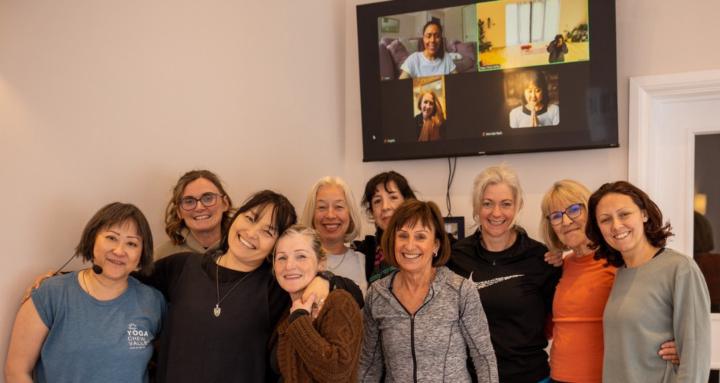
For yoga teachers who want to keep learning, questioning and developing their craft. Less prescription. More enquiry. Better teaching.
Leaderboard (30-day)
1

+5
2
+2
3
+1
Powered by