
Write something
Pinned

Jan 12 •
Welcome to The Healthy Coop Collective! 🐔
Hi everyone! I'm Dr. Nisana, and I'm thrilled to launch this community dedicated to helping you raise healthier, happier backyard flocks. A bit about me: I'm a Doctor of Veterinary Medicine specializing in avian and poultry health through my practice, Covenantal Wings Veterinary Services. My background includes working in commercial poultry, and now I focus on bringing that professional veterinary expertise to backyard poultry keepers like you. I live on an 80-acre homestead in Oklahoma with my husband and daughter. What to expect here: I created The Healthy Coop Collective because I saw too many backyard keepers struggling with conflicting information online and limited access to poultry-savvy veterinarians. This community bridges that gap. Here's what's coming: ✅ Daily Engagement - Tips, discussions, case studies, and community support to keep your knowledge growing ✅ In the Premium plan: Weekly Educational Resources - In-depth guides, protocols, and tools on disease prevention, nutrition, biosecurity, and wellness management ✅ In the VIP plan: One Private 1-on-1 Veterinary Video Consultation Per Month - Personalized flock health guidance from me directly This is a space for learning, asking questions without judgment, and building confidence in your ability to care for your birds. Whether you're brand new to poultry or have years of experience, you belong here. Let's get started! Drop a comment below and tell me: - What type of poultry do you keep? - What's your biggest flock health challenge right now? - What topics do you most want to learn about? I can't wait to get to know you and your flocks. Here's to healthier coops and thriving birds! 🌿 —Dr. Nisana

🔥
40m •
The "Hen Hotel": a moveable coop for 50 birds 🐔
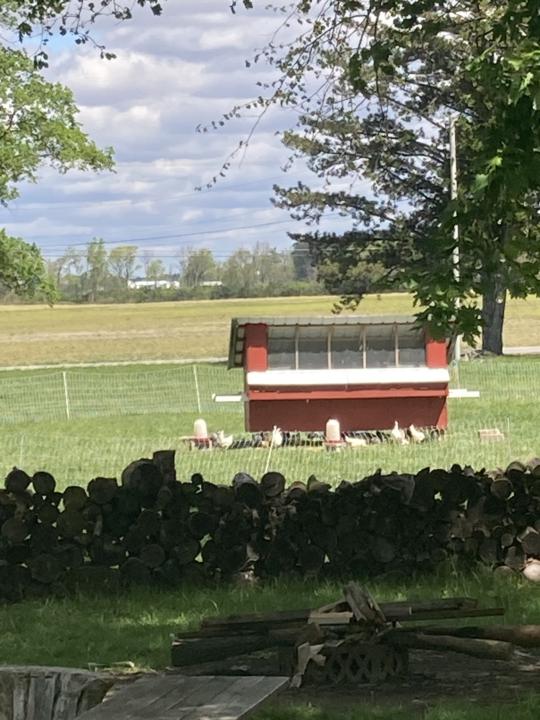
@Nisana Miller asked me to share this with you all, so here ya go! This is one of the projects my husband and kids have been up to lately: a high-security moveable chicken coop ("chicken tractor") for our new laying flock of roughly 50 birds. The roosts inside are saplings from our woods. The doors latch with hard-for-coons-to-figure-out methods and hardware cloth covers the open spaces. There are 12 nest boxes that jut out from one side, big doors open on both ends and a ramp-door with climbing slats opens in the front. It has pneumatic tires (2 of which swivel, so you can move it in all directions), and 2x4 moving "handles" come out from each end so a couple strong young people can move it around the pasture. If it's super muddy/wet ground, they can lay a couple pieces of plywood down and let it rest on them so the wheels don't sink. The bottom is also hardware cloth, so some droppings can fall through and it can be easily sprayed out with a hose to clean it, won't tear up the ground underneath, and the raised design provides hawk protection for the birds to scurry under during the day (iykyk). It is surrounded by a double length of electric net fence, powered by a solar fence charger, to keep birdies in and predators out. As much of it as possible is repurposed materials from other projects to help keep costs down. So far, the chickens love it, and it's been very easy to work with. Pictures are below. Not great, but they'll give you an idea. What do you think?
0
0
2d •
🌶️ Happy Cinco de Mayo! Fun Fact: Chickens Can’t Taste Spicy!
In honor of Cinco de Mayo—a Mexican holiday celebrating the Battle of Puebla in 1862—let’s talk about something spicy! Did you know chickens can eat hot peppers without feeling the burn? The Science: CAPSAICIN RECEPTORS: 🌶️Capsaicin is the compound that makes peppers “hot” 🌶️Mammals have TRPV1 receptors that detect capsaicin 🌶️These receptors trigger burning sensation 🌶️Chickens LACK this receptor entirely! What This Means: 🐓Chickens taste NO heat from hot peppers 🐓Can eat habaneros, jalapeños, ghost peppers—no problem! 🐓They experience peppers as just another food Why This Matters for Flock Keepers: POTENTIAL BENEFITS: 🐔Peppers are rich in vitamins A and C 🐔Carotenoids may enhance yolk color 🐔Some keepers report improved circulation (not fully researched) PEST DETERRENT USE: 🐁Adding cayenne to feed deters rodents/squirrels 🐁Mammals feel the burn—chickens don’t! 🐁Protects feed from unwanted nibblers IMPORTANT NOTES: 🫑Feed peppers in moderation (treats = 10% of diet max) 🫑Remove stems and seeds if concerned about choking 🫑Fresh or dried both acceptable 🫑Don’t rely on peppers for nutrition—supplement only! The Bigger Picture: This adaptation likely helps wild jungle fowl eat pepper plants and spread seeds—birds disperse seeds better than mammals who might destroy them! Fun Experiment: Offer your flock some mild pepper pieces and watch—no reaction to the heat whatsoever! Your turn: ❓Ever fed your chickens hot peppers? Did they gobble them up? 🌶️ ❓Do you use cayenne in feed to deter rodents? Does it work? 🐭

6h •
Black Copper Maran room upgrade till coop/run is finished
The Marans ran out of space in the box. Upgraded ti a temporary space until outdoor setup is finished. Planning on building a roost station out of more limbs. :)

12h •
🏊 Wading Pools: Disease Transmission Risks vs. Cooling Benefits
Summer heat has many keepers considering wading pools for their flock. But are the cooling benefits worth the disease risks? Let’s examine the science! Potential Cooling Benefits: HOW CHICKENS COOL: 💧Chickens don’t wade/swim like ducks! 💧May stand in shallow water to cool feet 💧Blood circulating through legs releases heat 💧Some birds enjoy it, others avoid completely REALITY CHECK: 🐓Most chickens WON’T use pools voluntarily 🐓Better suited for ducks and waterfowl 🐓Other cooling methods often more effective Disease Transmission Risks: STANDING WATER CONCERNS: BACTERIAL GROWTH: 🦠E. coli multiplies rapidly 🦠Salmonella thrives in warm water 🦠Pseudomonas (causes infections) 🦠Water contaminated within HOURS PARASITE TRANSMISSION: 🐔Coccidia oocysts survive in water 🐔Spreads between birds quickly 🐔Fecal contamination inevitable FUNGAL ISSUES: 🐥Aspergillus spores 🐥Respiratory risks OTHER PROBLEMS: 🦟Mosquito breeding ground 🦟Attracts wild birds (disease vectors!) 🦟Wet feathers in dirty water = skin issues 🦟Drowning risk for chicks Main Concerns: Studies show contaminated water sources are significant disease transmission routes in poultry. Standing pools combine fecal matter, warmth, and organic debris—ideal pathogen environment! Safer Cooling Alternatives: PROVEN EFFECTIVE: ✓ Shade structures (most important!) ✓ Frozen treats (watermelon, berries) ✓ Frozen water bottles to lean against ✓ Misting systems (fine mist, not soaking) ✓ Proper ventilation ✓ Fresh, CLEAN drinking water always available ✓ Shallow pans refreshed FREQUENTLY (not standing pools) If You MUST Use Water: ✓ Very shallow (1-2 inches maximum) ✓ Dump and refill MULTIPLE times daily ✓ Clean container daily ✓ Locate away from coop ✓ Monitor for mosquito larvae ✓ Remove if birds aren’t using it Bottom Line: The disease risks generally outweigh benefits for chickens. Ducks? Different story! Chickens? Better options exist. Your turn: ❓Have you tried a wading pool? Did your chickens actually use it? 🐔
1
0
1-30 of 85
skool.com/thehealthycoopcollective
Vet-led community for backyard poultry keepers. Dr. Nisana, DVM, provides expert guidance on flock health, disease prevention, nutrition, & wellness.
Leaderboard (30-day)
1
+22
2
+10
3

+7
4

+7
5
🔥
+6
Powered by