
Write something

22h •
Homework Exercises for Older Children A Parent’s Guide to Healthy Breathing, Tongue & Jaw Development
Each week I'll add exercises and strategies under each for each of the following topics: · PART 1 Tongue strength and position · PART 2 Lip and cheek function · PART 3 Jaw control and chewing · PART 4 Nasal breathing · PART 5 Posture and alignment PART 1 TONGUE STRENGTH & POSITION WHY TONGUE TRAINING MATTERS The tongue is not just for eating and talking — it plays a central role in how your child’s face, airway, and body develop. When your child’s tongue rests correctly (on the roof of the mouth): - It helps the upper jaw grow wide and strong - Supports straight teeth and proper bite alignment - Creates more space for the airway If the tongue is low, weak, or not functioning well: - The palate can become narrow - Teeth may become crowded - The airway can become restricted # 1. THE TONGUE SUPPORTS BREATHING The tongue helps guide whether your child breathes through their: - Nose (ideal) - Mouth (compensatory) When the tongue is strong and positioned well: - It supports nasal breathing - Improves oxygen delivery - Helps with calm, regulated breathing Mouth breathing is often linked to: - Poor sleep - Behaviour and focus challenges - Fatigue and low energy - Reduced oxygen efficiency # 2. THE TONGUE WORKS WITH THE LIPS AND JAW The tongue doesn’t work alone — it is part of a system: - Tongue + lips = proper oral seal - Tongue + jaw = balanced muscle development Lip incompetence (lips staying open) can contribute to: - Changes in jaw position - Altered craniofacial development If the tongue is not functioning well: - The lips may stay open - The jaw may shift or compensate - The face can develop asymmetrically # 3. THE TONGUE AFFECTS EATING, SWALLOWING & SPEECH Good tongue function helps your child: - Chew food properly - Swallow correctly (without compensation) - Develop clear speech patterns These exercises directly support: - Swallowing mechanics - Speech clarity # 4 THE TONGUE EVEN AFFECTS POSTURE & THE NERVOUS SYSTEM
11d •
Home Focus For Babies - A Parent’s Guide to Healthy Breathing, Tongue & Jaw Development
PART 1 FOR BABIES (Early Oral Development & Foundations) Many of the patterns that influence how your child breathes, feeds, sleeps, and develops begin in the very early months of life. As a parent, you may notice: - Feeding challenges - Difficulty settling - Mouth breathing - Tension in the body - Or simply a sense that something isn’t quite right These early signs are important — but they are also an opportunity. Why This Stage Matters In babies, the tongue, lips, jaw, and nervous system are still developing and learning how to work together. This means: Small, gentle inputs can have a powerful influence on development By supporting your baby early, you are helping to shape: - How they feed and swallow - How they breathe - How their face and jaw develop - How their nervous system regulates A Connected System Feeding, breathing, posture, and movement are not separate. They are all part of the same system. If one area is under strain — such as: - A tight tongue - Tension through the neck or spine - Poor coordination of sucking or swallowing The body will begin to compensate This is why we take a whole-body, proactive approach. Your Role as a Parent A skilled practitioner can assess and guide — but what you do at home is just as important. These simple, gentle practices help your baby: - Develop strong oral muscles - Build coordination and awareness - Establish healthy breathing patterns - Reduce unnecessary tension and compensation What We Are Aiming For Over time, we want your baby to develop: - A tongue that moves freely and lifts well - Lips that can gently close and seal - Coordinated sucking, swallowing, and breathing - Calm, nasal breathing patterns - Balanced movement and posture This is about: - Awareness - Consistency By supporting these foundations early: Many common challenges can be reduced or prevented altogether You are not just helping your baby in the moment — You are shaping how they grow, breathe, and function long-term.
1
0

11d •
A Parent’s Guide to Healthy Breathing, Tongue & Jaw Development
(I'm going to share some AT HOME activities parents can do to assist care they are having or have had) Many parents come to this work because they are concerned about their child. You may have noticed: - Mouth breathing - Snoring or restless sleep - Speech difficulties - Challenges with chewing or swallowing Or perhaps your child has had — or has been told they may need — a tongue tie release, and you’re wondering what more you can do. For some parents, these concerns begin even earlier. You may have noticed in your baby:• Feeding difficulties• Trouble latching or sucking• Reflux or unsettled behaviour• A preference for turning the head one way• Tension in the body or difficulty with tummy time These early signs are important — and they matter. WHAT MOST PEOPLE AREN’T TOLD The tongue, lips, cheeks, and jaw are not just involved in eating and speaking — they play a key role in how your child: - Breathes - Sleeps - Develops their face and jaw - Regulates their nervous system When these muscles are not working well together, the body adapts. This can lead to: - Mouth breathing instead of nasal breathing - Poor tongue posture (low or tight tongue) - Compensations in the jaw, lips, and neck - Changes in facial growth over time A TONGUE TIE IS NOT THE WHOLE STORY If your child has had a tongue tie (or a “tight” tongue), it’s important to understand: A procedure alone is not the full solution. If the tongue remains: - Weak - Tight - Or sitting low in the mouth The same patterns can continue. This is why it is essential to train the tongue and surrounding muscles, both before and after any intervention. YOUR ROLE AS A PARENT A skilled practitioner can guide and assess your child — but what happens at home is just as important. Through simple, consistent exercises, you can help your child: - Build strength and coordination - Develop correct movement patterns - Establish proper tongue, lip, and jaw function - Support healthy breathing and development
3
0
Mar 29 •
✨ Under the Tongue Release – Parent Homework
This is a simple technique you can do at home to help improve tongue mobility and reduce tension under the tongue. In this video, you’ll see a mum working on her little girl.There is a tender spot — but notice how her daughter actually draws her mum’s hand back in for more. This is really important. Even when there is some tenderness, children will often seek the input because it helps release the restriction and improve movement. How to do it: - Wash your hands thoroughly - For babies, use your little pinky finger - For older children, use your index finger - (Some parents find gently cooling the fingertip helpful) - Place one finger under the tongue inside the mouth - With your opposite hand, place a finger under the chin on the outside - Gently press the fingers toward each other, supporting the tissue between them Then: - Slowly work from one side to the other - You may feel small, pea-sized tight spots — these are areas of tension - Gently work to soften and flatten these areas - Work each side a few times using gentle downward pressure The goal is not to stretch forcefully, but simply to work through and relax the tissues under the tongue. What to expect: - If the tongue is moving freely, this usually isn’t uncomfortable - If there is restriction, the area may feel tender or sensitive This tenderness reflects tightness in the muscle layers — and is often where the most benefit can occur. Your focus: Consistency is key. Keep working gently and regularly until: - The tissue feels less tight and less sore - The tongue begins to move more freely A Gentle Reminder This kind of support is not a replacement for professional assessment, especially if there are feeding difficulties. However, understanding how the muscles under the tongue work together can help you better support your child’s feeding, oral function, and development.

Mar 29 •
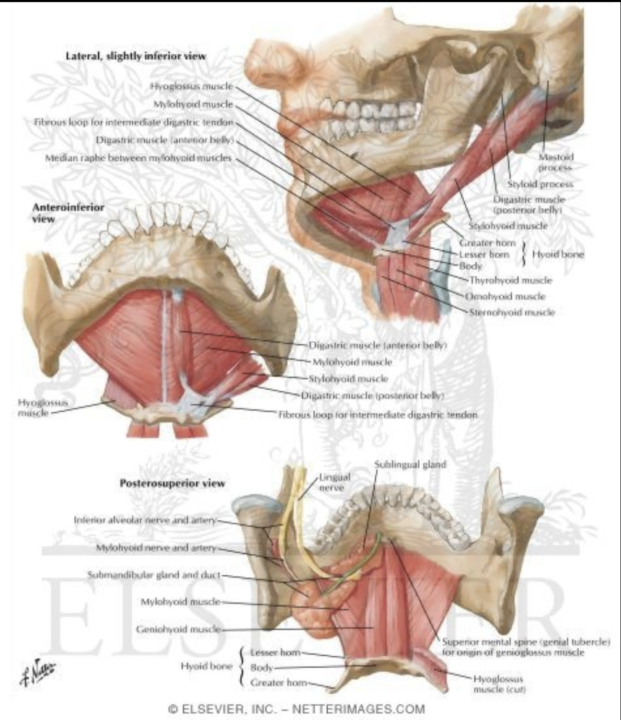
Understanding What’s Under the Tongue (This helps you visualise the technique I just shared)
After watching the technique I just posted, these images can really help you understand what your fingers are actually working on. Under the tongue isn’t just a single piece of tissue (like a frenulum) — it’s a layered network of muscles and fascia that all work together. Key muscles you’re influencing: - MylohyoidForms the floor of the mouth and provides a supportive “sling” for the tongue - GeniohyoidHelps lift and stabilise the tongue and plays a role in swallowing - Digastric musclesSupport jaw movement and coordinate with tongue function - Genioglossus & HyoglossusThese are deeper tongue muscles that control tongue movement and positioning Why this matters: When these muscle layers are tight or restricted, it can impact: - Tongue mobility - Feeding and latch - Swallowing patterns - Oral development - Even breathing patterns over time Bringing it back to the technique: When you’re gently working under the tongue: - You’re not just “stretching” tissue - You’re helping these muscle layers relax and coordinate better - You’re improving how the tongue can move, lift, and function This is why you may feel those pea-sized tight spots — they’re often small areas of tension within this system. The takeaway: This work is gentle… but powerful. Understanding the anatomy helps you: - Be more confident - Be more precise - And be more consistent with your child’s care
6
0
1-11 of 11

skool.com/the-tongue-tie-parent-guide
We help parents understand tongue tie and feel confident making decisions without fear or pressure.
Leaderboard (30-day)
1

+4
2

+3
3

+1
Powered by