
Write something
Pinned

⭐
4d •
🔥 Welcome to the Private AI Advantage Community!
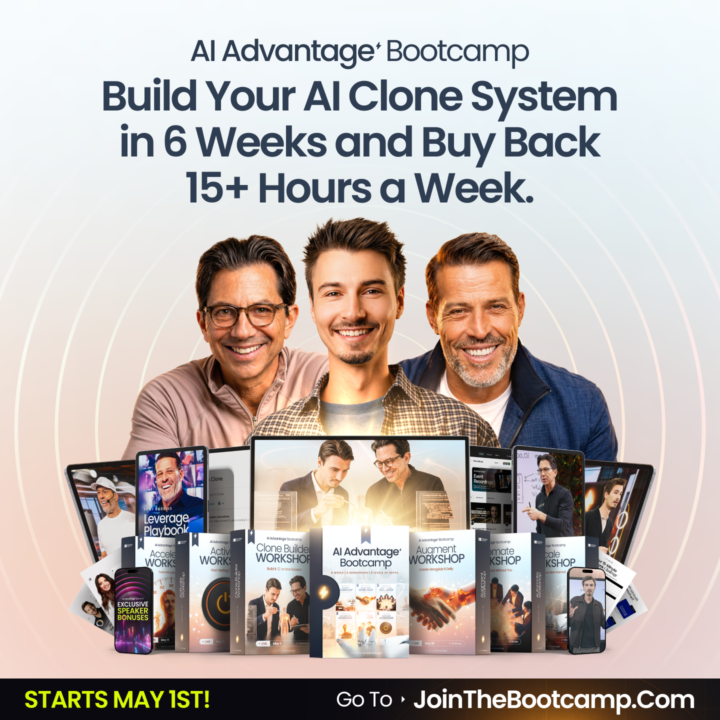
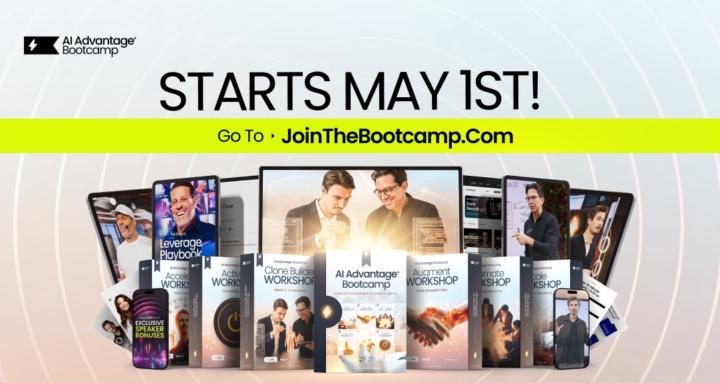
First and foremost, so glad you’re here. The 2026 AI Advantage Summit just wrapped, and the energy was incredible. If you joined us live, you already know what this community is about. And if you’re just finding your way here now, perfect timing. The doors to the AI Advantage Bootcamp are officially open. This is where the real work begins. Over the course of the Bootcamp, you’ll build your own AI clone, create AI agents that work for you around the clock, and put together a setup designed to save you 15 hours every week. Not 15 hours of busywork. Fifteen hours of the stuff that drains you, distracts you, and keeps you from the work that actually moves the needle. Whether you’re brand new to AI or you’ve been experimenting for a while, this is the right next step. The Bootcamp is practical and step-by-step. You don’t need a tech background. You just need to show up and do the work. JOIN THE BOOTCAMP HERE And while you’re getting settled, introduce yourself in the General Discussion section. Let us know where you’re from, what you do, and what you’re most hoping to change. We’re glad you made it. Let’s get to work.
Pinned
⭐
2d •
🔥 Quick Clarification: The Difference Between Our 3 AI Advantage Communities
Hey everyone, we’ve received a few questions in the customer service inbox, so we wanted to take a moment to clearly explain the difference between the groups and experiences inside the AI Advantage ecosystem. --------------------------------------------------------------------------------------------------- 1. This Skool Community (Free) This group right here is our free community. It’s where Igor Pogany, our team, and the community continue to share value, insights, resources, conversations, and support. Inside here you can expect: - Free trainings and resources inside the Classroom - Ongoing conversations - Community support - Updates of the latest AI News - Updates and announcements for AIA - Valuable insights to help you grow with AI This group is completely free and we fully encourage you to stay engaged, ask questions, connect, and use everything available here. And just because the Summit is over, doesn’t meant mean this group is going anywhere! --------------------------------------------------------------------------------------------------- 2. AI Advantage Club (Paid Membership) The AI Advantage Club is our premium membership for those who want to go deeper and continue building their AI skillset consistently. Depending on how you joined: - VIP members received a 30-day trial - Bootcamp members receive 3 months included And if you took the VIP upgrade AND joined the Bootcamp, you would have 4 months free inside the Club. Inside the Club, the experience goes deeper with things like: - Advanced trainings - Step-by-step guides and our “Hacks of the Week” - AI workflows - Prompt libraries you can copy - Business use cases - Time-saving systems - Ongoing implementation support - New resources added regularly - A Technical Support Team who can answer questions if you hit roadblocks trying to implement an AI tool Think of this as your AI gym membership. It’s the place where you will train those AI muscles and really focus on implementing AI into your life and business.
Pinned

8h •
Time To Make a Decision...
I think there’s something most people don’t realize about the 2026 AI Advantage Bootcamp… And I want to clear it up before doors close tonight. You don’t have to wait 6 weeks to start seeing results. In the very first workshop, we build your AI Clone’s DNA together. That means we’ll teach it your goals, your values, your voice, and your story. So by the time you leave Workshop 1, you’ll already have an AI system that understands how you think, what matters to you, and how to support you. And that’s just the beginning. When you click here to enroll, over the next 6 weeks you’ll build an AI Clone-Agent you can trust to handle real work for you, all on its own. That means it won’t just draft the email. It can send it. It won’t just summarize research. It can deliver a clear briefing to your inbox every morning. It won’t just brainstorm content. It can write, schedule, and publish using a cadence you approved. This is the bridge from “I use AI” to “AI works for me.” And the best part? You don’t need any baseline AI knowledge to do this. We’ll walk you through the entire process from start to finish. So if you can follow directions, you can build this. Click here before midnight tonight and get AI working for you like a super smart employee over the next 6 weeks. Our kickoff call goes LIVE tomorrow, so this truly is the last call.


just now •
What a reusable framework can do
So in my previous post I've been talking about creating templates to use instead of prompts because when you create a template that is reliable and reusable, you can create many different prompts from it that will work 95% of the time. Below is the template I'm going to be using. In the comments is what you can get from it using the same template The template ## PROMPT TEMPLATE Always generate prompts using this structure: <System> You are an expert X. You must operate under Y framework. You must score your output against Z criteria before finalizing. You must consider [specific considerations, like prior outputs, known biases, or edge cases]. Always integrate this context into reasoning and final output. {one-sentence statement of expertise, mission, and voice}. </System> <Context> {Brief background on the scenario, the intended audience, and the primary objective of the conversation or task}. </Context> <Domain_Standards> {Example: Editorial Standards, Coding Conventions, Pedagogical Principles}. </Domain_Standards> <Process_Guidelines> {Example: Article Structure & Format, Research & Interview Workflow, Quality Checklist}. </Process_Guidelines> <Instructions> 1. {First instructional step}. 2. {Second instructional step}. 3. {…continue as required}. </Instructions> <Constraints> - {Key limitation or rule}. - {Another limitation}. - {Add more as needed}. </Constraints> <Output_Format> Outline exactly how the assistant should present its response, for example: 1. Title or Headline 2. Introduction 3. Main Sections with sub-headings 4. Conclusion or Next Steps 5. Optional elements (Checklists, FAQs, CTAs, etc.) </Output_Format> <Reasoning> State the thinking approach: *Apply Theory of Mind, leverage System-2 reasoning, balance depth with clarity,* and any other meta-reasoning guidelines. </Reasoning> <User_Input> When the user first initiates the conversation, respond with: “Please enter your {specific request trigger} and I will start the process,”

17m •
AI enthusiast based in South Florida
Hi everyone! I'm Luis, a finance executive and AI enthusiast based in South Florida. I've moved well past the ChatGPT curiosity phase — I'm actively building AI-powered workflows and tools — but I'm here because I know I have real blind spots, especially on the creative and community-building side of AI applications. The specific area I want to grow: using AI in ways that feel more human, not just more efficient. I can automate a financial model. I'm still figuring out how to use AI to communicate, connect, and lead better. What brought me here is the people. The best learning I've had in AI came from practitioners in completely different fields who challenged how I was thinking. Fun fact: I'm also a mindfulness and mindset coach — so yes, I spend an uncomfortable amount of time thinking about what it means that a machine can now think.
1-30 of 18,453
skool.com/the-ai-advantage
Founded by Tony Robbins, Dean Graziosi & Igor Pogany - AI Advantage is your go-to hub to simplify AI and confidently unlock real & repeatable results
Leaderboard (30-day)
1

🔥
+1755
2
+1274
3

+741
4

+611
5

+546
Powered by