Activity
Mon
Wed
Fri
Sun
Aug
Sep
Oct
Nov
Dec
Jan
Feb
Mar
Apr
May
Jun
Jul
What is this?
Less
More
Owned by Stacey
Design a life you love through our 18-week Life Design Workshop with weekly coaching, AI-powered tools, and intentional action.🧡
Memberships
Magnetic AI Workforce
13 members • $47/month
Rock Your Moolah
96 members • Free
Magnetic Boardroom
13 members • $2,000/month
The Success Club
13.8k members • Free
AI Online Educators & Coaches
3k members • Free
Magnetic Memberships
3.9k members • Free
Free Skool Course
71.6k members • $1
EVOLVE
254 members • Free
Skoolers
166.5k members • Free
204 contributions to The AI Advantage
14h •
AI Advantage
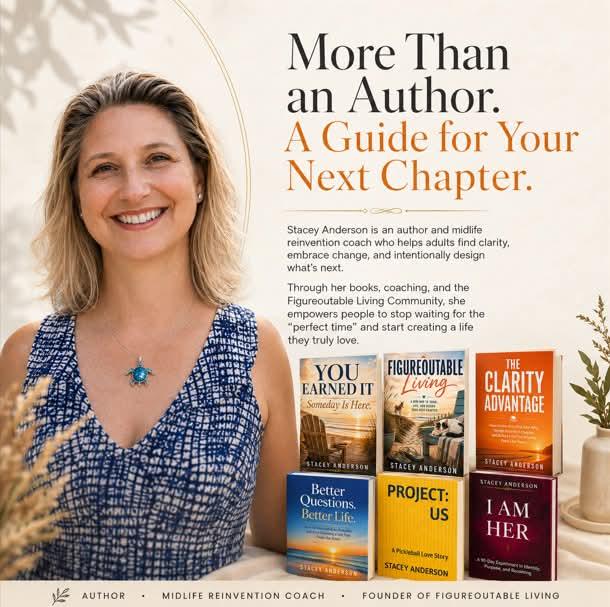
AI helped me create this graphic. It wasn't perfect (it looked like I was missing half my arm 😂), but I was also reminded me of something bigger: perfection is optional, publishing is not. The people getting the biggest advantage from AI aren't creating perfect content—they're publishing more content.
0 likes • 13h
@AI Advantage Team I use ChatGPT, it's been my comfort zone, but am going to start to dabble with Claude for business purposes. Oh my gosh, AI makes it sooo easy to whip up a post.
2d •
Figureoutability Lesson #3
Most people think they need a perfect plan. I don't. I need a direction. A direction lets me take the first step. The first step gives me feedback. Feedback helps me adjust. And after enough adjustments... I end up somewhere I never could have planned from the beginning. That's why I don't obsess over getting it right. I focus on getting it moving. AI helps me see possibilities. Action tells me which possibility is worth pursuing. Figureoutability isn't having the perfect roadmap. It's trusting yourself to navigate the next turn. Direction creates action. Action creates feedback. Feedback creates better direction. That's figureoutability. Question: What's one thing you've been waiting to have completely figured out before you begin?
2 likes • 2d
@AI Advantage Team Thank you so much 🧡 That’s exactly the distinction I was trying to make. AI can help us see more possibilities, but action is what turns possibility into actual clarity. I’m learning that I don’t need to be certain before I move. I just need enough direction to take the next honest step.
1 like • 14h
@Cathy Sherry I LOVE THAT! Have you read any of my books?
6d •
Figureoutability Lesson #2
Most people wait for clarity. I don't. I make a decision. Then I take the first step. Clarity isn't something you find. It's something you create. Every action teaches you something you couldn't have learned by thinking alone. That's why I use AI as a thought partner. Not because it gives me the answers. Because it helps me ask better questions, think through possibilities faster, and get to the next experiment sooner. Action creates clarity. Clarity creates evidence. Evidence creates confidence. That's figureoutability. Question: What's one decision you've been overthinking that could become clearer simply by taking the first step?
2 likes • 6d
@AI Advantage Team Thanks, Jaycebel! 🧡 That's exactly how I've been thinking about AI too. Not as a replacement for my thinking, but as a thought partner that helps me think better, spot blind spots, and take action faster. That's becoming the heart of Figureoutability for me: clarity through action, accelerated by AI. Thanks for taking the time to share this perspective!
0 likes • 3d
@Dionny Chejito Thanks for sharing that perspective! That is figureoutability in motion.

8d •
What Success Actually Buys You
Most people think success is about money. It's not. Money is just what buys you options. I've worked hard for decades. Not because I fell in love with the grind, but because I fell in love with what the work could create. Every uncomfortable conversation. Every risk. Every time I wanted to quit but didn't. None of it was just to make more. It was to own my time. To be there for the people I love. To create memories instead of regrets. To have the freedom to say yes to what matters and no to what doesn't. Don't chase success because you want to look successful. Chase it because one day you'll realize time is the only thing you can't earn back. Work hard. Do the uncomfortable things. Become the person capable of creating the life you want. Because real success isn't measured by what you own. It's measured by how fully you get to live. Question for you: If you had complete freedom over your time one year from now, what would you spend more of it doing... and who would you spend it with?
1 like • 7d
@Debbie Smith Debbie, thank you so much. That means a lot. I really believe taking a few minutes to encourage each other matters, especially when we’re all building something meaningful in our own way. Wishing you success and momentum too. 🧡
1 like • 5d
@Debbie Smith
7d •
AI Didn't Teach Me This. Life Did.
I've spent hundreds of hours using AI as a thought partner. But one of the biggest lessons I've learned didn't come from AI. It came from watching people—including myself. We work hard. We reach a goal. And almost immediately we move the finish line. "I'll celebrate when..." "I'll be happy after..." "Just one more..." AI can help us think more clearly. But it can't remind us to pause and recognize how far we've already come. That's why I wrote You Earned It. Sometimes the next breakthrough isn't setting a bigger goal. It's finally giving yourself credit for achieving the last one. Question: What's one accomplishment you've never really stopped to celebrate? 🧡
0 likes • 7d
@AI Advantage Team Thank you so much, Jaycebel. 🧡 When I started writing You Earned It, I thought it was going to be a book about giving yourself permission to spend the money you'd worked so hard to earn. But as I wrote, I realized it was about something much bigger. It's about giving yourself permission to recognize how far you've come. I wanted people to see they've already built a lifetime of evidence that they're more Figureoutable than they think. Every challenge they've overcome is proof. Sometimes we just need someone to remind us, "You earned it." 😊
0 likes • 6d
@Stan Hobbs I agree. We can do things so fast, but also need to appreciate the present and how far we've come, instead of just focusing on the next thing.😎
1-10 of 204
@stacey-anderson-9932
📚 Author | ✨ Midlife Reinvention Mentor
🧭 Helping you design your next chapter with AI
🧡 18-Week Life Design Workshop • Starts July 21
Active 2h ago
Joined Nov 7, 2025
Powered by