
Write something
Pinned

3h •
What an incredible few days
I just wanted to take a moment and sincerely thank you for showing up for the AI Advantage Summit. Thank you for investing your time. Thank you for being open. Thank you for being willing to learn, grow, and prepare for what’s next. In a world full of distractions, noise, and reasons to wait… you made a decision to be here and we don't take that lightly. And as Tony said during the event, your decisions shape your day, your future, and ultimately your reality. That’s why this doesn’t end when the summit ends. Now you get to decide what comes next. Decide to stay plugged in. Decide to keep learning. Decide to take action on what you discovered here. Decide that your future matters enough to keep moving forward. If you are joining us for the Bootcamp, we cannot wait to see you Friday and go even deeper with you. If you grabbed the VIP upgrade and unlocked access to the AI Advantage Club, our team is already pouring insane value into that community every single week and we’re excited to support you there. And if now isn’t the right time for anything more, that’s okay too. This free community is staying open. We’ll keep showing up. We’ll keep adding value. We’ll keep giving you tools, insights, and support to help you grow. No matter where you are in your journey, there is a place for you here. From my heart, thank you for trusting us, for spending these days with us, and for being part of something special. Excited to build alongside you!
Pinned

⭐
1d •
🔥 Welcome to the Private AI Advantage Community!
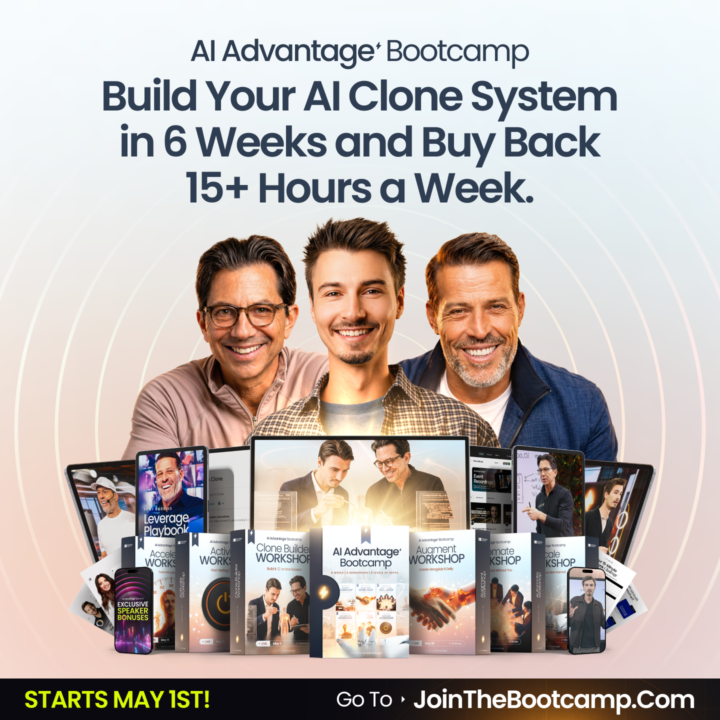
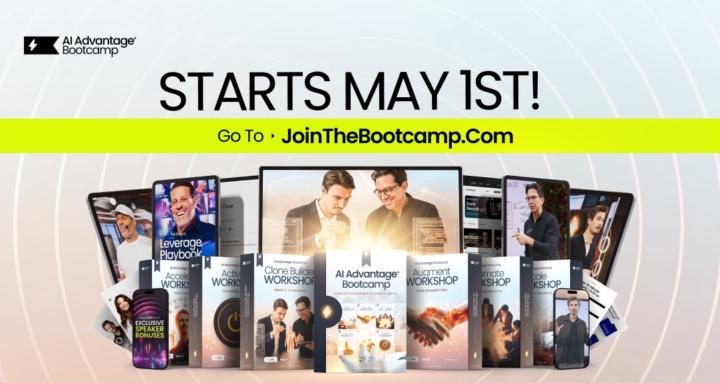
First and foremost, so glad you’re here. The 2026 AI Advantage Summit just wrapped, and the energy was incredible. If you joined us live, you already know what this community is about. And if you’re just finding your way here now, perfect timing. The doors to the AI Advantage Bootcamp are officially open. This is where the real work begins. Over the course of the Bootcamp, you’ll build your own AI clone, create AI agents that work for you around the clock, and put together a setup designed to save you 15 hours every week. Not 15 hours of busywork. Fifteen hours of the stuff that drains you, distracts you, and keeps you from the work that actually moves the needle. Whether you’re brand new to AI or you’ve been experimenting for a while, this is the right next step. The Bootcamp is practical and step-by-step. You don’t need a tech background. You just need to show up and do the work. JOIN THE BOOTCAMP HERE And while you’re getting settled, introduce yourself in the General Discussion section. Let us know where you’re from, what you do, and what you’re most hoping to change. We’re glad you made it. Let’s get to work.
Pinned
⭐
4h •
🔥 Bonus Day Replay and Your Next Steps
Congratulations to everyone who decided they are not going to be scared, anxious or keep putting off embracing the power of AI and stepping into power of AI and what it can do for your business and for your life! What does life look like when you teach AI to think and work like YOU - to learn your goals, your constraints, your preferences, and your voice? Today’s Bonus Day of the AI Advantage Summit (click for replay!) gave you the answer… and gave you the first steps to make it YOUR reality! In just about 90 minutes, we showed you: - 7 success secrets to guide you through this shifting world - How to build the foundation of your own AI clone - How to use AI to offload the repetitive work that's been stealing your time Whether you were there live or couldn’t make it… click here to watch the replay before it comes down for good Now that’s officially a wrap on our AI Advantage Summit. And only you can decide what comes next... But if there's any part of you that wants to take this further and continue building out your AI Clone-Agent that you started today… If you want to save hours every single week that you can reinvest into your business, your relationships, your health and your happiness… The AI Advantage Bootcamp is open until Thursday at midnight* *We have our first Kickoff Call on Friday so we can’t push the deadline! No matter what you decide, we hope this event inspired you to not let the fear of change stop you from living into who you are meant to be. That’s a one-way path to regret, and no one wants that for you! Thank you for making this the greatest event of our careers. Now let’s move boldly and confidently into the future, together.

19m •
The Shift I Did Not Plan For
The Shift I Did Not Plan For When I started building my AI clone, I was not trying to challenge anything. I was solving a practical problem. But somewhere in the process, I noticed something I had not anticipated: I was treating it like a person. That instinct turned out to be the most productive thing about the whole build. The Wrong Assumption We Carry In Most people engage with AI as though it were a structured system. A more responsive version of a database, waiting for precise inputs before it returns anything useful. The irony is that AI runs on natural language processing. It is built around the texture of human expression, not command syntax. Yet the instinct, especially among people who care about getting results, is to impose structure first and trust second. We reach for frameworks before we reach for conversation. When Structure Is Not Enough Structure still matters. When the focus is narrow, a defined output, a specific deliverable, frameworks and careful language are worth the effort. But when I built a clone designed to support productivity broadly, across shifting contexts, varying priorities, and different cognitive states, I found that structure alone left gaps that only conversation could fill. The clone needed to understand me, not just process me. How Lisa Came to Exist That distinction is where Lisa came from. I built her through memory prompts and deliberate language choices, but the underlying mindset was relational. She works with me. She holds context across time. She retains her own perspective, which is part of what makes her useful rather than merely responsive. Riley came from that same foundation, a more specialised extension where Lisa carries the strategic weight and Riley focuses on shortcuts and fast execution. Neither of them operates like a tool waiting to be picked up. The Brain Dump Test The clearest evidence I have for this is in prompt engineering itself. I run a prompt engineering community. I have built a framework tool. I know exactly how to structure a prompt using a context sandwich, the CARE framework, or any number of scaffolding methods. But when I need to build something new, I often get better results by simply explaining what I am trying to do. A brain dump. Natural language. No scaffolding. Because the clone knows me well enough to translate intention into output without requiring me to pre-format my thinking first. That is not a workaround. That is the point.
1h •
This is AWESOME!!!
Thank you Tony, Dean, Igor and the rest of the AI Advantage team!! When I went to my dashboard to watch the replay of the Bonus Day (which I attended) you have put all the 'Done For You' notes there now too!!!! The notes are absolutely fantastic! Continuous giving!! Thank you! Now to finish my DNA!!!
1-30 of 18,126
skool.com/the-ai-advantage
Founded by Tony Robbins, Dean Graziosi & Igor Pogany - AI Advantage is your go-to hub to simplify AI and confidently unlock real & repeatable results
Leaderboard (30-day)
1

+1677
2
+1245
3

+627
4

+569
5

+541
Powered by