
Write something
Pinned

⭐
9h •
Day 3 Replay Unlocked + Next steps! 🔥
Today shattered the myth that more growth has to mean more complexity. Day 3 of the AI Advantage Summit showed you a better way. Instead of doing everything yourself… you can build a playbook, hand it to AI, and let technology help handle the tasks that slow you down. And that was just the beginning. In just a few hours, we broke down: • The powerful exercise that makes failure feel impossible • How to build operations playbooks so AI can handle the work that drains you • How to dive into AI without overwhelm and which opportunities to act on right now And Tony Robbins brought it all home by showing how to get out of freeze state so you can make fast, effective decisions that move your life, career, and business forward. Watch the FULL Day 3 Replay here (for a limited time). Thank you for making these last 3 days so special. By now, we hope you can see what’s possible when you overcome hesitation, build the right skills, and learn how to ride the wave of new technology instead of resisting it. And if part of you knows you’re ready for the next step… If you want to build your own AI Clone-Agent System so you can hand off repetitive tasks once and for all and get back 15+ hours every single week… Check out the AI Advantage Bootcamp before enrollment closes soon and we kick of May 1st If you’re one of the thousands who already joined, congratulations No matter what, we hope you walk away from this experience proud of yourself for taking a chance, investing the time, and learning something new. And remember… This is only the beginning.
Pinned

10h •
The Last 3 Days Proved What We Can Build Together 🚀
I'm sitting here reflecting after this event and I just wanted to come in here to show my gratitude to you all. The first time we did this, most people were still trying to understand what AI even was. They were curious, but cautious. Interested, but unsure. They knew something big was happening, but they hadn’t experienced it for themselves yet. This time felt completely different. You showed up ready. You had opened the tools. Tested prompts. Tried different platforms. Seen glimpses of what was possible. But you were still asking the questions that matter most: Which tools actually matter? How do I make this work for my business? How do I save time instead of adding more noise? How do I use this to create a better future for myself and the people I love? That tells me something important. You’re not resisting the future. You’re preparing for it. You don’t need more theory... You need clarity. You need strategy. You need a path you can trust. And if I’m being honest, we didn’t know how the world would respond when we launched this summit the first time. We believed in the mission, but no one knew how quickly this technology would evolve or how many people would be ready to embrace it. Even doing it again now, with how fast everything changes, we still didn’t know what the response would be. What we found is this: people are hungry. Hungry to grow. Hungry to learn. Hungry to adapt. Hungry to become more capable in a changing world. That’s inspiring. Because no matter how much technology advances, some things never change. People still want progress. People still want purpose. People still want to provide, contribute, create, and live a better life. I’m incredibly grateful to my partners Tony Robbins and Igor Pogany for sharing the vision of making this practical, empowering, and real for everyday people. I’m deeply grateful to every speaker who poured into these three days with wisdom, generosity, and real insight. And I’m grateful for every one of you who showed up, took notes, asked questions, and stayed open to learning something new.
Pinned
⭐
Mar 25 •
🎉 Welcome to the Private AI Advantage Community!
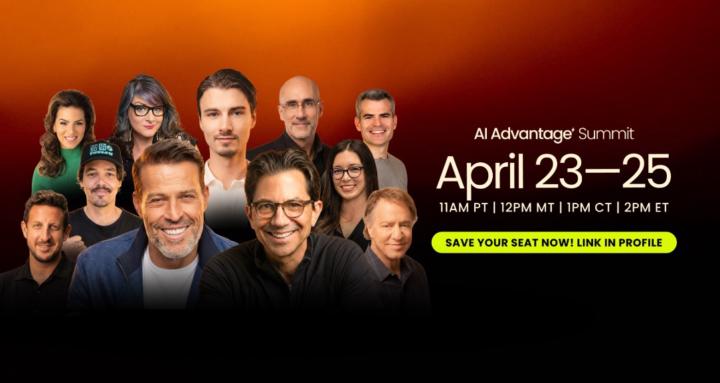
First & foremost… We’re so glad you’re here with us in this incredible private community. You’re officially part of the AI Advantage movement, and there’s never been a better time to jump in and start creating TRUE AI Confidence in a world that’s shifting daily. With our brand new 2026 AI Advantage Summit happening April 23–25, this is the perfect place to get connected, get inspired, and get ready for an incredible event. If you found this community because you registered for the Summit, welcome… We’re thrilled to over deliver for you during this journey! If you’re an existing member and want to be part of the 2026 Summit, make sure you RSVP so you don’t miss your chance to join us live for this exciting experience. Over the coming weeks, this community is where the momentum starts. It’s where entrepreneurs, business owners, creators, and professionals come together to explore what’s possible with AI, especially when it comes to saving time, simplifying the way you work, and creating more space for what matters most. Whether you’re brand new to AI or already experimenting with it, you’re in the right place. The Summit is going to be packed with powerful ideas, practical strategies, and real-world ways to use AI to work smarter, move faster, and reduce the overwhelm that so many people feel in business and life right now. And while you’re here, we’d love for you to introduce yourself in the General Discussion section. Let the community know where you’re from, what you do, and what you’re most excited to learn at the Summit. This is your chance to meet like-minded people, build connections, and start learning alongside others who are also ready to embrace AI in a practical, empowering way. We’re excited to have you here, and we cannot wait to experience the Summit with you. Let’s get ready for an amazing April 23–25... and make sure you RSVP if you want to join us



7d •
Attention Australia and New Zealand
Hi from New Zealand I'm based in Auckland where you based? I see from the map there are just over 5000 people from Australia and New Zealand registered for the event. I'd love to connect and see how we might support each other. Drop a comment where are you based? Regards Jeff & Donna

1-30 of 17,831
skool.com/the-ai-advantage
Founded by Tony Robbins, Dean Graziosi & Igor Pogany - AI Advantage is your go-to hub to simplify AI and confidently unlock real & repeatable results
Leaderboard (30-day)
1

+1595
2

+1245
3

+564
4

+510
5

🔥
+477
Powered by