
Write something
Pinned

13h •
🧩 The AI Use Case Inventory: The Smallest Governance Move With the Biggest Payoff
Most organizations do not struggle with AI because they lack tools. They struggle because they lack visibility. When we cannot clearly see where AI is being used, what data it touches, and what decisions it influences, we cannot scale adoption confidently. We either freeze, or we let shadow usage spread until trust breaks. An AI use case inventory sounds unglamorous, but it is one of the highest leverage moves we can make. It turns AI from scattered experimentation into a managed capability. ------------- Context: Why AI Gets Messy Fast ------------- AI adoption often begins with good intentions. A team tests a tool for summarizing meetings. Another team uses AI to draft marketing copy. A leader asks for faster reporting. Someone finds an AI feature in an existing platform and switches it on. None of this feels risky in isolation. Then, a few months later, the organization is surprised. People cannot answer basic questions. Which teams are using AI. What tools are in play. Are we putting customer data into third-party systems. Are we relying on AI outputs in decisions that affect customers. Which workflows are automated. Who owns them. The problem is not that AI is uniquely chaotic. The problem is that AI is easy to adopt without coordination. It spreads through convenience. It hides inside everyday tools. It slips into workflows because it saves time, and then it becomes normal before anyone has defined standards. When that happens, leadership tends to react in one of two ways. We either clamp down and restrict everything, which kills momentum and creates resentment, or we ignore it and hope for the best, which creates silent risk. An inventory is the middle path. It does not require perfect policy. It requires honesty. It starts with one simple act: seeing reality clearly. ------------- Insight 1: You Cannot Govern What You Cannot See ------------- Governance often fails because it is built on assumptions. We write rules based on what we think is happening, not what is actually happening. AI makes this worse because usage is distributed and often informal.

Pinned

16h •
The Difference Between Grinding… and Living on Purpose
I was up at 4:35am this morning… on a Sunday… diving head first into work. And the truth is — it didn’t feel like grinding at all. Because when you love what you’re building, when you know it’s stretching you as a man, when it’s tied to being in service to your family and making a real impact… the work hits different. It stops feeling like pressure. It starts feeling like purpose. I don’t get excited about being busy. I get excited about growing. About becoming more disciplined. More focused. More capable than I was yesterday. That’s what fuels me. Not the hours. Not the grind. The progress. So if you’re in a season where you’re putting in the reps — don’t just ask yourself how hard you’re working. Ask yourself who the work is helping you become. Because when the mission is bigger than you…even a 4:35am Sunday start feels like a privilege.
Pinned
3d •
Claude Interactive Responses, ChatGPT Ads Explained & More AI News You Can Use
This week, I show you how to use Claude's new Interactive Reponses, breaks down AI ads at the Superb Owl and how ads in ChatGPT work (for now), reviews our testing results comparing GPT-5.3-codex and Claude Opus 4.6, and way more. Enjoy!

11h •
Intro
Hey everyone 👋 Excited to be here. I’m Augie Santa Maria, founder of Cognagent Services, based in Palm Beach, Florida. I work at the intersection of AI, enterprise systems, and human decision-making. My focus is helping B2B leaders move AI from interesting pilot projects into practical, repeatable impact inside complex organizations. A lot of the work I do centers around ERP, data modernization, and building frameworks that make AI usable at scale rather than experimental. I joined AI Advantage because I’m deeply interested in simplifying AI adoption in a way that drives real business outcomes, not just activity. I’m especially curious how others here are operationalizing AI inside growing companies. Looking forward to learning, contributing, and connecting.

🔥
13h •
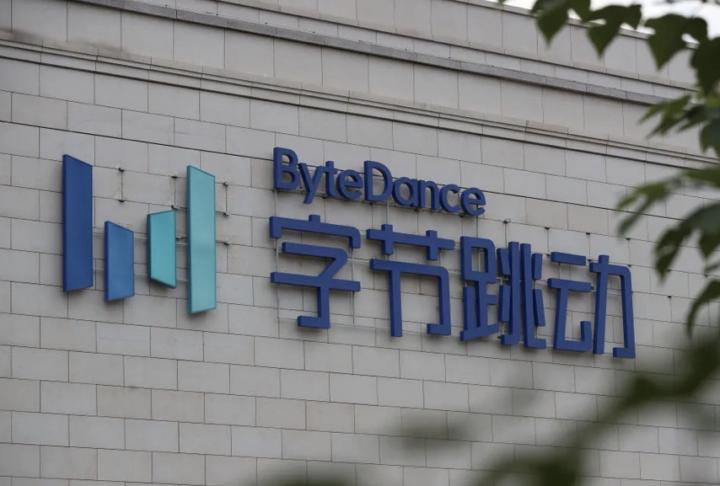
📰 AI News: Hollywood Declares War On Seedance 2.0, ByteDance’s New AI Video Generator
📝 TL;DR A new AI video model called Seedance 2.0 is already triggering an all-out backlash from Hollywood. Studios and unions say it enables “blatant” copyright infringement and unauthorized use of famous faces, voices, and characters, and they want ByteDance to shut it down fast. 🧠 Overview ByteDance, the company behind TikTok and CapCut, launched Seedance 2.0, a tool that can generate cinematic 15 second videos from a simple text prompt. Almost immediately, people used it to generate clips featuring famous actors and recognizable movie style scenes, and that is exactly what set off alarms in the entertainment industry. This is another clear sign that AI video is moving from “cool demo” to “legal and cultural battleground,” especially when the output looks like it borrows directly from real people and real IP. 📜 The Announcement Seedance 2.0 was released earlier this week and is currently available to Chinese users through ByteDance’s Jianying app, with ByteDance signaling it will come to global users via CapCut. The model competes with other text to video tools like OpenAI’s Sora and Google’s Veo, but critics argue Seedance launched without meaningful safeguards. In response, major Hollywood groups condemned the tool publicly. The Motion Picture Association called out what it describes as mass unauthorized use of US copyrighted works. SAG-AFTRA and the Human Artistry Campaign also criticized Seedance, framing it as an attack on creators and performers whose likeness and work could be repurposed without consent. ⚙️ How It Works • Text to video generation - You type a short prompt and Seedance generates a 15 second video clip with characters, motion, and cinematic styling. • Viral realism - Early examples went viral because the outputs looked surprisingly believable, including clips featuring celebrity likenesses. • Weak guardrails claims - Critics say it is too easy to generate content that resembles real actors, franchises, and scenes with little friction.
1-30 of 11,441

skool.com/the-ai-advantage
Founded by Tony Robbins, Dean Graziosi & Igor Pogany - AI Advantage is your go-to hub to simplify AI and confidently unlock real & repeatable results
Leaderboard (30-day)
1

+173
2

+165
3

+148
4

+141
5

🔥
+111
Powered by