
Write something
Pinned

2h •
Quick Check In
It’s almost March. Be honest. Are you still going after the goals you set in January…or have you quietly adjusted them to feel more comfortable? This is the part of the year nobody talks about. The hype is gone. The excitement faded. Now it’s just discipline. At some point it stops being about motivation. It becomes about keeping your word to yourself. So I’ll ask you straight: Are you growing into who you said you wanted to become this year? 👇 Where are you at right now...crushing it, coasting, or recalibrating?
Pinned

9h •
🧭 The Confidence Gap, Why Fear Costs Time More Than Mistakes Do
Most of us think the biggest risk with AI is getting something wrong. But in practice, the bigger cost is getting stuck. Fear, hesitation, and perfectionism quietly inflate time-to-first-draft, increase meeting hours, and keep us doing work the slow way even when better options exist. Mistakes can be corrected. Avoidance turns into a permanent time tax. AI adoption becomes real when we build confidence, not as a personality trait, but as a workflow design. Confidence is a time strategy because it reduces friction, shortens cycles, and helps us move from “thinking about using AI” to actually reclaiming hours. ------------- Context: How Fear Turns Into Lost Hours ------------- The confidence gap usually does not look dramatic. It looks like small delays. We open the tool, we type a prompt, we delete it, we try again, then we decide we will just do it ourselves. We tell ourselves it is faster this way, but what is really happening is that uncertainty is steering the workflow. Fear shows up as over-checking. We draft with AI, then we read and reread, looking for what might be wrong, because we do not trust the output or we do not trust our ability to spot issues. That can be responsible, but it can also become unbounded. We do not know when we are “done checking,” so the time expands. Fear also shows up as meeting gravity. Instead of sending a draft, we schedule a call to “align.” Instead of proposing a direction, we ask for more input. We do this because we want safety, but the cost is time-to-decision and cycle time. Then there is the identity layer. Many of us have been rewarded for being competent, accurate, and reliable. AI introduces a new dynamic: we are working with a tool that can be brilliant and wrong in the same breath. That ambiguity can feel threatening. So we keep AI at arm’s length, and we keep doing things manually, not because it is best, but because it is familiar. The result is predictable. We miss the biggest time gains: faster starts, fewer blank pages, fewer revision loops, and cleaner handoffs. We remain in the “manual default,” and the week keeps feeling compressed.

Pinned
3d •
The Best Free AI Got a MASSIVE Upgrade & More AI News You Can Use
This week, I break down some huge updates to Claude that, combined with the introduction of ads in ChatGPT, make Claude the best AI if you're on a free plan. Plus, I cover the barrage of OpenAI news and releases, discusses the evolution of the "OpenClaw" movement, and more. Enjoy!

15h •
New week. Fresh start.
New week. Fresh start. Whatever didn’t work last week? Leave it there. Whatever slowed you down? Learn from it. This week isn’t about being perfect. it's about being intentional. One clear goal. one improved habit. one step forward. Progress doesn’t come from doing everything comes from doing the right things consistently. What’s ONE thing you’re committed to improving or completing this week? Drop it below, let’s start strong

🔥
6d •
📰 AI News: OpenAI Hires OpenClaw Creator To Build Next-Gen Personal Agents
📝 TL;DR Sam Altman just announced that OpenClaw creator Peter Steinberger is joining OpenAI to drive the next generation of personal agents. OpenClaw is moving into an independent foundation and staying open source, with OpenAI continuing to support it. 🧠 Overview This is a big signal about where AI is headed next. The race is shifting from “who has the smartest chatbot” to “who can deliver agents that actually do things,” like managing your inbox, booking travel, handling forms, and working across apps on your behalf. OpenClaw exploded because it made agents feel real, not theoretical. OpenAI bringing Steinberger in suggests they want to move faster on personal, multi step, multi agent systems, and they want the builder who already proved it can work in the wild. 📜 The Announcement OpenAI CEO Sam Altman said Peter Steinberger is joining OpenAI to lead the next generation of personal agents. He also said OpenClaw will live in a foundation as an open source project that OpenAI will continue to support. Separately, Steinberger reinforced the same direction, he is joining OpenAI to bring agents to everyone, while OpenClaw remains open and independent under a foundation structure. ⚙️ How It Works • Personal agents, not just chatbots - The goal is an assistant that takes actions across tools, not one that only drafts text. • Multi agent direction - Instead of one giant assistant doing everything, the future looks like multiple specialized agents coordinating to complete tasks. • OpenClaw as proof of demand - OpenClaw gained massive traction because it showed real workflows like email, scheduling, and online tasks, not just demos. • Foundation structure for OpenClaw - Moving the project into a foundation is meant to keep it open source and reduce fear that it gets locked into a single company. • OpenAI support without full ownership - The public promise is continued support while the open source project stays independent in governance.
1-30 of 11,569
skool.com/the-ai-advantage
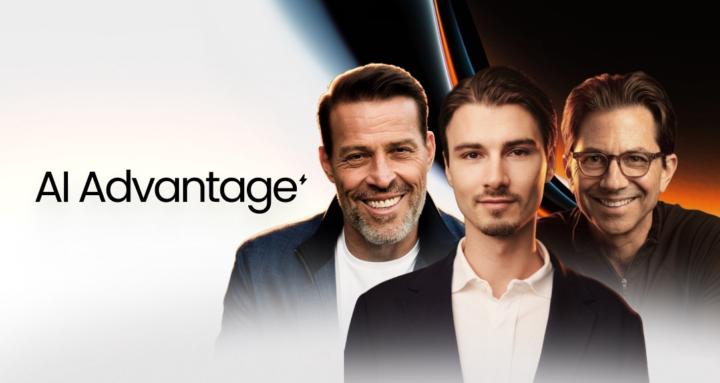
Founded by Tony Robbins, Dean Graziosi & Igor Pogany - AI Advantage is your go-to hub to simplify AI and confidently unlock real & repeatable results
Leaderboard (30-day)
1

+202
2

+150
3

+139
4

🔥
+112
5

+108
Powered by