
Write something

16d •
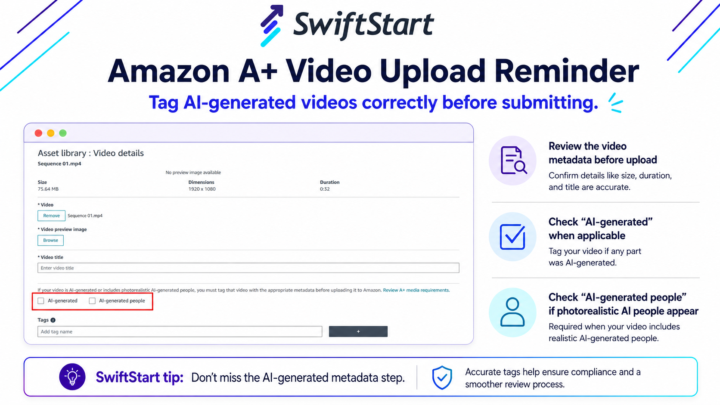
Amazon AI Images Update
Amazon just introduced a small update that could become a big deal for brands. No announcement. No headline. Just a new checkbox inside A+ Content and Brand Story uploads. It asks whether your images were created with AI, and whether they include AI-generated people. At first glance, it looks insignificant. History suggests otherwise. Amazon has a pattern of introducing data fields long before they become mandatory. Product safety details, expiration dates, hazmat information, and country of origin all started as simple inputs before evolving into compliance requirements. This feels very similar. The brands that should pay the closest attention include: → Supplements → Skincare & beauty → Baby products → Pet brands → Any category where product benefits could be interpreted as health-related The concern isn't AI itself. The concern is what AI-generated images might communicate. A perfectly clear complexion. A healthier-looking pet. A happier, thriving baby. Even when no words are making the promise, the image can. Amazon's review teams don't just evaluate creative quality anymore. They also evaluate whether the visual implies a claim that your brand can support with evidence. That's where AI-generated lifestyle imagery creates additional risk. What should brands do today? → Keep a record of every AI-generated and AI-assisted image you publish. → Separate original photography from AI-created assets. → Review your visuals for implied claims, not just written claims. → Build a clear process for documenting creative sources. Not knowing which assets were created with AI won't be a strong defense if Amazon tightens its policies. This checkbox isn't just another form field. It may be Amazon laying the groundwork for what's coming next. The brands that prepare now will have a much easier time adapting if AI image disclosure becomes a formal compliance requirement. #amazonlistings
0
0
30d •
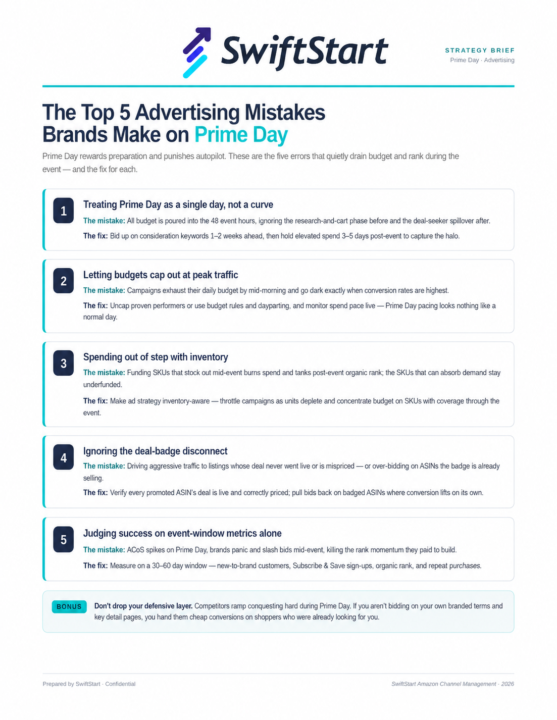
Most brands treat Prime Day as a 4-day sprint.
The ones who win treat it as a three-week campaign. Every year, we watch the same five advertising mistakes quietly drain budget — and drag down organic rank long after the deals end: → Treating the event as a single day, not a curve → Letting budgets cap out at peak traffic → Spending out of step with inventory → Ignoring the deal-badge disconnect → Judging success on event-window metrics alone None of the fixes are complicated. But they have to be in place before the traffic spikes — not scrambled together at hour 30 when your best SKU is already out of stock. We broke down all five (mistake + the fix for each) in the one-pager below. What's the costliest Prime Day mistake you've seen? Drop it in the comments.
0
0

May 29 •
Too Much Information Is Quietly Killing Most Amazon Beginners
I used to think the difference between people who “make it” on Amazon and those who don’t was just experience or capital. But after spending time around this space, I’m starting to see something else. Most people are not failing because they lack information. They’re failing because they don’t know what to actually apply first. There’s too much:Guides.Templates.Strategies.Webinars.Case studies. And ironically, that overload becomes the problem. You end up learning everything… but executing nothing clearly. What started shifting things for me was simplifying the process into one question: “What is the next step that actually moves revenue, not just knowledge?” That small shift changes how you look at everything. Curious if anyone here has dealt with this too, where too much information actually slowed your progress? I don’t check this platform that often, easier to chat on Gmail [email protected] i will be expecting you guys message
1
0
May 20 •
SwiftStart Low Inventory Fees Trick for 2026
Amazon just made one quiet update that could destroy margins for sellers who are not paying attention. Starting in 2026, Amazon’s low inventory level fees are no longer applied at the product level. They’re now charged at the FNSKU level. That means your main ASIN can look perfectly healthy, but if one size, variation, or color drops below 28 days of supply, Amazon will charge a fee on every unit sold for that SKU. And these fees are not small: • $0.32 to $2+ per unit depending on product size • Now expanded to bulky and large-item categories • Enough to turn a profitable SKU into a break-even product overnight This is where inventory strategy becomes profit strategy. Here’s what sellers should be doing right now: → Drip-feed inventory into FBA instead of overloading shipments → Use AWD (Amazon Warehousing & Distribution) for replenishment stock → Enable AWD auto-replenishment because those SKUs are fully exempt from low inventory fees → Audit your FBA dashboard at the SKU level, not just the parent ASIN level Most sellers will notice this change only after margins start shrinking. The smart operators will fix the supply flow before Q1 2026 hits. https://youtube.com/shorts/jkGViZY1TdM?feature=share
0
0
May 19 •
I stayed silent about this struggle for years, but learning online business changed everything…
One thing I realized about life: Nobody is coming to save you. The day I accepted responsibility for my future was the day my mindset changed completely. I stopped blaming the economy. Stopped blaming my background. Stopped waiting for “perfect timing”. That’s when I started learning online business seriously. Was it easy? No. I failed many times. I got frustrated many times. But every failure taught me something valuable. Now I understand why successful people protect their mindset and environment so much. If you’re reading this and you’re currently struggling financially or mentally, keep going. Your breakthrough might be closer than you think. Sometimes one decision can change your whole life. If you wanna chat better easier to chat on telegram @Gghvlgdyfj
1
0
1-30 of 109

skool.com/swiftstartamzmastermind
SwiftStart AMZ community is for Amazon brand owners and small businesses like yours that are eager to scale their stores on Amazon.
Powered by