🔥
12h • Early Clues & Signals
Muzzle Map Monday: What Their Face Is Whispering
Most people think behavior starts with behavior. It doesn’t.
It starts with micro‑shifts in the tissues of the face, shifts driven by the nervous system, the fascia, the respiratory cycle, the gut, the minerals, the mitochondria, and the animal’s internal threat‑safety calculus.
The muzzle is where all of that leaks out.
Today we decode the hidden layer.
1. The Fascia Layer: Why the Muzzle Tightens Before the Body Does
The muzzle is wrapped in one of the most expressive fascial networks in the mammalian body.
When fascia senses:
- inflammation
- dehydration
- mineral imbalance
- pain
- emotional threat
- sensory overload
- it tightens before muscles do.
This is why you’ll see:
- a tiny pull at one corner of the mouth
- a slight flattening of the nose bridge
- whiskers that shift 2–3 mm forward
- a micro‑twitch under the eye
These are not “expressions.” They are fascial micro‑braces, the body preparing for impact.
2. The Respiratory Signature Hidden in the Nose
The nose tells you how the respiratory system is coping with the world.
Look for:
- Nostril flare without sound = rising CO2 = sympathetic activation
- Nostril collapse on inhale = fatigue, airway resistance, or stress‑bracing
- Rapid micro‑sniffing = threat assessment, limbic activation
- Barely perceptible slow inhale = freeze, dorsal vagal tone, shutdown
Your pet’s nose is a live feed of their internal gas exchange and threat detection.
3. The Mouth as a Metabolic Barometer
The mouth is where metabolic load becomes visible.
- Tight commissures (corners) = blood sugar instability, cortisol spikes, or pain
- Excessive drool = nausea, gut dysregulation, or anticipatory stress
- Dry mouth = dehydration, mineral depletion, or chronic sympathetic tone
- Tongue tip tension = early anxiety signal, often missed
The mouth is not emotional. It’s biochemical.
4. Whiskers: The Brainstem’s External Hard Drive
Whiskers are plugged into the trigeminal nerve, which feeds directly into:
- the brainstem
- the amygdala
- the sensory integration centers
This means whiskers show you:
- sensory overload
- pain on one side of the body
- early neurological fatigue
- asymmetrical compensation
- emotional conflict
If whiskers shift before the body does, the nervous system is already negotiating safety.
5. The “Pre‑Behavior” Zone: 0–5 Seconds Before Anything Happens
This is the gold mine.
Right before a behavior, the muzzle reveals:
- the direction of the nervous system (fight, flight, freeze, fawn)
- the intensity of the internal load
- the origin (sensory, metabolic, emotional, pain)
- the threshold (how close they are to reacting)
Examples:
- A single whisker twitch = sensory spike
- A micro‑lip pull = pain anticipation
- A nostril flare = threat detection
- A jaw quiver = emotional conflict
- A still muzzle with hard eyes = freeze
If you learn to read the muzzle, you can intervene before the behavior ever appears.
6. The Emotional Containment Patterns
Animals don’t hide emotions. They contain them.
Containment shows up in the muzzle as:
- tight vertical lines = holding back fear
- horizontal tension = suppressing frustration
- asymmetry = internal conflict
- stillness with tension = “I can’t show you how I feel, but I feel it”
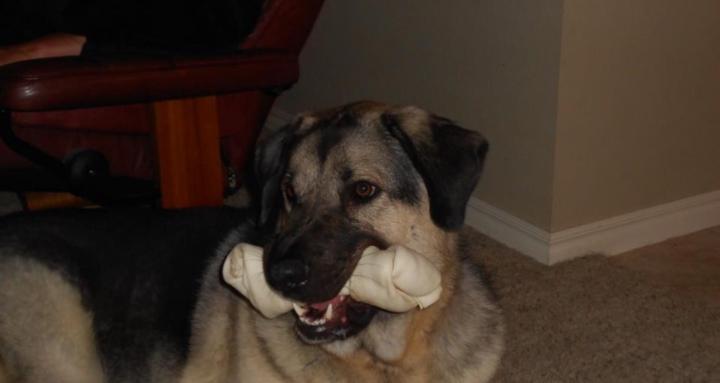
This is why Simcha’s paw‑in‑mouth sleep is so diagnostic: It’s a self‑containment maneuver, a mammalian attempt to hold the emotional load in place.
7. The Muzzle as a Pain Map
Pain rarely starts with limping. It starts with:
- uneven whisker angles
- one side of the mouth tighter than the other
- nostril asymmetry
- micro‑flinches when touched
- a single whisker that won’t relax
Pain is a facial event long before it’s a gait event.
8. The Muzzle as a Gut Map
The gut and the muzzle are connected through:
- the vagus nerve
- the enteric nervous system
- inflammatory cytokines
- metabolic byproducts
Gut load shows up as:
- drooling
- lip licking
- mouth tension
- darkened fur around the mouth
- subtle jaw clenching
- “worried mouth” even at rest
If the gut is inflamed, the muzzle is never soft.
Today, observe your pet’s muzzle during:
- waking
- eating
- resting
- being touched
- hearing a sound
- seeing another animal
- being asked to do something
Then ask:
“Which system is whispering through their face, nervous, metabolic, sensory, or emotional?”
This is not dog‑specific. Everything in the Muzzle Map applies to any mammal with a face, because the signals come from shared mammalian physiology, not species‑specific quirks.
Let me show you how deep this actually goes across species.
Muzzle Map Monday Is Species‑Agnostic
(Dogs, cats, horses, rabbits, ferrets, goats, exotics, all of them.)
The muzzle is a neuro‑fascial‑sensory hub in every mammal. Different shapes, same wiring.
Here’s how the same principles show up across species:
1. Whisker Set (Vibrissae) - Universal Mammalian Sensory Antennas
Cats: Whiskers are even more expressive than dogs, forward whiskers can mean predatory focus, overstimulation, or sensory overload.
Horses: Their muzzle whiskers are longer and more sensitive; trimming them (still legal in some places) removes a major sensory organ.
Rabbits & small mammals: Whisker asymmetry is one of the earliest signs of pain or GI distress.
Ferrets: Whisker tension shows adrenal stress long before behavior changes.
Dogs: Same system, different intensity.
The physiology is identical: trigeminal nerve = brain stem = limbic system = behavior.
2. Nose Shape & Tension - A Window Into Autonomic Tone
Cats: A tiny nostril flare often precedes a swat or a bolt.
Horses: Nostril shape is a massive tell, dilation without sound = sympathetic surge; collapse = bracing or respiratory strain.
Goats & sheep: Nasal tension often precedes vocalization or avoidance.
Dogs: Flattening or wrinkling maps directly to stress load.
Same mechanism: respiratory pattern = CO2 balance = nervous system state.
3. Mouth Tension - The Most Honest Part of Any Mammal’s Face
Cats: A tight “lemon mouth” is an early pain indicator.
Horses: Tight commissures = bracing; chewing without food = displacement.
Rabbits: Jaw tension is a red flag for GI stasis.
Dogs: Lip licking, corner tension, jaw set, all metabolic or emotional load.
Same physiology: fascia + vagus nerve + metabolic state.
4. Stillness vs. Freeze - A Universal Mammalian Pattern
Every mammal has:
- fight
- flight
- freeze
- fawn
- shutdown
And the muzzle shows the transition before the body does.
Cats: freeze looks like “statue mode” with tight whiskers Horses: freeze looks like “statue with flared nostrils” Dogs: freeze looks like “stillness with tension” Rabbits: freeze looks like “wide eyes + tight mouth” Same nervous system. Different costume.
5. Pain Mapping - The Muzzle Tells the Truth First
Cats: Asymmetrical whiskers or a tight muzzle = pain long before limping.
Horses: One-sided nostril tension = unilateral pain.
Dogs: Micro‑twitches, whisker angle changes, mouth tension.
Small mammals: Jaw tension is often the first sign of internal distress.
Pain is a facial event before it’s a behavioral event in every species.
6. Gut Load = Muzzle Signals Across Species
Cats: Lip licking, drooling, tight mouth = nausea or GI inflammation.
Horses: Tight muzzle + chewing motions = gut discomfort.
Rabbits: Jaw tension = GI stasis risk.
Dogs: Darkened fur, drool, mouth tension = gut imbalance.
Same gut–brain axis. Same vagus nerve. Same muzzle tells.
So no, this is not a dog post.
This is a mammal post. A physiology post. A universal decoding system.
1
1 comment
Muzzle Map Monday: What Their Face Is Whispering
skool.com/simcha-hub-of-pet-physiology-5304
Understand your pet through physiology. Learn the gut - immune - neuro patterns that shape behavior, mood, and resilience long before symptoms appear.
Leaderboard (30-day)
1

🔥
+61
2

+40
3

+16
4

🔥
+13
5

+3
Powered by